
Shoppers scrambling for last minute gift purchases might notice a disturbing pattern: Items targeting female consumers are often more expensive than similar products and services marketed towards men—a phenomenon often referred to as the “pink tax.”


More Than A Magazine, A Movement

Shoppers scrambling for last minute gift purchases might notice a disturbing pattern: Items targeting female consumers are often more expensive than similar products and services marketed towards men—a phenomenon often referred to as the “pink tax.”

Oluna is a clothing company that donates a year’s worth of period products for each pair of pants sold.
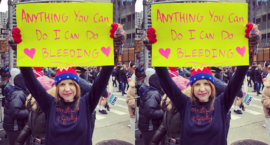
Scotland recently became the first nation in the world to mandate all period products in the country will be free for anyone who needs them.
Jennifer Weiss-Wolf, menstrual equity expert and founder of Period Equity, discusses the historic nature of Scotland’s new law; how it’s going to work, in practice; how we might model it in the U.S.; and how COVID is affecting menstrual equity here in the States.

The devastating crisis of COVID-19 is impacting adolescent girls through unprecedented school dropouts and learning losses, compromised health care and a lack of vital resources such as menstrual supplies. So 12-year-old Patience and 13-year-old Kashish set out to tackle this issue in Uganda.

These six young period activists take on school administrators and state legislators in their fight for menstrual equality. Here are some lessons they’ve learned in the field.

A lawsuit was filed on behalf of an eleven-year-old with Down syndrome that challenges her expulsion from a federally-funded afterschool program in Austin, Texas. Why? Because she began to menstruate.
The young girl’s lawsuit—and her demand that menstruation be considered under Title IX of the Educational Amendments of 1972—has the potential to break new ground.
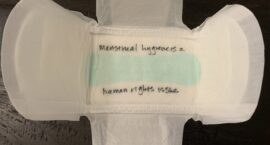
This year’s law school bar examination, in particular, is high stress and high stakes. Nearly 3,000 lawyers, law professors and recent graduates are demanding a clear, consistent statement that authorizes people to carry and use their own menstrual products while taking the bar exam in every state.

Through a brand-new website, the team behind #PeriodFutures decided to take action in the hopes of tackling the many challenges that riddle the menstrual health industry—from access, affordability and sustainability, to education and stigma.

Two determined Astoria high school juniors have convinced the New York Department of Education to distribute menstrual products at school food-distribution sites during the coronavirus crisis.
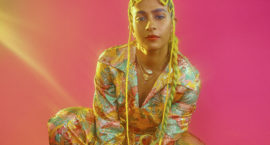
“Unfortunately, we are in a world that takes so much offense to being feminine, that we try not to be. … We are constantly aspiring to masculine standards, instead of being brave enough to see what it is that femininity brings to the table.”
By 2019, Gandhi had released two EPs as Madame Gandhi, opened for Ani Difranco, toured with Thievery Corporation, played Bonnaroo and numerous other festivals, and been named one of Forbes’ 30 Under 30 in music for 2019.