Mifepristone Could Treat Endometriosis, Some Cancers, Depression and Chronic Illness—If Politics Didn’t Interfere

Across a range of conditions that disproportionately affect women, research into mifepristone’s potential has been slowed, defunded or blocked altogether. Nowhere is that clearer than in the treatment of endometriosis and other serious illnesses that leave millions of women in chronic pain.

Endometriosis—when endometrium cells grow outside the uterus—afflicts an estimated 10 percent of reproductive-age women. It can lead to chronic pelvic and back pain, heavy or abnormal bleeding, pain during sex or bowel movements, fatigue, bloating, digestive issues, infertility, anxiety and depression.

Mifepristone can help—it blocks the progesterone causing the cellular growth and decreases the size of existing endometrial lesions, thereby relieving painful symptoms. But antiabortion politics have obstructed the development of the medication for these uses in the U.S.

Researchers have also produced studies showing mifepristone is effective for treating ovarian and breast cancer, chronic inflammatory diseases, and several psychiatric disorders, including major depressive disorder, post-traumatic stress disorder (PTSD) and psychotic depression.

This is Part 2 of 3 in a new series, “The Moral Property of Women: How Antiabortion Politics Are Withholding Medical Care,” a serialized version of the Winter 2026 print feature article.

Hitting Where It Hurts: Expiring Healthcare Tax Credit Means Price Hikes for Americans with Cancer

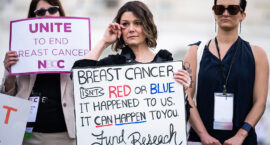
For more than 18 million Americans living with cancer, access to healthcare and health coverage is more than just financial security. It connects them to life-saving care that maintains and improves their quality of life.

However, federal action—and inaction—may sever that connection for people with cancer.

Without congressional action, current marketplace premium tax credits will plummet on Jan. 1, 2026—by an average of 93 percent in HealthCare.gov states. Among people with cancer receiving these tax credits, 86 percent report they will have difficulty affording and getting necessary health care services.

As Support for Abortion Grows, the Court Doubles Down on Restricting Care

In its Medina v. Planned Parenthood South Atlantic ruling last week, the U.S. Supreme Court issued a devastating blow to reproductive health clinics across the nation. A substantial slate of decisions issued by the Court Friday dealt several more severe blows to the rule of law and our constitutional rights—though a silver lining was the Court’s decision to uphold the Affordable Care Act’s preventive-care mandate.

Supreme Court Allows States to Exclude Reproductive Health Clinics From Medicaid

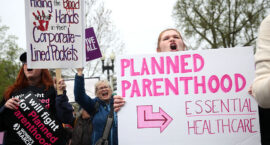
In a landmark decision released Thursday morning, the U.S. Supreme Court ruled 6-3 in favor of South Carolina in Medina v. Planned Parenthood, granting states the authority to exclude reproductive health clinics from their Medicaid programs—even when those clinics provide essential care such as cancer screenings, birth control and STI testing. This decision could embolden Republican-led states to “defund” Planned Parenthood across the country.

Trump Is Gutting Healthcare—But Women’s Health Was Already Disastrously Underfunded

For the past few decades, women’s healthcare has been under increasing attack across the country. Even states like New York, often perceived as a beacon of women’s healthcare, are backsliding, increasingly unable to address women’s health challenges adequately. Indeed, the lack of funding and legislative support isn’t limited to rural areas or red states; it is everywhere.

As the Trump administration threatens to accelerate this decline even further, we must come to terms with how little our cities, states and federal government have valued and prioritized women’s health for more than 30 years and begin fighting back against this renewed assault.

‘This Is About Life or Death’: Leading Feminists Discuss Women’s Rights in Post-Roe America

Clara Bingham, Jamia Wilson and Jessica Valenti on the state of abortion access and the feminist resistance rising up in every state in the U.S.:

“The 14th Amendment is what antiabortion activists are using right now to fight for fetal personhood. Anytime you see the 14th Amendment mentioned, that’s what it’s about.”

“We are no longer first-class citizens in banned states.”

“There are countries in this world where the pro-life movement is the movement that is about choice. … They’re surprised when they hear the framing of pro-life being used to dominate and control women’s bodies.”

“As terrible as things are every single day, in every single community and in every single state, there are rooms full of women, and there are rooms full of activists who are working their asses off, who are using their time, their money, their energy to make sure that if someone needs care, they can get it, whether or not we see it.”

New York Times’ Shameful Reporting on Planned Parenthood Bolsters Right-Wing Attacks on Reproductive Healthcare Access

The New York Times recently published a 3,000-word investigative report claiming to have found “scores of allegations” against Planned Parenthood for misconduct, medical malpractice, mismanagement and labor violations. Released within a month of Trump’s inauguration, the article appears timed to provide ammunition for the ongoing right-wing attack on reproductive rights. 

The NYT could have invested its significant resources into investigating how Planned Parenthood plays a unique and irreplaceable role in the U.S. healthcare system as the nation’s leading provider of sexual and reproductive healthcare and largest sex educator. By choosing to publish what reads as a hit job on Planned Parenthood at this political moment, while failing to devote any resources to investigating the opaque and unregulated antiabortion industry vying to defund and replace Planned Parenthood, the NYT has done a grave disservice to readers, especially women and girls who need reproductive healthcare.

A Second Trump Presidency Could Be Deadly for Women Overseas

The first time Donald Trump was president, he imposed a strict, overseas antiabortion policy that caused 108,000 women and children to die and 360,000 people to contract HIV/AIDS, according to a journal of the National Academy of Sciences. If voters send him back to the White House, those numbers, staggering as they may be, would be dwarfed by what comes next, reproductive rights advocates contend.

Busting Five Myths About Birth Control

Debunking myths about birth control is not just a matter of correcting misinformation; it is crucial for empowering individuals to make informed choices about their sexual and reproductive health. 

Let’s explore some myths about contraception that the young people in your life may have seen online—including that it may make you infertile (not true!) and can cause cancer (quite the opposite!).

Menopause Went Prime Time at the Super Bowl. Now the Federal Government Must Step Up

Menopause has been sorely neglected by the mainstream medical establishment, by lawmakers, by employers and by just about everyone. As a result, millions of women are left to navigate its most debilitating symptoms with little support.

Menopause is clearly having a prime-time moment—and we think that’s worth cheering. We challenge the National Institutes for Health to design and launch a modern initiative to assert the long-term benefits of hormone therapy and accurately assess its risks.