Flipping the Script on True Crime: The Ms. Q&A With Author Kristine S. Ervin

Kristine S. Ervin was 8 when her mother was abducted from a mall parking lot, murdered and abandoned in an Oklahoma oil field. In her debut memoir Rabbit Heart, Ervin resists the true crime trope of exploiting and glorifying femicide and instead delves into the emotional toll her mother’s death took on her and her family. We sat down recently to talk about her book, growing up motherless, how this informed her life’s gender power dynamics and her evolution from being a feminist-skeptic to writing what is undeniably a deeply feminist memoir.

“I see this as a grief memoir, a motherless daughter memoir, a memoir that is meant to show what 25 years of unrelenting, brutal grief looks like when you are the loved one of a victim and you don’t have answers.”

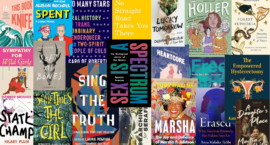
Three New Best-Selling Books on Menopause

A new, modern menopause movement is underway, mobilized by a diverse coalition of doctors, journalists, and social and racial justice activists.

In particular, we recommend: The New Menopause: Navigating Your Path Through Hormonal Change With Purpose, Power, and Facts by Dr. Mary Claire Haver; Grown Woman Talk: Your Guide to Getting and Staying Healthy by Dr. Sharon Malone; and The Menopause Brain: New Science Empowers Women to Navigate the Pivotal Transition with Knowledge and Confidence by Dr. Lisa Mosconi.

(This article originally appears in the Summer 2024 issue of Ms. Join the Ms. community today and you’ll get issues delivered straight to your mailbox!)

My Sexts Were Leaked in High School. I Learned the Hard Way How Sexuality Is Weaponized to Silence Women.

Each instance of gendered and sexualized narratives against high-profile women—and even ordinary people, including students like myself—serves as a warning to thousands of other women and those close to us. Witnessing these attacks often leads them to reconsider their own participation in public discourse.

The message is clear: Speak out, and your sexuality will be weaponized against you.

‘This Book Won’t Burn’: Celebrating Young People’s Bravery in the Face of Book Bans

Banning books is deeply harmful to children. Censorship not only removes books from library shelves; it erases identities. Bans suggest that the very existence of some human beings is controversial. Make no mistake, book banning is an anathema to liberty. It is a tool of oppression, and if we really want to protect our children, if we want to ensure our democracy, we all need to be raising our voices to stop it.

“How can I be brave?” That’s the question that planted the seed for my novel, This Book Won’t Burn.

‘Life and Death Decisions in Post-Roe America’: The Ms. Q&A with Shefali Luthra

Roe v. Wade was overturned on June 24, 2022. But according to Shefali Luthra, author of Undue Burden: Life and Death Decisions in Post-Roe America, “it had been on the verge of collapse for decades.” After all, most Medicaid recipients had lost insurance coverage for the procedure in 1977 and a plethora of restrictions—from parental consent and notification requirements for minors, to mandated counseling sessions to dissuade people from ending their pregnancies—had long kept procedural abortion out of reach for large segments of the population.

Undue Burden digs into this lack of preparedness by introducing diverse people who have been directly impacted by the decision—people who have had to travel hundreds of miles to have an abortion, people whose highly-anticipated pregnancies became untenable, a trans man who became pregnant shortly after beginning his transition, and a young couple who lacked the emotional and financial resources to welcome a second child, among them. Their stories are juxtaposed with those of overwrought clinicians as well as staff at abortion funds. The result is a poignant and dramatic look at the stakes of losing Roe and a compassionate assessment of the human toll wrought by Dobbs.

How Rowena Chiu’s Story Helped Expose Harvey Weinstein—From ‘Credible: Why We Doubt Accusers and Protect Abusers’

Rowena Chiu began working for Harvey Weinstein in 1998, assisting in the London office with his European film productions. Later that year, at the Venice Film Festival, she found herself at a late-night meeting with the producer. There, she recalls, Weinstein told her “he’d never had a Chinese girl” before attempting to rape her.

After signing a nondisclosure agreement, Chiu spent nearly two decades in what she describes as “constant fear”—“fear of Harvey’s abuse, control and power; that the story would come back to haunt me; that I would inadvertently slip up on my promise to never speak of this.” She was finally inspired to speak out by the powerful testimony of Christine Blasey Ford, whose decision to “speak up” about Brett Kavanaugh in September 2018 made a lasting impression.  

“I can briefly glory in the relief that I am no longer sitting on a sickening secret,” she wrote.