A North Texas city just rejected an all-Indian slate at the ballot box. A few months ago, the data warned it was coming. The country is finally catching up to the Indian diaspora.
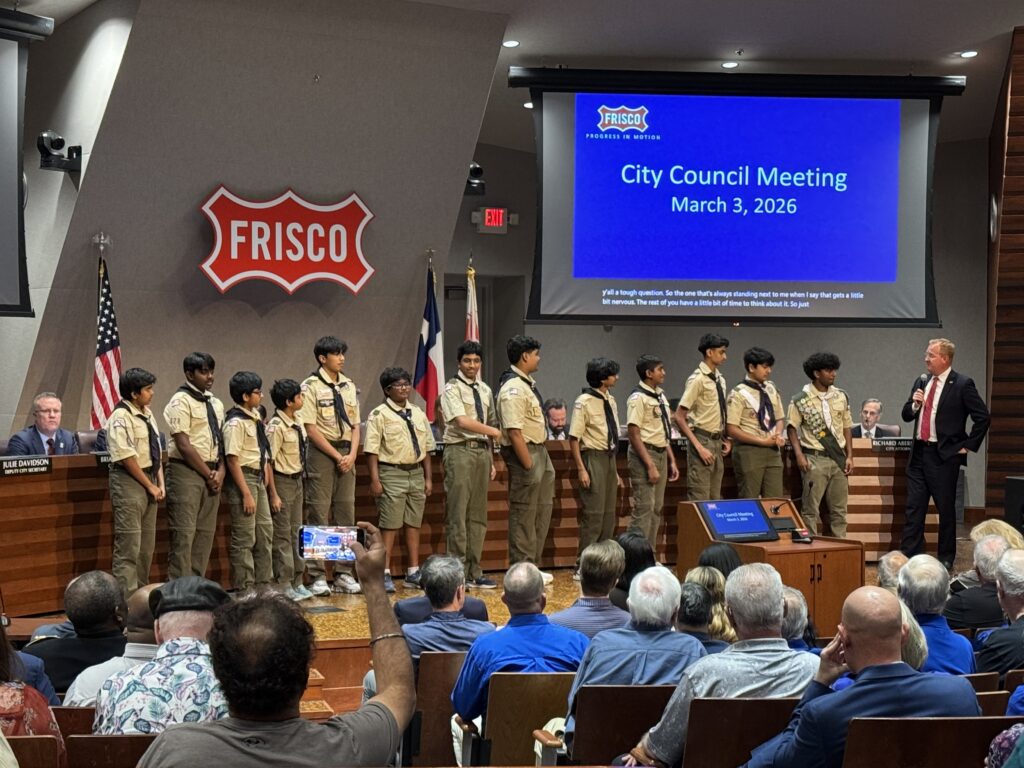
On a Tuesday night in March, a troop of Boy Scouts stepped to the front of a Dallas-suburb city council chamber and led the Pledge of Allegiance. A clip went viral within hours. The reposts came in the thousands. Most of them were hateful. The reason was simple: The boys were Indian.
Watching it from the dais was Frisco City Council member Burt Thakur—a U.S. citizen, a Navy veteran, a Trump supporter, born in New Delhi. By March, Thakur was used to it. For months, speakers had been driving in from neighboring cities to stand at the public comment microphone in Frisco and rail against “anchor babies,” against “invaders,” against the “Indian takeover” of a city where nearly one in five residents is now Indian.
“If you go after Boy Scouts, 10-year-old kids doing literally the most American thing ever,” Thakur told The Texas Tribune, “how can you also say the issue is assimilation?”

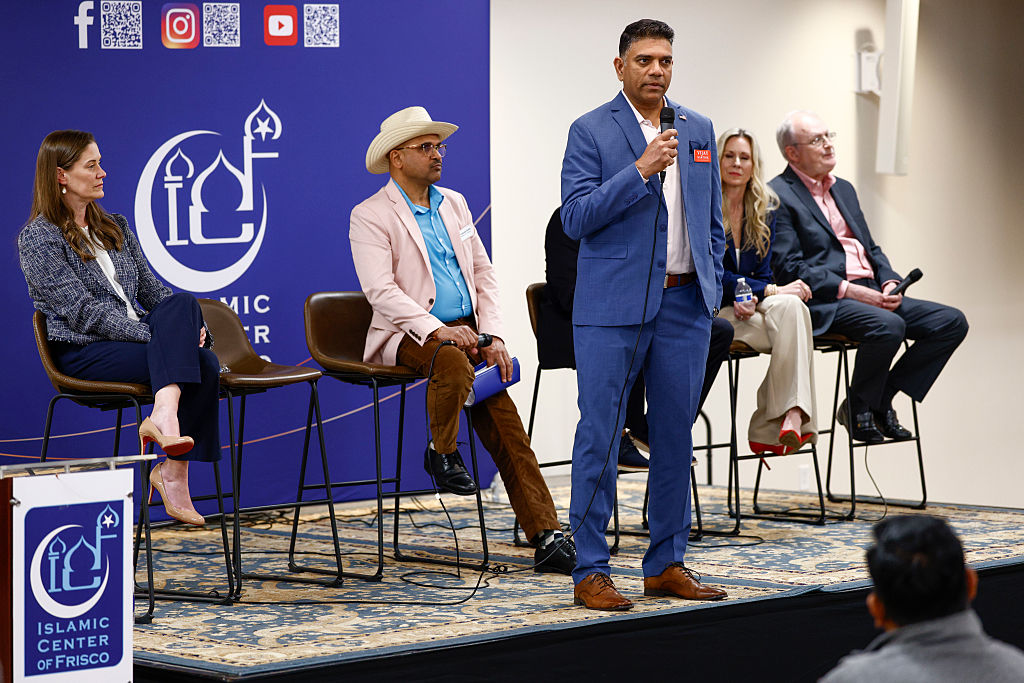
This spring, an Indian slate ran for Frisco City Council and school board: Sreekanth Reddy, Vijay Karthik and others. Every one of them lost.
Activist accounts on X—many run by people who do not live in Frisco—celebrated the results. The same Indian Americans the Republican Party had spent five years courting with Diwali receptions and Hindi-language yard signs had stepped up to run as Republicans in a Republican stronghold—and the base had answered them at the ballot box.
It was the right question Thakur asked, and the answer—visible now in council meetings, in viral clips, in social media campaigns, and in the quiet polling data of an entire diaspora—is that the issue was never assimilation. The issue was the contract. And the contract is being torn up.
A few months ago, the Carnegie Endowment for International Peace released the most comprehensive survey ever conducted of Indian American political attitudes. Democratic identification had fallen six points since 2020. Independent identification was up six. Third-party voting intent had doubled. Both parties’ favorability had declined for the third consecutive survey wave.
The most successful immigrant group in America was not consolidating around the GOP. It was not consolidating around the Democrats. It was checking out.
At the time, the data read like a forecast.
In Frisco, the forecast is now the weather.
Political scientists describe three options for a dissatisfied constituency: Exit, voice or loyalty. Indian Americans are exercising none of them cleanly.
In November, The Juggernaut documented the seismic swing in Edison, N.J., toward the Democrats: a Trump +30 precinct flipping to Sherrill +76 in a single year.
Frisco is the other half of the same story. Edison is what the diaspora looks like when it walks away from one party. Frisco is what it looks like when the other party kicks it out the door.
How the Courtship Curdled
Five years ago, the Republican Party began an unusually disciplined courtship of Indian American voters.
In 2021, the Republican National Committee opened community centers in purple-trending suburbs. The Coppell, Texas, center was christened with a Diwali ceremony.
In 2024, Greg Abbott led a nine-day trade delegation to India, and on returning, hosted Diwali at the Governor’s Mansion, where he assured a room of Indian community leaders that as long as he was governor, Texas would remain “a land for the Indian community.” The Collin County GOP printed Trump-Vance yard signs in Hindi, Telugu, Gujarati and Tamil.
Eighteen months later, the same party is the engine of the backlash.
Even at the top of the Republican Party, Indian identity is no longer protection. In Ohio in May, Vivek Ramaswamy won the GOP nomination for governor over an opponent who attacked him in nakedly racial terms. White supremacist Nick Fuentes called him an “anchor baby who got your birthright citizenship from your H-1B parents.” Ramaswamy won anyway.
The base has decided: The wing of the party that wants Indian voters cannot deliver an electorate that wants Indians.
The Bargain Is Broken
You can have a vice president whose wife is Indian American *and* watch the president repost a podcaster who calls your country of origin a hellhole.
Let’s be precise. Indian Americans remain, by every objective measure, the highest-achieving immigrant group in America. Pew Research data is real: highest median household income at $151,200, highest educational attainment, highest professional employment rates. The model minority, in economic terms, is intact.
What the Carnegie survey revealed is more unsettling: Achievement is no longer protection.
The unspoken bargain was always this: Succeed at exceptional levels, and America treats you as an exception—exempt from the discrimination, the belonging questions, the “go back where you came from” that other minorities navigate.
This diaspora held up its end. The country is renegotiating the terms.
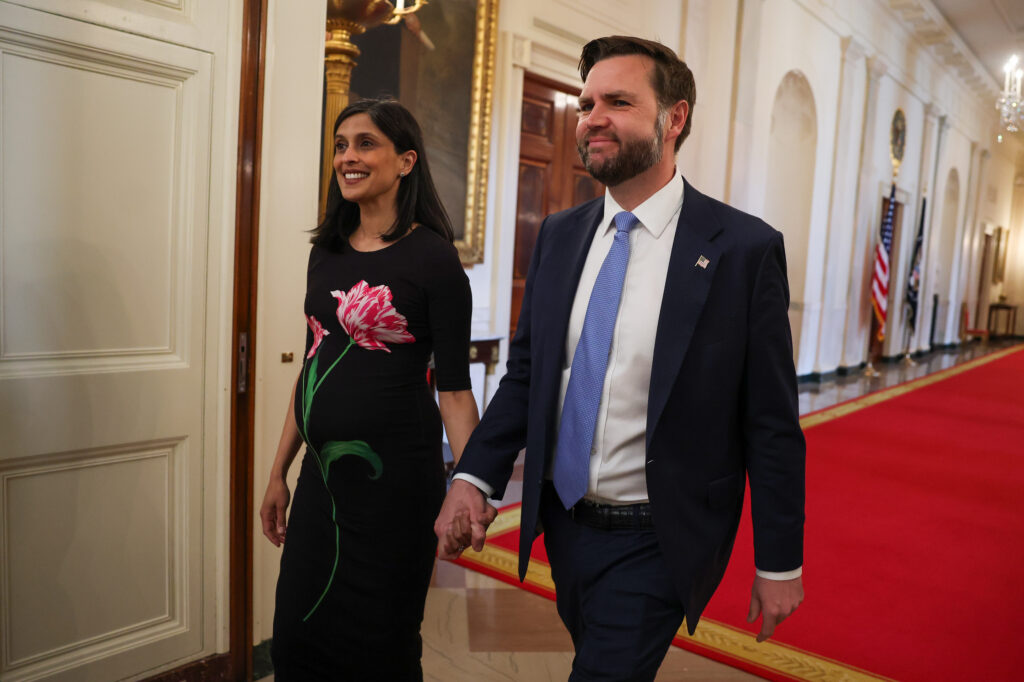
You can be the most educated demographic in America and still watch a sitting member of Congress call your religious traditions Third World. You can have a $151,200 median household income and still feel unsafe wearing your cultural clothing in public. You can have a vice president whose wife is Indian American and watch the president repost a podcaster who calls your country of origin a hellhole.
The achievement is real. The immunity it was supposed to purchase is gone.
The duration-of-stay data shows exactly when this disillusionment sets in.
Those here fewer than 20 years are still becoming more Democratic—party identification rose from 37 to 42 percent. The promise is fresh. The memory of where they came from still makes America feel like the answer.
Those here 20 or more years are moving the other way, dropping from 53 to 48 percent Democratic.
Among those over 50—longest-settled, highest-achieving, deepest roots—Democratic identification collapsed eight points in a single cycle.
This is not the white working-class disillusionment narrative that has dominated American political coverage since 2016. That story is about economic precarity. Indian Americans are not left behind—they are at the peak of what this country promised was possible, discovering that the contract they earned doesn’t mean what they were told. That is a different betrayal.
The Carnegie numbers are not alone:
- A February 2026 AAPI Data survey found 68 percent of Indian voters say Trump has gone too far in restricting legal immigration.
- Stop AAPI Hate reports that the use of South Asian slurs online rose 115 percent between January 2023 and December 2025.
- Thirty-one percent of Indian Americans have stopped discussing politics on social media.
- Twenty-one percent have avoided leaving and re-entering the U.S.
- One in four have been called a slur since the start of 2025.
Two pollsters, one behavioral dataset, one direction.
The Prize Nobody Is Picking Up
Political scientists describe three options for a dissatisfied constituency: Exit, voice or loyalty. Indian Americans are exercising none of them cleanly. They are not leaving—37 percent of Carnegie respondents have never considered it. They are not organizing. Their attachment to either party is measurably eroding.
What they are doing is waiting: making individual calculations, reading the room, finding both parties wanting. When a diaspora adapts individually rather than responds collectively, both parties get to pretend the problem does not exist.
They will still show up. Turnout rates among Indian Americans remain among the highest of any group in the country. In viral clips of Boy Scouts and lost city council races and an electorate that will keep voting and keep losing faith in the act at the same time.
Five million people with nowhere to go is not a problem for Indian Americans. It is an opportunity for whoever figures out how to meet them where they are. So far, at the national level, nobody has shown up.