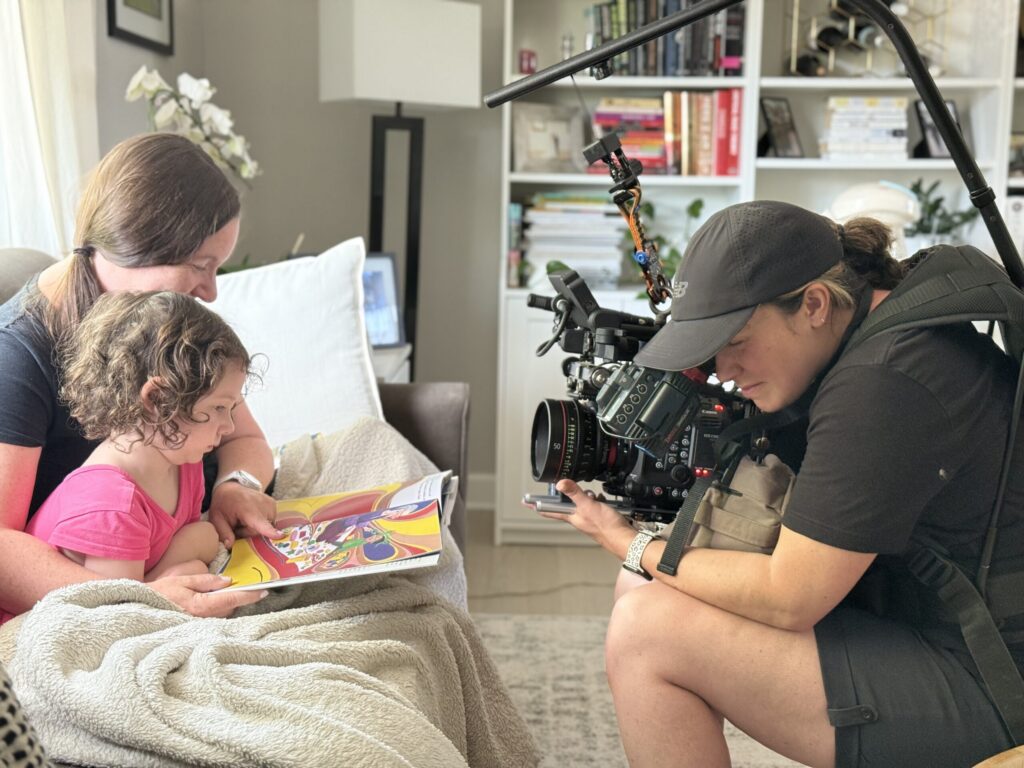
“Raising a family today, it’s terrifying,” said Elizabeth Milligan Cordova in Lifelines, a new short film about the fight in the U.S. for paid family and medical leave directed by Hannah Rosenzweig and Robin Honan.
Often considered by lawmakers to be a program too expensive to start, it’s the cost of inaction that lawmakers should be concerned with, according to Dawn Huckelbridge, executive producer of Lifelines and founding director of Paid Leave for All.

The United States is one of only seven countries lacking a federal mandate for paid maternal or family leave.
Within the country, only 13 states and D.C. have paid family and medical leave programs, acting as a lifeline for families.
Paid family leave is one of the most popular issues in the country: Recent polls show that 91 percent of voters support a national paid family and medical leave policy—making it more popular than the beach (which 72 percent of Americans say they like) and apple pie (82 percent). It’s hard to find this high level of support among anything these days.
It’s estimated that workers in states without a paid leave program lose roughly $34 billion in wages alone.
Meanwhile, every $1,000 spent on paid parental leave is estimated to generate anywhere from $7,275 to over $29,000 in net social benefits.
“We find money for the things that we want to, everyday in this country, right now in particular. I think it’s simply a matter of priorities, and there are a number of different ways it can be funded,” says Huckelbridge.
However it is funded in the long run, it is putting money back into the economy. It is saving jobs.
Dawn Huckelbridge, executive producer of Lifelines
In the U.S., where only one in four people have access to paid family leave from their jobs, a federal paid family and medical leave program that covers all working people would serve as a tool to support families, economic growth and public health.
“A lot of people miss their baby’s first smile. We often say that too many people are dying alone. They’re not there to hold their parent’s hand because they can’t get the time off work. So [federal paid leave] would transform this country in terms of health and happiness. It would make it a more equitable country. It would close pay gaps, all sorts of amazing things,” says Huckelbridge.
After the early birth of her daughter, Milligan Cordova received an additional 16 weeks of leave through Colorado’s state family leave program which took effect at the beginning of 2024.
“This early birth did not ultimately take away my time to bond with my baby at home, and now we just live these normal baby lives. She smiles and she laughs and I feed her in her rocking chair now that I used to be alone in. And I sometimes don’t even think about the NICU anymore,” said Cordova in Lifelines.
After Habibah Johnson and Rasheed Hafeez were forced to balance a new baby and a medical emergency in the family, Johnson said that without paid leave she would have had to leave her job.
“The hardest thing with a new baby was always feeling like there’s this clock that’s ticking down. Every week that went by there was another day checking off and checking off and checking off; and it felt like there’s a separation coming,” said Johnson.
Johnson, who lives in New Jersey, now serves as an advocate for paid leave. In 2019, the state passed a paid family leave law to guarantee 12 weeks of time off, six more weeks than Johnson received.
A lot of people miss their baby’s first smile. … They’re not there to hold their parent’s hand because they can’t get the time off work.
Huckelbridge
How Paid Leave for All Works
Paid family leave programs at the state level work by having taxpayers pay a small amount into a fund that is available when workers need it. It is not an unfunded mandate that forces employers to pay totally out of pocket. Instead, it creates a support system for businesses. The need to take lead is inevitable, this program simply makes it easier, Huckelbridge says.
Paid leave programs not only benefit individual lives and families, but the economy too. A national paid leave program would increase labor force participation and productivity. It would also result in less employee turnover and reduce poverty.
Funded through taxpayers, it’s not small businesses who would be paying the price, leveling the playing field for small business owners and entrepreneurs across the country who can’t necessarily pay for leaves for their employees out of pocket.
“However it is funded in the long run, it is putting money back into the economy. It is saving jobs. … We often say that the discussion of can we afford it is the wrong one. It’s the cost of inaction that we should be talking about,” says Huckelbridge.
“We have all the evidence in the world that it works. … What we need to do now is find the political will to finally make it happen.”