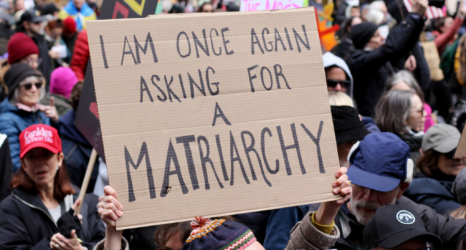
As abortion bans spread, democratic norms eroded and women’s rights came under renewed attack, feminists faced a familiar lesson: Progress is never permanent.

One of the most urgent lessons of the present moment is that democracy requires constant vigilance. Rights can be won, expanded and celebrated—but they can also be restricted, undermined or taken away. The years since 2020 have revealed both the fragility of democratic institutions and the enduring power of feminist organizing in the face of renewed threats.
This essay is part of Feminist Lessons, a series from Ms.’ FEMINIST 250 project exploring what each decade of modern feminist history can teach us about power, democracy, backlash and social change. Drawing on more than 50 years of reporting, organizing and activism, the series examines how feminists transformed American life—and what those victories and setbacks can teach us today.
“Who would have thought that today we need Ms. more than we ever needed it before?” Rep. Sheila Jackson Lee wrote in a letter included in the Summer 2022 issue. “Who would have believed that the 50th anniversary of Ms. would find us in a fight for our bodies, our lives, and our dignity?”
They say that those who never learn history are doomed to repeat it. These days, it feels like our history is more alive than ever.
Throughout the 2010s, abortion restrictions mounted nationwide, and in 2021, state legislatures enacted more laws limiting abortion access than ever before. The next year, the Supreme Court decision in Dobbs v. Jackson overturned Roe v. Wade. Abortion is currently banned outright in 13 states, and ranges from as early as six weeks into pregnancy up to or near viability in 28 more. This means that in over half the country, anyone who can become pregnant is a second-class citizen, with laws restricting only their freedoms.
The increasingly draconian and authoritarian goals of the anti-abortion movement have also put pregnant people at increasing risk of criminalization.
In the 15 years before Dobbs, at least 1,400 women were criminalized for pregnancy-related reasons; within the first two years of the decision, more than 400 women faced the same fate. These outcomes disproportionately impact poor women and women of color by design, just as laws governing bodies have for centuries.
It isn’t a coincidence that attacks on abortion and birth control are rising at the same time that widespread state violence against women of color and immigrants, growing rollbacks on LGBTQ+ rights and increasing impunity for men who commit gender-based violence are making headlines. “Government control over women’s bodies and, by extension, women,” Elizabeth Hira noted in the Winter 2022 issue of Ms., “has been … built into our very systems.”
Economically, women have also lost ground. Women across lines of race continue to live in poverty at higher rates than men, and the COVID-19 pandemic exacerbated the disparities. American women, disproportionately poor women and women of color, lost 5.4 million jobs in by 2021, and nearly 3 million left the workforce entirely.
In the Spring 2021 issue of Ms., a group of economists concluded that “the global economy is structured to favor men.” In the same issue, economists Rakeen Mabud and Lenore Palladino asserted that “women, especially Black women and Latinas, are trapped in an economy that is set up to extra their labor without paying them their due—all while also relying on them to solve the caregiving needs of their families on their own.”
Donald Trump’s reelection in 2024 only added to the squeeze. DOGE’s widespread federal layoffs pushed hundreds of thousands more women, including over 300,000 Black women out of the workforce, and the so-called Big, Beautiful Bill he rammed through Congress in 2025 slashed funding for Medicaid, Medicare, SNAP benefits, family planning—all to give tax cuts to the richest Americans in a move experts say is the largest single upward transfer of wealth in U.S. history. He has rolled back workplace protections, frozen family planning funds, attempted to limit access to gender-affirming care, halted trans-inclusive federal policies, attacked women’s and gender studies programs and efforts by companies to hire more women and men of color, and terrorized immigrant communities—all while protecting the men in the Epstein files.
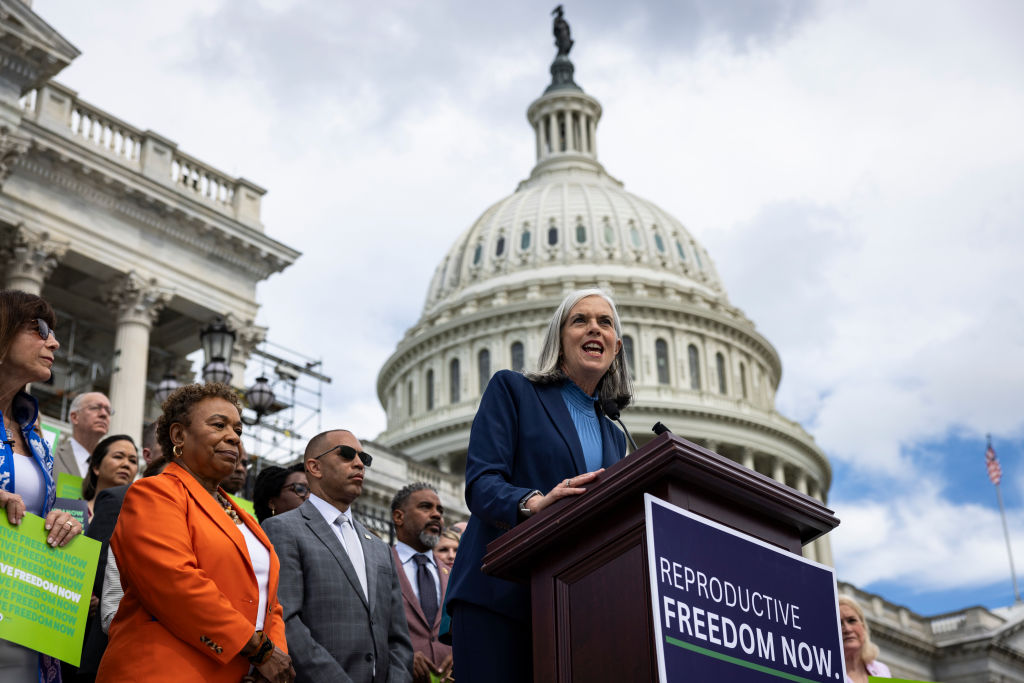
Yet women’s political power is growing. Just two weeks into 2020, Virginia became the 38th state to ratify the ERA—meaning that, nearly 50 years after it was originally sent to the states, the ERA had finally met the requirements by law to be added to the U.S. Constitution. It was a victory made possible by the changing face of political power in the U.S.: In the last three states to ratify, in the 2010s and 2020s, ratification efforts were driven by multiracial and intergenerational coalitions of women lawmakers and political leaders, many of whose elections marked historic firsts.
Today, there are 150 women in Congress, 14 in Governor’s mansion, and 2,488 serving in state legislatures—holding a record 33 percent of seats and, in a record seven states, forming majorities in legislative chambers. President Joe Biden made history in 2020 by appointing the first gender-balanced cabinet and nominating the trailblazing Ketanji Brown Jackson, the first Black woman justice, to the Supreme Court. During his term, Kamala Harris made history every day as the first woman and first woman of color Vice President.
In 2020, the gender gap reached a record 12 points, and 61 percent of all women voters in addition to four in ten men identified as feminists. In 2022, after Dobbs, 73 percent of women and 60 percent of men in nine battleground states agreed in a Ms. poll that the ERA was more urgently needed than ever in light of accelerating abortion bans. In 2024, Feminist Majority Foundation, Ms., and Lake Research Partners found that abortion rights and the ERA were top issues for voters.
“Women’s political power is essential to a properly functioning multiracial democracy,” political scientists Zoe Marks and Erica Chenoweth wrote in the Spring 2022 issue of Ms, emphasizing that “feminist candidates, women elected officials, and feminist policies are fundamental to the health and well-being of democracy.” But despite our gains, women are still far from political parity—and the U.S., in 2021, was designated a backsliding democracy.
That’s why, 250 years into our nation’s history, we still need an empowered feminist movement to realize the true vision of American democracy. After all, as Steinem wrote in Ms. in 1997: “Feminism isn’t called the longest revolution for nothing.”
The lesson of the 2020s is not that history repeats itself exactly. It is that every generation must decide whether it will defend, expand or surrender the rights and freedoms it inherits. The fight for gender equality has always been inseparable from the fight for democracy itself—and the future of both remains unwritten.
Feminist Lessons: Keep Reading the Series
At a moment when hard-won rights are being challenged, and fundamental questions about democracy, equality and freedom are once again at the center of American politics, there is much to learn from the recent past and modern women’s movement. Explore the rest of Feminist Lessons to see how feminists transformed American life in the 1970s, confronted organized backlash in the 1980s, emerged as a powerful political force in the 1990s, built a feminist majority in the 2000s, turned mass resistance into political power in the 2010s, and continue fighting for democracy in the 2020s. Together, these essays draw on more than 50 years of reporting, organizing and activism to recover the hard-won lessons of the modern women’s movement—and to illuminate the challenges and opportunities that lie ahead.