From family separation to barriers to prenatal care, immigration enforcement threatens the fundamental right to build and raise a family with safety and dignity.
“It’s hell.”
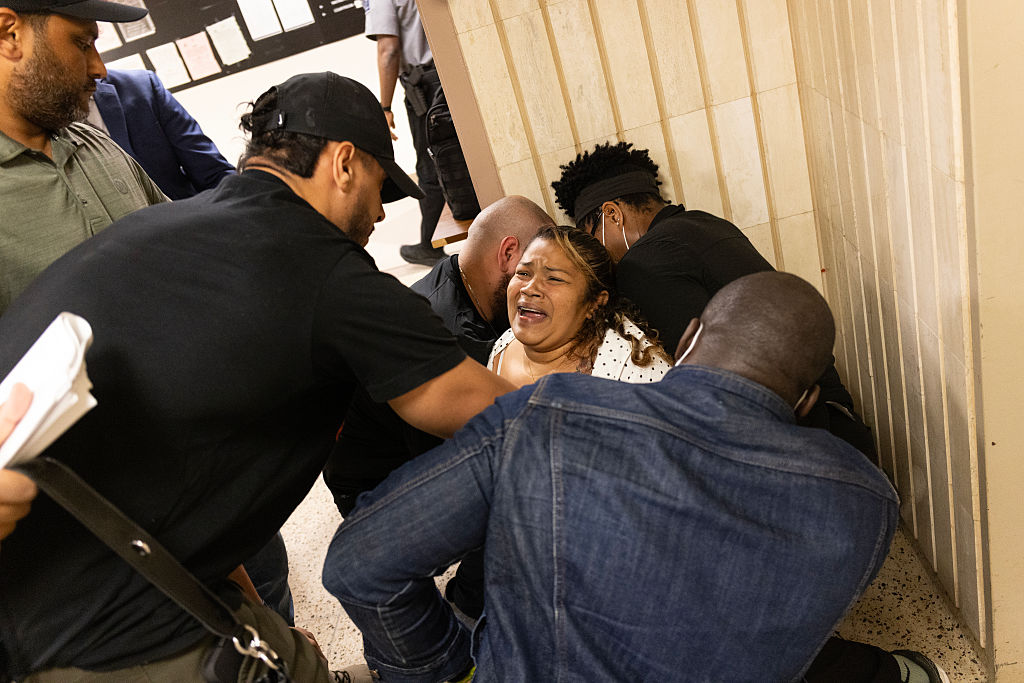
That’s how our colleague, Miri, described her months-long detention in the Rio Grande Valley, Texas, last year, separated from her husband and four children. Food was inedible, medications were inaccessible and women were forced to share beds and blankets due to overcrowding. She witnessed guards sexually assault women and conduct invasive strip searches. Pregnant and breastfeeding people were neglected: One new mother suffered from mastitis, while another woman in labor was ignored for hours before being taken to a hospital.
These horrors, perpetrated by immigration enforcement officers, are exactly what the federal government approved billions to fund this summer.
The violence continues every day. In the span of one week, ICE killed two fathers in Houston and in Maine. Nine people have died as a result of immigration enforcement operations and, as of last month, at least 52 people have died in ICE custody during this administration’s reign of terror.
The cruelty and violence is not limited to adults. This administration is deporting children at a rate three times higher than during Trump’s first term. It’s considering a proposed Department of Health and Human Services (HHS) rule that would use the Hyde Amendment to further restrict abortion access for unaccompanied children and pregnant youth. There are reports it is also pursuing policies to make it easier to rapidly deport unaccompanied children by transferring them en masse to states like Texas, all while eroding their legal protections and resources.
These harms extend far beyond detentions and deportations. Across the country, people are delaying reproductive healthcare out of fear. One in five pregnant women say ICE activity has stopped them from seeking prenatal care.
When fear dictates whether someone seeks healthcare, attends school or goes to work, that is not just an immigration issue—it’s a reproductive justice issue. Families cannot thrive when they have to choose between safety and basic needs.
Reproductive justice is often reduced to abortion rights. But the movement has always taken a broader view. Created by 12 Black women organizers, the reproductive justice framework is about the right to have—or to not have—children and the right to raise them in safe, healthy communities. Detentions, deportations and disruption of care are part of a broader effort to limit who can fully belong, safely build a family and have rights in the United States.
So who deserves safety and belonging in the U.S.?
This question is not new. Throughout U.S. history, communities of color have never been granted true safety and belonging. From the colonization of Indigenous lands and the violent displacement of Native communities, to the enslavement of Black people, to the internment of Asian American, Pacific Islander and Native Hawaiian (AANHPI) families and the detention of Latine and other communities of color by immigration officials, we have long been forced to live in fear. These injustices have contributed to a system that determines who belongs, whose labor is valued and whose families are protected.
These historic injustices continue to shape immigration policies today. Even after the Supreme Court rejected the executive order restricting birthright citizenship, Republicans are doubling down on targeting immigrant families. Their latest efforts seek to restrict pregnant travelers from entering the U.S. to preempt so-called anchor babies.

These attacks are too often treated as immigration issues alone. But that framing is too narrow. Targeting immigrant communities threatens the freedom at the heart of reproductive justice. Detention and deportation don’t just determine who can remain in this country—it shapes whether families can stay together and raise children safely and with dignity. That is why attacks on immigrant communities are reproductive justice issues.
The greatest consequences of these injustices fall on immigrants as well as women and gender-expansive people of color. AANHPI and Black communities—many of whom are refugees, mixed-status families, people with temporary protected status, visa holders and undocumented immigrants—are too often excluded from immigration conversations despite being deeply impacted. AANHPI, Black and Latino communities are all being targeted.
Attacks on immigrants harm us all, yet too many of our communities remain invisible in policy debates. It’s no surprise, then, that many women of color feel increasingly ignored by the leaders who claim to represent them. Recent polling from Intersections of Our Lives found that more than half of women of color believe politicians don’t care about them and nearly nine in 10 worry about affording basic needs. These concerns aren’t separate from reproductive justice. They’re central to it. When people cannot access healthcare, support their families, or trust that their rights will be protected, the freedom to determine their own futures becomes increasingly out of reach.
A nation cannot claim to champion family values while making it harder for families to stay together and it cannot celebrate opportunity while denying millions the security needed to pursue it.
Who should get to belong in our country and raise children free from fear? Our answer is simple: everyone. Everyone deserves the right to live with health, dignity and justice, regardless of who they are or where they come from.
The fight over immigration is a fight over the future of the United States itself. The question before us is whether we will continue narrowing the circle of belonging, or whether we will finally build a country where every family has the freedom and opportunity to thrive.
*
A note from Ms. editors: We want to hear from you for The Majority, a new campaign collecting stories about how reproductive freedom has enabled readers to build the lives they want and need.
Poll after poll shows a majority of Americans support reproductive healthcare access. Yet public debate overlooks the lives shaped by abortion access, contraception, IVF, miscarriage care, maternal healthcare or comprehensive sex education—countless women who chose to pursue an education, have children, not have children, protect their health and chart their own future. What’s your reproductive freedom story? Add your voice. Together, these stories will help show not only why reproductive freedom remains a majority value, but also what it makes possible.
Look to these trusted groups if you or a loved one needs to know more about reliable abortion care:
- A one-stop-shop for abortion seekers: I Need An A
- Other websites to explore all your options for abortion care: Plan C Pills, Abortion Finder
- Safe websites to buy abortion medication: Aid Access, Massachusetts Medication Abortion Access Project, Hey Jane
- If you need help affording abortion care, tell your telemedicine provider or contact an abortion fund near you.
- To protect your digital privacy when planning your abortion, click here.
- For free legal help as a patient or doctor, call If/When/How’s Repro Helpline—844-868-2812—or contact Pregnancy Justice.
- For medical advice, contact the Miscarriage & Abortion Hotline: 833-246-2632.
- If you need to know the abortion law in your state, look to the Center for Reproductive Rights. or Guttmacher Institute.