In her own unforgettable words, the pioneering feminist writer, poet and longtime Ms. editor reflects on power, progress, women’s leadership and the fight ahead.
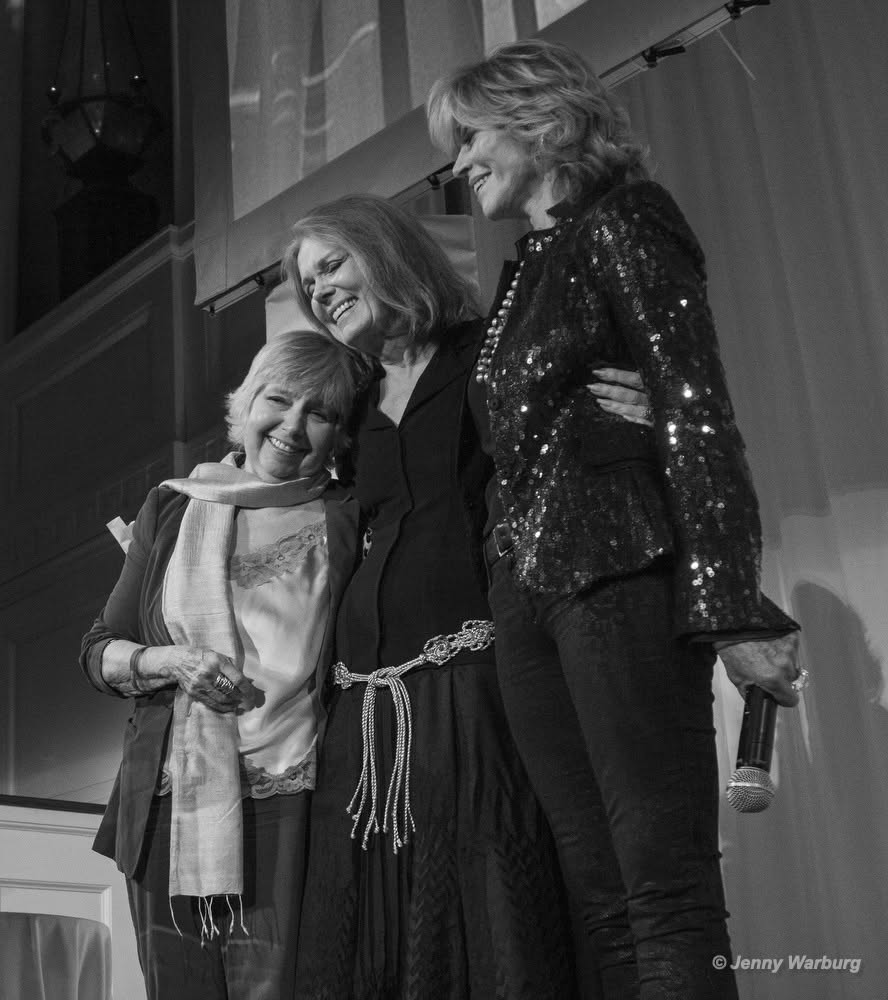
Robin Morgan’s death marks the loss of an extraordinary, brilliant and fierce human being—a pioneering feminist, writer, poet, journalist and activist, and one of the architects of the contemporary women’s movement. Coming just days after the death of her dear friend, fellow Ms. leader and Women’s Media Center co-founder Gloria Steinem, it compounds the grief of an already heartbreaking moment for the feminist community.
For more than half a century, Morgan helped shape feminist thought and activism in the United States and around the world. She also designed the now-iconic symbol of the women’s movement: the female symbol combined with a raised fist.

Morgan was the author and editor of more than 20 books, including the groundbreaking anthologies Sisterhood Is Powerful, Sisterhood Is Global and Sisterhood Is Forever—to which I was honored to contribute, co-writing the chapter “Cyberfeminism: Networking on the Net” with Amy Richards—as well as The Demon Lover, her memoir Saturday’s Child and Fighting Words.
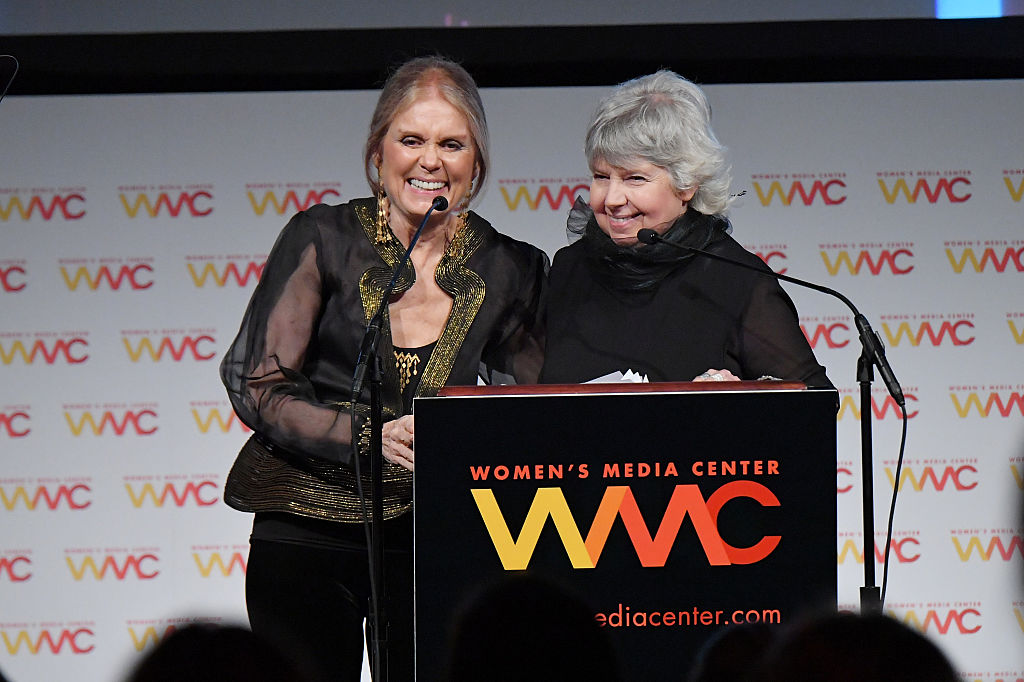
Robin served as editor in chief of Ms. magazine from 1989 to 1994 and subsequently as its global consulting editor. In 2005, she joined with Gloria Steinem and Jane Fonda to found Women’s Media Center, a “nonpartisan, nonprofit organization working to raise the visibility, viability and decision-making power of women and girls in media and, thereby, ensuring that their stories get told and their voices are heard.”

She was president and co-founder, with Simone de Beauvoir, of the first international feminist think tank, the Sisterhood Is Global Institute. With royalties from Sisterhood Is Powerful, she also established the Sisterhood Is Powerful Fund, the first feminist grant-making foundation in the United States, which provided seed grants to hundreds of early women’s groups.
Robin Morgan was also the longtime host and producer of the award-winning, nationally syndicated radio program and podcast Women’s Media Center Live with Robin Morgan, where her celebrated “Fighting Words” commentaries brought her distinctive voice and perspective to listeners around the world. Through her writing, poetry, organizing and journalism, she devoted her life to amplifying women’s voices and advancing equality and justice.
But for me, this loss is also deeply personal. Morgan was an important mentor who always generously offered encouragement, guidance and support for me and my work. I had the great privilege of interviewing her numerous times over the years, including on many occasions at the Women’s Media Center Awards. I had been involved with WMC since its inception, and Morgan also invited me onto WMC Live to discuss my book What Will It Take to Make a Woman President?, for which I had interviewed her.
One of the last times I saw Morgan was at Gloria Steinem’s home for a celebration of Morgan’s beautiful poetry collection Dark Matter—a memory that feels especially poignant now, as we mourn the loss, within days of each other, of two feminist icons who were also dear friends. I was always struck by Morgan’s formidable intellect, conviction, courage and clarity, but also by her warmth, generosity, irreverent wit and humanity.
In interviews conducted over many years—including for my 2013 book, What Will It Take to Make a Woman President?—Morgan shared so much wisdom with me about feminism, activism, power, politics, progress and creating change. Her words feel especially important to revisit now.
As we mourn the loss of another wise and luminous feminist leader, I want to share some of Morgan’s reflections, and some of what I learned from knowing her, so that her voice, her wisdom and her “fighting words” can continue to inspire us in the work ahead.

Without Women’s Voices in Media, We Don’t Have the Full Picture
Morgan was committed to increasing women’s representation in media and once told me that “the erasure, underrepresentation and misrepresentation of women” was “the greatest threat to democracy.”
As she put it, “The news is where we get our information, and if we are getting our information from only white men—when the vast majority of people on the planet are neither white nor male—there’s a problem here.”
Having more women in media and making sure women receive fair coverage is “absolutely central,” she said, “because if you don’t have a representative and fact-based and fair media, you don’t have a democracy. You just don’t. If women are not, like our [Women’s Media Center] motto says, ‘visible and powerful in media,’ you don’t have a view of reality. So if people don’t get the facts, how can they operate on the facts?”
At the Women’s Media Center, Morgan worked to put those principles into practice through research and reports tracking and analyzing gender inequity in media, original content channels, media training and advocacy, and initiatives such as Name It. Change It., which challenged sexist coverage of women candidates.
Fair and inclusive media was not simply an aspiration for Morgan; she believed it should be a basic right.
“There should be like a Media Consumers’ Bill of Rights,” she told me. “You have the right to accurate information. You have the right to be aware of where the reporting ends and the opinion begins. You have a right to inclusive information that doesn’t exclude news pieces or individuals, much less reporters, because they’re of a certain gender or a certain pigmentation or a certain sexual preference or a certain ability. These should be basic rights.”
For Morgan, whose life’s work was devoted to making women visible and powerful, representation in media was ultimately about something even larger: whose voices shape our culture and our understanding of reality.
Redefining What Power Looks Like
I had many conversations with Morgan—including for What Will It Take to Make a Woman President?: Conversations About Women, Leadership and Power—about why it was important to advance women’s leadership and how women often view and use power differently.
“There is a real difference in the way women practice power,” she told me. “Socialization, we know, raises women to take care of and be caregivers and, if anything, be afraid of power. They’re afraid of power the way it’s been defined by men: power over. When you position it as power to, they’re not afraid of power anymore.”

Morgan also pointed to real-world examples of the difference women’s leadership can make. Gro Harlem Brundtland’s second government in Norway included eight women among its 18 ministers—an unprecedented near-even split.
“In other words, not tokenism, but critical mass,” Morgan said. “Policies on everything from employment and child care and flextime and work hours to environmental policies to you name it—it just changed. It was absolutely enormous. And the same thing is happening in Rwanda now, because a majority of the Parliament are females. So that’s the kind of change, toward a much more humane politics—tactics and strategies that are less confrontational, less militaristic—the kind of thing I refer to as the human touch. How do we get rice in a bowl to this person now? As opposed to macropolitics, which only sees the big picture. I’m for seeing both. So there’s a very real difference.”
Morgan understood that these distinctions were not absolute and that not every woman would lead in the same way. But she believed that bringing women into power in meaningful numbers could help redefine both who holds power and how it is exercised.
Increasing Women’s Political Leadership
I also spoke with Morgan about how the United States could make that kind of progress—electing more women to political office and, ultimately, a woman president.
“We live in a patriarchal, sexist society, and that’s one of the biggest ceilings that we have yet to crack,” she said. “It’s the kind of post that when you don’t have it, it means an enormous amount. And once you do have it—once we have the first woman president—we will realize that everything has not immediately fallen into place and women are not immediately free, but we still have a ways to go. But it does have to start somewhere.”
One way to get more women represented in politics was to provide them with financial support, Morgan said.
“Women have more trouble raising money, so that’s one place where we’ve got to do a whole lot of work and where women have got to put their checkbook where their mouth is. And women of earned or inherited wealth, who are coming more on board, finding their own feminism, and then being able to turn their activism into funding support, it makes a huge difference. We’ve also got to encourage women to run at the local levels and then be there for them.”
Morgan also emphasized the importance of increasing the number of women in the pipeline to all positions of power.
“It’s hitting it on a number of fronts,” she said. “It’s getting more women in the pipeline, in every area, toward power. That’s in the pipeline toward power in the corporate world and changing the ethics there. It’s toward getting women more power in politics, in the entertainment industry, you name it. It’s important because we haven’t been able to get in the pipeline, so consequently, when they look around and say their classic ‘We can’t find any qualified women,’ we know the women are out there, but they’re not in the pipeline. So the pipeline is important and getting women to run is important, and then funding is really absolutely crucial.”
Morgan also stressed the importance of continuing to support women once they were elected—and of remaining politically engaged:
“Being there for the women politicians, if they act in a principled manner. Being there for them in a way that is really loud and clear. Not forgetting once they win. We need to be there for them as they take those stands into the policy realm. We need to get on their mailing lists. We need to tweet and email and call and fax and use whatever means of communication—carrier pigeon, if necessary—when they have bills up that we approve of. We need to become less apathetic and more involved in legislation, or else we’ll have legislation that will kill us.”
In Morgan’s view, representation required more than getting women elected. It meant building the pipeline, providing the resources to get women there and continuing to show up once they were in power.
The Work Matters—Even When Progress Feels Too Slow
Among the many qualities I admired in Morgan were her wit and humor, combined with optimism and a deep commitment to her work. When I asked whether she was optimistic, she answered, “Yes, but I permit myself pessimism on alternate Wednesdays for 15 minutes at a time. I’m psychotically depressed, and then time’s up!” she said with a laugh.
Then, on a more serious note, she added: “It’s guarded optimism, but I am feeling optimistic.”
Morgan was steadfast in her belief in the importance of the work, regardless of how challenging and discouraging it could be. Though she understandably had moments of frustration, she did not let backlash or the slow pace of progress deter her from continuing the fight to advance women’s rights, freedoms and opportunities.
“We’ve had backlash on an average of every two years since the late 1960s. Backlash comes with the territory. This is a clash between modernists and traditionalists,” she explained. “There are pros and cons on both sides. But women, and the perception of women, are absolutely crucial to both sides, because how women are dealt with in a modern context, or in a traditional context, matters. These things really matter, and they take a long time to sort themselves out, because we’re not just talking about gaining power; we’re talking about redefining it.”
Of the progress already made, Morgan said, “Measured celebration is in order—and continued vigilance.”
She once joked with me that, on days when she felt less optimistic, she would question why she had spent nearly 50 years doing this work when she could have been writing more books. But she told me she did not regret it.
“I don’t think it’s been wasted,” she said. “There’s a lot more to do, but I think we’ve made a very solid start and I don’t think it can ever be as effectively erased again.”
The world has changed since Morgan said those words, and some of the progress she believed could not be erased is now under profound threat. That makes the call to action she offered then feel even more urgent today:
“If you had to read it in a bubble over the heads of humanity, it would be saying, ‘We need all hands on deck now.’ Oh my, that even includes women.”
Robin Morgan spent a lifetime offering us her “fighting words”—challenging us to see more clearly, question what we had been taught, redefine power and refuse complacency. Now, as we mourn her loss, those words feel less like a remembrance and more like a charge: to keep showing up, keep speaking out and carry the work forward.
Rest in power, Robin Morgan.