Keeping Score: Supreme Court Blow to Voting Rights Will ‘Silence Our Voices’; Conservative Judges Try to Restrict Mifepristone; Moms Worry About Putting Food on the Table

In every issue of Ms., we track research on our progress in the fight for equality, catalogue can’t-miss quotes from feminist voices and keep tabs on the feminist movement’s many milestones. We’re Keeping Score online, too—in this biweekly roundup.

This week:
—The Supreme Court gutted the Voting Rights Act, slashing protections against racially discriminatory voting laws.
—A record high amount of books were censored from libraries in 2025, often due to LGBTQ characters or plotlines addressing racism.
—A third of moms living on low incomes have gone into debt or skipped meals so their kids could eat.
—Just 22 percent of American voters have significant confidence in the Supreme Court.
—In 2025 the number of abortions in the U.S. remained stable, but more patients in states with bans turned to telehealth services instead of traveling out of state.
—The Department of Justice announced plans to expand the use of the federal death penalty.
—An Epstein-Maxwell survivor, who asked to remain anonymous, laments, “I kept my identity protected as Jane Doe. I woke up one day with my name mentioned over 500 times. While the rich and powerful remain protected by redaction, my name was exposed to the world.”
—The Trump administration launched a Moms.gov site on Mother’s Day that refers pregnant people to unregulated crisis pregnancy centers.
—A Ms. piece on solitary confinement by Kwaneta Harris and her daughter Summer Knight won Kwaneta second place in the Collaboration category of the Stillwater Awards for prison journalism.
Liberation, a play about 1970s feminism by Bess Wohl, won the Pulitzer Prize for drama. It was also nominated for the Tony Award for Best Play. Wohl was inspired by her own life: Her mother, Lisa Cronin Wohl, was an early Ms. contributor.

… and more.

Banned From Talking About Third-Trimester Abortion Care at a Texas Medical School: The Ms. Q&A with Dr. Shelley Sella

Texas Tech University Health Sciences Center (TTUHSC) cancelled Dr. Shelley Sella’s scheduled campus talk in January about her recent book Beyond Limits: Stories of Third-Trimester Abortion Care, which she had been invited to give by the Texas Tech chapter of Medical Students for Choice (MSFC) in collaboration with MSFC’s Board of Directors. The administration told right-wing outlet Texas Scorecard that it decided hosting her was “not in the best interest of the university.” The decision to ban Sella from campus was made after days of coordinated activism by the Turning Point USA chapter at Texas Tech in conjunction with two antiabortion activists: Mark Lee Dickson and Jim Baxa. 

The cancellation of Sella’s talk was not “an anomaly,” as Jessica Valenti of Abortion, Every Day writes, but part and parcel of the “antiabortion snitch culture” on college campuses—”part of the broader conservative attack on academia that’s gained steam over the last few years.”

“And it’s not just impacting a few schools or professors,” Valenti continues. “Antiabortion groups are determined to eradicate any iota of pro-choice speech on college campuses. Now is the time for us to make as much noise as possible and not back off one single inch.”

Taking seriously Valenti’s call to “make noise” rather than retreat in the face of escalating efforts to suppress pro-abortion speech, Ms. sat down with both Sella and Claire Surkis, a medical student in Connecticut who serves on MSFC’s Board of Directors, to explore the impact and implications of the university’s actions.

When Reporting Becomes a Crime: Georgia Fort on Her Arrest, Press Freedom and Black Media Representation

The press release in Emmy-award winning journalist Georgia Fort’s inbox was vague, stating only that an event to honor Rev. Dr. Martin Luther King Jr’s memory would be taking place Jan. 18 and asking people to assemble at 10 a.m.

Fort joined protesters in a car caravan that ended up at Cities Church in St. Paul. The site, she learned, had been selected because one of the church’s pastors, Rev. David Easterwood, was rumored to be working as the acting head of a local office of Immigration and Customs Enforcement (ICE). Fort, with camera and mic in hand, recorded everything that was taking place and live-streamed the action as it was unfolding—a routine part of her work as an independent TV and radio journalist. 

On Jan. 30, she was arrested (along with seven others including former CNN reporter Don Lemon) and charged with “conspiracy to deprive the church’s congregants of the right to worship.”

She spoke to Ms. reporter Eleanor J. Bader in mid-April about her work as a multimedia reporter, mentor for Black and brown youth, and critic of the government’s “strategic attack” on press freedom.

“About two dozen federal agents, including personnel from the Drug Enforcement Agency, arrived around 6 a.m. and pounded on the door to my home. … They were really aggressive. … My 17-year-old has been having nightmares, and my 8-year-old cries every day.”

‘First They Came for My College’: The Takeover of a Florida College and the Students Who Refused to Disappear

When I told coworkers and friends I was going to see a documentary about the right-wing takeover of a small public Florida college, the reaction was immediate and unanimous: Why would you do that to yourself? Too depressing. I’d be too angry.

They weren’t wrong. Premiering at SXSW last month and directed by Patrick Bresnan, First They Came for My College is, at times, almost unbearable to watch—a slow, procedural dismantling of a public institution, carried out in meeting rooms and press conferences and budget lines.

But what stayed with me wasn’t only the anger—it was the stubborn, surprising insistence on community, joy and showing up anyway.

In Iran, Iraq and the U.S., Women Speak Out Against State Repression

Internationally acclaimed Iranian human rights attorney and women’s rights advocate Nasrin Sotoudeh has been arrested by the Iranian regime. Her whereabouts are currently unknown. Our hearts are with Sotoudeh and her family, including her husband Reza Khandan, who has been detained in Tehran’s notorious Evin Prison since December 2024 for supporting her work for women’s equality.

Meanwhile in Baghdad, an American freelance journalist has been kidnapped. Shelly Kittleson, who had built her freelance career reporting from the Middle East for years, is known among colleagues for her determined, on-the-ground reporting and willingness to go where others would not. On Tuesday, she was taken by two unknown men, after learning of threats to her safety from militias. 

Time and time again, it is women who speak out in the face of state repression—whether they are doing so as journalists speaking truth to power, lawyers fighting for the rights of the oppressed, or everyday women taking to the streets in defiance of regimes that seek to strip them of their autonomy and human rights.

I Want to Be Obsolete. Instead, I’m Afraid to Teach.

I want to be obsolete. I want to walk into a classroom full of students excited to learn feminist histories and begin by marveling at how far we’ve come—how unthinkable it now feels that a president once demeaned women, faced dozens of credible accusations of sexual violence, and still rose to the highest office in the country. I want that version of this story to feel distant, resolved, finished.

Instead, I walk into my gender, women and sexuality studies classes scanning for signs of hostility—wondering who might be recording, who might be there to report me, who might see my teaching not as scholarship but as something to punish.

Teaching about marginalized communities, especially through a feminist, anti-racist lens, now carries real risk: of being surveilled, doxxed, harassed or silenced. Books are banned, curricula are targeted, and the very act of naming systems of power is treated as a threat.

And yet, I keep teaching. I keep showing students that what they are experiencing is not individual failure but the result of structural forces—and that those forces can be challenged. I tell them their voices matter, their rage is justified, and their histories deserve to be known.

I would rather be obsolete. But as long as these attacks persist, our work is far from done.

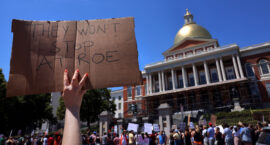
Furious, Fearless and Defiant: Our Favorite Protest Signs From No Kings 3.0

On Saturday, March 28, 2026, millions showed up for the latest wave of No Kings protests, drawing an estimated 8 million people across more than 3,300 events worldwide.

The flagship event was held in Minneapolis-St. Paul, the site of a controversial immigration enforcement surge resulting in the deaths of two residents, Renée Nicole Macklin Good and Alex Pretti, at the hands of federal agents.

Kathy Spillar on ‘Velshi’: A Warning About the Right’s Agenda for Women

This weekend on Velshi with MS NOW (formerly MSNBC) anchor Ali Velshi, Kathy Spillar—executive editor of Ms. and executive director of the Feminist Majority Foundation (publisher of Ms.)—joined to discuss a sweeping new policy blueprint from the Heritage Foundation that lays out a vision for reshaping American family life and rolling back women’s independence.’

Velshi summarized the underlying logic of the proposal starkly: “You cut off opportunities outside the home. You make the public sphere hostile to women’s independence. You create a system where the only viable path left for women is dependence on a man for survival. In other words, you drag the country back to a time when women had fewer choices.

“Women today have opportunities their grandmothers could only dream of. From the perspective of the new right, that’s the crisis.”

Spillar said the report spells out a broader political strategy. “They are determined to use whatever levers of power they have under the Trump administration—to change tax laws, to provide incentives for women to have more children, to get married younger and to stay married, even in bad relationships,” and added the proposed policies primarily target heterosexual, middle- and upper-income families.

“This is the game plan of an authoritarian regime,” she said. “It’s designed to support an authoritarian government that has control over its women—and therefore over its men as well, making men more compliant because they now have larger families who depend on them economically.”

Look for Ms. Magazine at Hudson News This Women’s History Month

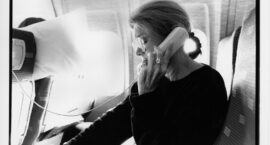
Traveling this month? Keep your eyes peeled. For Women’s History Month, Ms. magazine is hitting the shelves at Hudson News airport bookstores across the country.

If you spot Ms. at Hudson News, snap a photo and tag @msmagazine on social media—we’d love to see it. Consider grabbing a copy for your flight; every purchase helps sustain our feminist journalism.

Oscar-Nominated Documentary ‘The Devil Is Busy’ Shows What It Takes to Keep an Abortion Clinic Safe

Tracii’s day begins early—before dawn. She arrives at work, turns on the lights and thoroughly searches the building for intruders. Then she checks outside, where it’s still dark, making sure no one is hiding in the woods or behind a dumpster.

Tracii is the head of security at an abortion clinic in Atlanta, and is also the subject of the Oscar-nominated documentary short, The Devil Is Busy. Directed by Christalyn Hampton and Geeta Gandbhir, the film follows Tracii over the course of a long, stressful day at the clinic, as she works tirelessly to ensure not just the safety but the comfort of the women seeking care. (Neither her last name, nor the name of the clinic, gets mentioned in the film.)

Available to stream on HBO Max, The Devil Is Busy is a compelling portrait of a deeply compassionate woman on the frontlines of the abortion war. It packs a lot into 31 minutes, exploring not just the precarious status of abortion care post-Roe v. Wade, but also the fraught intersection of race, religion and women’s health.

The film arrives just as advocates mark Abortion Provider Appreciation Day, observed each year on March 10. The date honors Dr. David Gunn, an abortion provider murdered by a white supremacist anti-abortion extremist in 1993. Since 1996, supporters have used the day to recognize the courage and compassion of abortion providers—people like Tracii—whose work continues despite harassment, threats and political attacks.