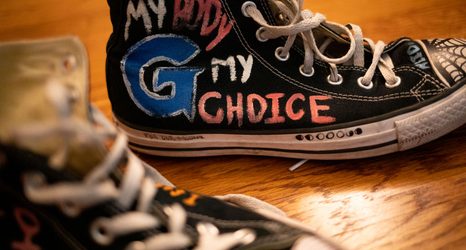


With nearly 130 heads of state and government arriving for the U.N. General Assembly’s high-level week, advocates are urging governments to turn promises of global cooperation into protections for Afghan women and girls.
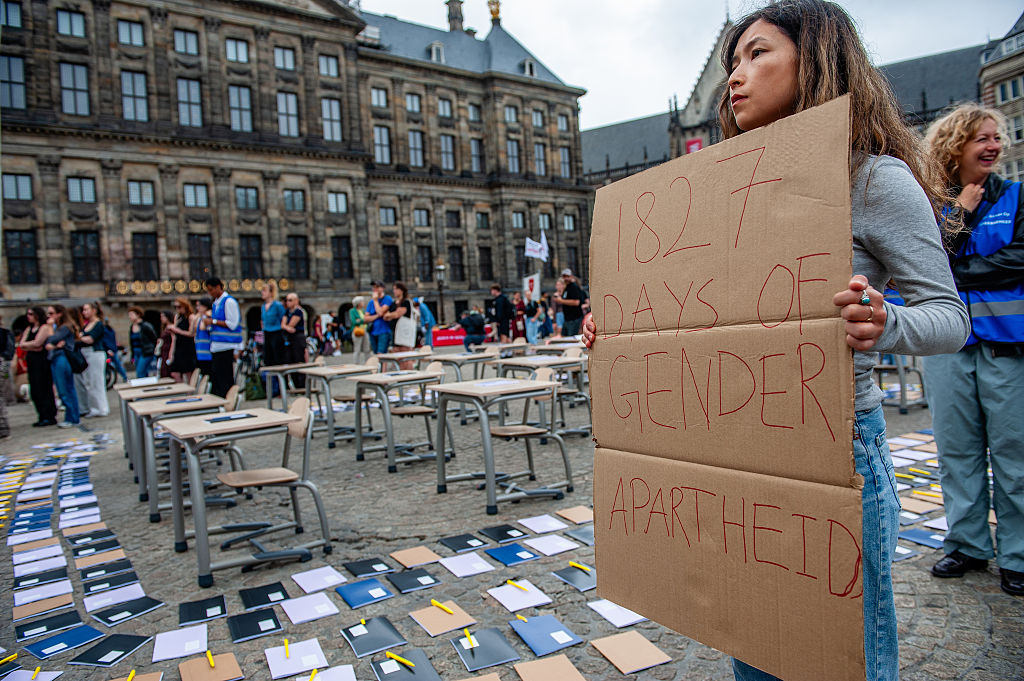
Nearly 130 heads of state and government are expected to attend the United Nations General Assembly’s high-level week in New York. From Sept. 22 to 28, world leaders will gather for the General Debate of the 81st session under the theme, “Restoring trust, managing transformation: a United Nations that delivers for all.”
For Afghan women and girls living under the Taliban’s systematic oppression, whether the United Nations can deliver is not an abstract question. It requires the international community to recognize gender apartheid for what it is: a crime against humanity.
Feminist Majority Foundation (FMF) and other feminist civil society leaders and activists are engaged in the historic process of U.N. negotiations for a crimes against humanity treaty, which would provide a formal mechanism for recognizing, codifying and holding perpetrators accountable for atrocities that have fallen through the gaps of existing international law for decades.
Crucially, the negotiations provide a window for feminists to ensure that all forms of gender-based persecution are defined, recognized and punished for what they are: global atrocities and systematic violence permeating all levels of society.
On July 28, the U.N. released an updated version of the draft articles that includes amendments and additions aimed at ensuring gender apartheid is recognized throughout the text.

On June 4, Australia, Afghanistan’s U.N. mission, Iceland, Mexico, Timor-Leste, Uruguay and Spain agreed to include gender apartheid in their amendments; the draft released in July reflects these commitments in writing. These seven states join Austria, Portugal, Malta, the Philippines, Chile, Brazil and Luxembourg in supporting the global fight for the rights and dignity of Afghan women and girls living under the oppressive Taliban regime.
Several states also proposed additions and amendments recognizing forced marriage as its own category: Canada, the Netherlands, Sierra Leone, Germany, Belgium, Colombia, the United Kingdom, Andorra, Cyprus, Ukraine and Poland, along with states proposing the inclusion of gender apartheid. This same group of states, as well as the Nordic countries, proposed expanding the definition of sexual violence to cover specific forms of reproductive violence, including forced sterilization and forced birth.
The support for recognizing forced marriage and reproductive violence, while stopping short of naming “gender apartheid,” presents an opportunity for feminist organizations to continue advocating for the full breadth of gender-based oppression to be recognized by the United Nations.
The General Debate will not determine the final language of the treaty. But as world leaders speak about restoring trust and building a United Nations that delivers for all, they have an opportunity to demonstrate publicly what those promises mean for women and girls whose most basic freedoms have been stripped away.
FMF—the publisher of Ms.—calls on these states to embrace this fight to the fullest extent. The totality of Afghan women’s and girls’ oppression must be unequivocally condemned by the international community in all its forms.
FMF will continue to push for full recognition of gender apartheid as the U.N. undertakes the long process of creating a new legal instrument for identifying and punishing crimes against humanity. FMF’s advocacy draws from the voices and leadership of women and girls in Afghanistan, and echoes their calls for the international community to refuse to recognize or normalize the Taliban.
Countries that have demonstrated solidarity and leadership in this urgent fight are setting an important example. With nearly 130 heads of state and government gathered at the United Nations, this is a critical moment to engage more partners, build on that momentum and advance a Crimes Against Humanity Convention that recognizes gender apartheid and accurately reflects the experiences and lives of women and girls in Afghanistan.
If the United Nations intends to restore trust and deliver for all, it cannot leave Afghan women and girls outside the meaning of “all.”
Adapted from a piece originally published by the Feminist Majority Foundation (publisher of Ms.) on Sept. 3, 2026, “Support Is Growing in the Push to Recognize Gender Apartheid as a Crime Against Humanity.”
*
A note from Ms. editors: We want to hear from you for The Majority, a new campaign collecting stories about how reproductive freedom has enabled readers to build the lives they want and need.
Poll after poll shows a majority of Americans support reproductive healthcare access. Yet public debate overlooks the lives shaped by abortion access, contraception, IVF, miscarriage care, maternal healthcare or comprehensive sex education—countless women who chose to pursue an education, have children, not have children, protect their health and chart their own future. What’s your reproductive freedom story? Add your voice. Together, these stories will help show not only why reproductive freedom remains a majority value, but also what it makes possible.