Taliban’s New Penal Code Codifies Violence, Obedience and Gender Apartheid

On Jan. 7, Taliban leader Hibatullah Akhundzada signed off on the “Penal Principles of Taliban Courts,” a sweeping new penal code that fundamentally reshapes Afghanistan’s legal system: formalizing violence, criminalizing dissent, legalizing slavery and stripping women of legal personhood under the guise of religious law. It took effect immediately without public announcement or consultation. 

The regulation only became public weeks later after an Afghan human rights organization, Rawadari, published the text, raising alarm over provisions that legalize slavery, authorize private violence and institutionalize repression across nearly every aspect of life.

According to the regulation, absolute obedience to the Taliban’s supreme leader is mandatory. The penal code also codifies a rigid social hierarchy, dividing society into four classes and explicitly recognizing individuals as either “free” or “enslaved,” with harsher punishments imposed on those deemed lower status. Human rights advocates warn this structure institutionalizes discrimination and revives concepts long prohibited under international law.

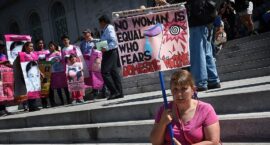
Women are among the most severely targeted. Under multiple iniquitous provisions, husbands are authorized to punish their wives through discretionary violence, while domestic abuse is only recognized as a crime in limited circumstances and carries a maximum sentence of 15 days imprisonment for the perpetrator. 

In contrast, forcing animals to fight carries a longer prison sentence than severe violence against women—reinforcing a sinister legal hierarchy in which women’s lives are afforded less protection than animal welfare. 

These codes are not merely domestic policies. They will shape the psychological, social and moral landscape of an entire population and a new generation growing up under the Taliban’s brutal regime. Children are being raised under a system where violence is law, obedience is survival and women are denied humanity. The cost of inaction will not be measured only in today’s abuses, but in the long-term destabilization of Afghan society and the normalization of extremist governance beyond its borders.

When Is the Next No Kings Protest? And How to Find a Demonstration Near You

On Saturday, March 28, the third round of No Kings will take place in cities and towns across the United States. The protest comes in response to the Trump administration’s recent crackdowns on immigration and Immigration and Customs Enforcement (ICE)’s systemic violations of proper law enforcement procedures. The organizers are optimistic that millions of Americans will take part in demonstrations, marches and rallies, and predict it will be the largest nonviolent protest in American history. 

To find a protest close to you, No Kings has created a map to locate a nearby protest site.

The protest’s flagship event will be hosted in Minneapolis and Saint Paul, Minnesota’s Twin Cities.

Keeping Score: 137 Women Are Killed by Partners or Family Per Day; Bipartisan Push for Epstein Files; Trans Day of Remembrance and Native Women’s Equal Pay Day

In every issue of Ms., we track research on our progress in the fight for equality, catalogue can’t-miss quotes from feminist voices and keep tabs on the feminist movement’s many milestones. We’re Keeping Score online, too—in this biweekly roundup.

This week:
—137 women and girls are killed by intimate partners or family members every day.
—Congress votes overhwlemingly to force the Justice Department to release their Epstein files.
—Donald Trump snaps at women journalists: “Quiet, piggy” and “you are an obnoxious—a terrible, actually a terrible reporter.”
—Violence against trans women remains high.
—DACA recipients are being targeted and detained under the Trump administration.
—Higher-income college students often receive more financial support than they need, while low-income students struggle.
—Tierra Walker died from preeclampsia in Texas after being repeatedly denied an abortion.
—Viola Ford Fletcher died at age 111. She was the oldest living survivor of the 1921 Tulsa Race Massacre. 
—North Dakota’s total abortion ban was reinstated after the state’s Supreme Court reversed a temporary injunction from a lower court. There are now 13 states with total bans.

… and more.

The Ms. Q&A With Democracy Defenders Norm Eisen, Skye Perryman and Jennifer Rubin

In the middle of an accelerating democratic crisis, and a year defined by sweeping attacks on women’s rights, the Feminist Majority Foundation, publisher of Ms. magazine, gathered in Los Angeles to honor some of the most formidable leaders on the front lines of resistance. At the Nov. 18 Global Women’s Rights Awards, journalists, lawyers, artists, organizers, litigators, community activists and movement strategists came together to celebrate what I call the “essential trifecta” for defeating authoritarianism: the law, the press and culture.

We recognized The Contrarian’s Jennifer Rubin and Norm Eisen for building an independent media platform willing to call out authoritarianism plainly; Democracy Forward president and CEO Skye Perryman for her organization’s record-breaking wave of legal challenges against the Trump administration; and the creative team behind the Broadway hit Liberation—playwright Bess Wohl, director Whitney White, and former Ms. writer and editor Lisa Cronin Wohl—for reminding audiences that storytelling is itself a democratic act.

“The number one tool that autocratic actors use to try to consolidate power and take away power from the people, is to convince people that they have no power,” said Perryman. “Their toolbox is one of isolation. They want you to feel alone.”

“I grew up miles from here, family hamburger stand,” said Eisen, “and now to be here, to have this opportunity with my colleagues to fight for this democracy that took my country, and my parents. … When my mother was living, she loved to say the Nazis took us out of Czechoslovakia on cattle cars, and my son flew back on Air Force One. So, how can I not be hopeful?”

The Resistance Is Everywhere

These past 10 months have been tough. Every day a fresh outrage, more trampling of the Constitution and a new attack on common decency. Taking a page from Hollywood, Trump and his administration seem to have embraced a strategy of “everything, everywhere all at once.” 

But, unfortunately for them: The resistance has also been everywhere all at once, too.

There is no doubt that when historians look back on this sordid moment in history, they will conclude that it was women, and feminists, who led the way out of it.

Feminists vs. Authoritarians: Honoring Leaders Holding the Line

Greetings from Los Angeles—on the heels of a very special evening to celebrate the heart and soul of the democracy movement. On Tuesday night, Ms. paid tribute at the Global Women’s Rights Awards to bold leaders operating at the intersection of media, the law and storytelling—recognizing these as the essential trifecta for toppling authoritarianism. And, importantly, for fueling a feminist future.

‘Liberation’ Opens on Broadway—And Ms. Magazine Is at Its Heart

The feminist revolution has taken center stage. Liberation, written by Bess Wohl and directed by Whitney White, officially opened on Broadway on Oct. 28, 2025, at the James Earl Jones Theatre, following a critically acclaimed Off-Broadway run earlier this year.

In an interview with Vogue, Wohl said she was inspired by her mother’s work as an editor at Ms.: “The arc of history is so much longer than we realize. Already in 1970 women were feeling frustrated, like, ‘When is this gonna happen?’ … And I think that that urgency really powers so much of the story of the play.”

Twenty-Five Years of Mifepristone: How Activists Brought the Abortion Pill to America and Changed Reproductive Health Forever

At the urging of antiabortion advocates and politicians, and based on a flawed and biased report put out by an antiabortion group, the Trump administration announced the launch of a new review of mifepristone—despite 100 peer-reviewed scientific studies proving the safety and efficacy of these medications and safe use by over 7.5 million U.S. women.

On the 25th anniversary of FDA approval of mifepristone, reproductive rights supporters are celebrating the creative, determined and courageous advocates who brought this medication to market.

One organization that played a critical role in bringing mifepristone, known as RU-486, to the United States was the Feminist Majority Foundation (FMF)—today the publisher of Ms.

U.S.-Funded Contraceptives Meant for Crisis Zones Are Headed for the Furnace—Unless Congress Acts

Nearly $10 million worth of U.S.-funded contraceptives—purchased to support women in some of the most desperate places on Earth—are currently sitting in a Belgian warehouse, slated for destruction. The supplies include long-acting contraceptives such as implants and IUDs, as well as birth control pills, many of which remain sealed, viable and do not expire until 2031.

According to advocates, there are qualified organizations—including the United Nations Population Fund (UNFPA) and MSI Reproductive Choices—prepared to accept and distribute the supplies at no additional cost to the U.S. government. But Secretary of State Marco Rubio, appointed earlier this year, has not authorized their release.

In response, Sens. Jeanne Shaheen (D-N.H.) and Brian Schatz (D-Hawaii) have introduced legislation to stop the destruction. The Saving Lives and Taxpayer Dollars Act would require the contraceptives to be released for their intended humanitarian use and prohibit incineration of still-viable medical supplies.

Advocates are urging members of the public to call or email their senators and representatives to demand they pressure the State Department to release the contraceptives, not destroy them.

‘The Feminist Agenda Is Wildly Popular’: Celinda Lake on the Political Power of Feminist Voters

Pollster and leading Democratic strategist Celinda Lake has been examining the data on women and feminist voters for decades. I talked to her about what Americans really want. (Spoiler alert: It’s not Project 2025.)

“People think that feminism is a dirty word. In fact, it’s a very strong word. Particularly for progressives and Democrats—feminism is highly correlated with voting for Democrats. Half of Independents consider themselves feminists; when you describe it, a third of Republicans and 83 percent of Democrats do. Our voters consider themselves feminists. It is a very quiet movement out there that is really underestimated. …

“Feminist issues, however we define them, are doing quite well. What we don’t have is we don’t have enough of them out front. We don’t have enough leaders taking them on.”