Jackson Katz’s new book argues that ending gender-based violence requires confronting everyday complicity, and calls on men everywhere to step up as part of the solution.

The following is excerpted from Jackson Katz‘s Every Man: Why Violence Against Women Is a Men’s Issue, and How You Can Make a Difference (Bloomsbury Publishing), out March 19.
In 2024, a mass rape scandal rocked France and reverberated around the world. Fifty men in a small town in the southern part of the country were convicted of raping Gisèle Pelicot, a woman who had been secretly drugged by her husband and set up to be assaulted. The husband’s name is Dominique Pelicot, and until police discovered evidence of the rapes—which took place over a 10-year period—his family had described the 70-year-old as a loving spouse, father and grandfather.
The shining light of this horrific case was the courage and dignity of Gisèle Pelicot, who became an international feminist icon when she insisted on being present and highly visible throughout the spectacle of the trial. She made it clear that she wanted to appear in the courtroom to stand up for survivors and send an unmistakable message: “Shame must change sides.”
But this epochal story had another major angle: the 50 men. It wasn’t enough to blame the despicable crime on the monstrous deeds of Dominique Pelicot. What about all those men? Were all of them monsters, too? A brief glance at their bios revealed most of them to be otherwise ordinary men, ranging in age from 26 to 74. Many were married and had kids. They were blue- and white-collar workers: a restaurant manager, nurse, computer technician, prison guard, firefighter, journalist, soldier.
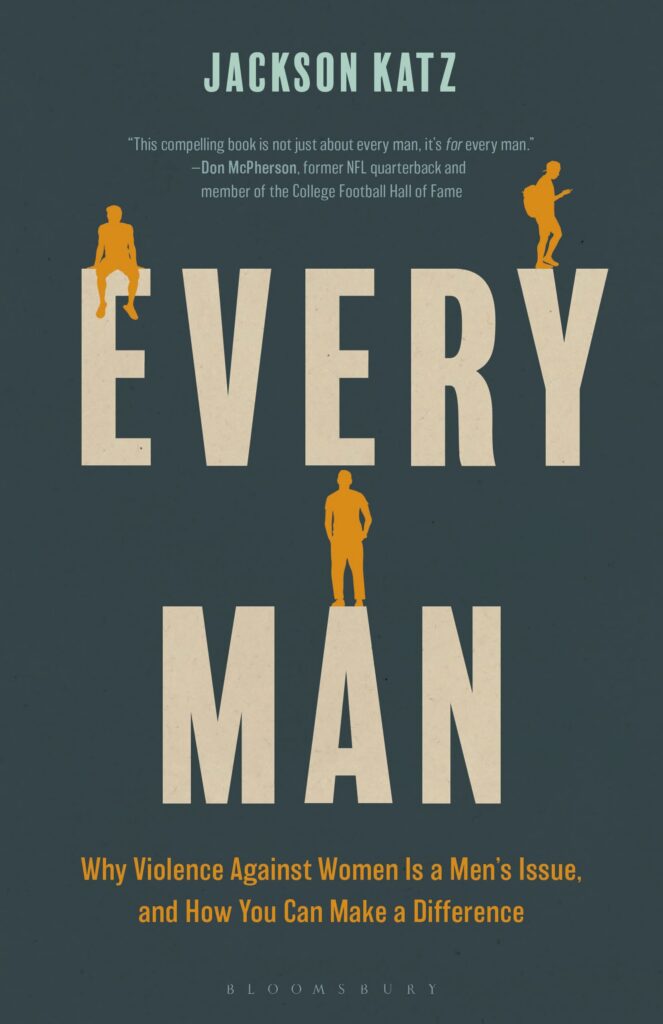
The seemingly unremarkable life histories of the convicted rapists led to an evocative nickname the case acquired in French media reports: Monsieur Tout-le-monde. Mr. Everyman.
Just to be clear: I didn’t name this book after that infamous case. I came up with the title years earlier. But it’s not exactly a coincidence, either, because the reason why “Mr. Everyman” stuck in that French tragedy, and why it’s the title of a book that offers practical solutions to the ongoing crisis of men’s violence against women, are directly related. In each case, the concept of “every man” suggests there is growing recognition among the broader public that this enormous problem has deeper societal roots, and is not primarily about the deviant behavior of pathological individuals.

But my use of the term “Every Man” differs from its use in the French case for one fundamental reason: This book is less of an indictment than it is an explicit call to action.
I have long believed that every man can—and should—be part of the solution to gender-based violence. I’ve been beating that drum from the time I was a college student in the early 1980s, right up to the present. It’s one of the central premises of my work as an educator, writer and speaker, and it’s informed the pioneering prevention programs I’ve created and run in educational institutions, sports culture, the military, law enforcement, and companies large and small.
Men from every walk of life have a critical role to play on this issue. But first we have to break through some of the layers of denial and resistance that have impeded progress for far too long.