Women Make Our Movements Powerful. They Shouldn’t Have to Suffer in Silence.

New York Times investigation released this week broke news of shocking sexual abuse allegations against labor leader César Chávez—from two women who were young teenagers at the time, and from Dolores Huerta, our long-time Ms. advisor, Feminist Majority Foundation (publisher of Ms.) board member, friend, and feminist and labor icon who co-founded the United Farm Workers with Chávez.

In fighting the culture that makes these actions not only possible, but permissible—and that encourages women like Huerta to remain silent for over 60 years—we must consider the role of men.

Men, argues Ms. contributor Jackson Katz, are essential to shifting the narrative. In describing the case of Gisèle Pelicot, a woman who had been secretly drugged by her husband and set up to be raped by dozens of men over a 10-year period, Katz mentions the evocative nickname the case acquired in French media reports: Monsieur Tout-le-monde. Mr. Everyman. 

If the 50 men who assaulted Pelicot were just “ordinary men” (“many were married and had kids. They were blue- and white-collar workers: a restaurant manager, nurse, computer technician, prison guard, firefighter, journalist, soldier,” Katz writes), then consequently, every man has a role to play in dismantling systemic violence against women.

Every Man Has a Critical Role to Play in Ending Violence Against Women

(An excerpt from Jackson Katz’s Every Man: Why Violence Against Women Is a Men’s Issue, and How You Can Make a Difference, out March 19 from Bloomsbury Publishing.)

In 2024, a mass rape scandal rocked France and reverberated around the world. Fifty men in a small town in the southern part of the country were convicted of raping Gisèle Pelicot, a woman who had been secretly drugged by her husband and set up to be assaulted. The shining light of this horrific case was the courage and dignity of Gisèle, who became an international feminist icon when she insisted on being present and highly visible throughout the spectacle of the trial. She made it clear that she wanted to appear in the courtroom to stand up for survivors and send an unmistakable message: “Shame must change sides.”

But this epochal story had another major angle: the 50 men. A brief glance at their bios revealed most of them to be otherwise ordinary men.

The concept of “every man” suggests there is growing recognition among the broader public that this enormous problem has deeper societal roots, and is not primarily about the deviant behavior of pathological individuals.”

Men from every walk of life have a critical role to play on this issue. But first we have to break through some of the layers of denial and resistance that have impeded progress for far too long.

From ‘Every Man’ to the ‘Epstein Class’: Misogyny in Male Peer Culture Cuts Across Class Lines

The rich men surrounding Jeffrey Epstein, and the working and middle-class men who were lured into Dominique Pelicot’s twisted fantasy, navigate the social world from very different sides of the class chasm.

But they share something in common, too: They’re all men who were socialized into a misogynous culture that dehumanizes women, turns them into sexual commodities and licenses men to mistreat them.

Misogynous exploitation is not rooted primarily in plutocratic privilege. The sense of unquestioned entitlement to women’s bodies that many observers have noted about “Epstein class” men is hardly confined to the wealthy.

Sundance 2026: Documentary ‘Silenced’ Exposes How Defamation Suits Muzzle Survivors and Journalists

Featuring the cases of Amber Heard, Gisèle Pelicot, Brittany Higgins, Colombian journalists at Volcánicas and others, Silenced traces a global pattern of defamation suits used to punish survivors and the reporters who amplify their stories.

It’s a fitting but frustrating coda that Silenced itself faced legal threats right after its festival premiere.

(This is one in a series of film reviews from the 2026 Sundance Film Festival, focused on films by women, trans or nonbinary directors that tell compelling stories about the lives of women and girls.)

‘No More Shame!’ The Transformative Lesson of Gisèle Pelicot, the French Survivor of Mass Rape

A phone call one autumn morning from local police requesting that Dominique Pelicot, then 67, husband to Gisèle, also 67, report to the local station interrupted their daily routine. A surprised Gisèle listened as her husband told her not to worry: “It won’t be pleasant, but by noon we will be home,” he said. But the next time she saw him was at his trial.

Like many countries, France has a protective privacy act guaranteeing anonymity for crime victims. Gisèle’s lawyers warned what would happen in a public trial—the intense media attention that would surely follow every development in the case, the probable attacks on her testimony in court and possible threats to her life. Undaunted, Gisèle chose to waive her right to anonymity.

“When you’re raped, there is shame, and it’s not for us to have shame,” she told the court. “It’s for them.”

Her insistence that her trial be public surprised both her lawyers and the presiding judge—and transformed Gisèle into a feminist hero and icon.

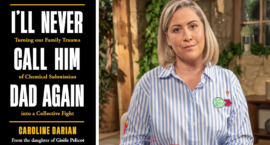
‘I’ll Never Call Him Dad Again’: From the Daughter of Gisèle Pelicot, a New Memoir on Surviving Private Rape and a Public Rape Trial

Caroline Darian is Gisèle Pelicot’s daughter. Throughout the highly publicized trial in France, which ignited a global conversation about sexual assault and submission, Darian was a forceful advocate for her mother and for the rights of sexual assault survivors the world over.

An excerpt from I’ll Never Call Him Dad Again, Darian’s new memoir: “Our family has been torn in two. … I’ve heard nothing from Mum since Christmas. I miss her. I decide to give her a call. When I hear her voice, I start crying. She soon follows suit. Tears have become our default language, because what we’re going through is beyond words. Eventually, I manage to express myself: I want to be with her, to stand by her. We talk for the next two hours. At the end, we promise each other we’ll stick together from now on. And that neither will sit in judgement of the other.”

And the Oscar for Best Documentary Should Go to … ‘Black Box Diaries’

Black Box Diaries is a powerful, Oscar-nominated documentary that follows journalist and survivor Shiori Ito’s fight for justice after being raped by a powerful media figure in Japan. Using cinéma vérité techniques, surreptitious audio recordings and intimate self-documentation, Ito exposes the systemic failures that silenced her while capturing the emotional toll of her struggle.

The film highlights the global reach of the #MeToo movement and the stark realities of patriarchal impunity, culminating in a historic victory: the 2023 inclusion of consent in Japan’s rape law.

Keeping Score: Senators Grill Hegseth, Call Trump Pick Unfit to Lead DOD; Pregnancy Doubles Homicide Risk for Women; Federal Judge Strikes Down Biden Title IX Rules

In every issue of Ms., we track research on our progress in the fight for equality, catalogue can’t-miss quotes from feminist voices and keep tabs on the feminist movement’s many milestones. We’re Keeping Score online, too—in this biweekly roundup.

This week: Getting pregnant doubles the risk of dying by homicide for women under 25; Biden has appointed a record 40 Black women to federal judgeships; Louisiana’s abortion ban has a chilling effect on maternal healthcare and miscarriage treatment; N.C. Republicans try to overturn the fair election of a Democratic justice; the psychological toll on children in Gaza is severe; Biden’s Title IX protections struck down; Blake Lively filed a lawsuit against actor and director Justin Baldoni for repeated sexual harassment and retaliation; Trump’s Cabinet will be the wealthiest in American history; and more.

Feminist Roundup: The Best and Worst Quotes of 2024

“A bird may sing in Kabul, but a girl may not.”

“I want all women who have been raped to say: Madame Pelicot did it, I can too.”

“Our ability to end a pregnancy with just a few pills—safely, privately, at home and without shame—was too much for them to take.”

“The rules were that you guys weren’t going to fact check.”

“Birth control really screws up female brains.”

A collection of this year’s most inspiring and infuriating things said by and about women.