‘For the First Time in a Long Time, They Have Hope in Alabama’: What Rep. Marilyn Lands’ Win Means to Voters

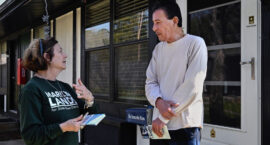
When Rep. Marilyn Lands won her race for the 10th District seat in Alabama in March with 63 percent of the vote, she did not expect to beat her Republican opponent by such a large margin.

After having an abortion herself, Lands made reproductive freedom the heart of her winning campaign this year. She has found that sharing her story has had a profound impact on her relationship with voters.

What Angela Alsobrooks’ Primary Win Means for Black Women in Politics

We currently have zero Black women governors and only one Black woman in the Senate. But that could soon change.

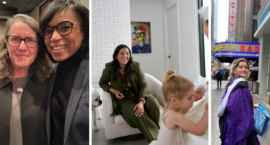
This week, exciting news came out of Maryland’s Democratic primary race: U.S. Senate candidate Angela Alsobrooks won big despite being outspent 10 to 1 by her opponent, Rep. David Trone, a wealthy businessman who threw more than $60 million of his own money into his campaign. Alsobrooks is the county executive for Maryland’s second-largest county, and this win means she, along with Rep. Lisa Blunt Rochester, could become the United States’ fourth and fifth Black women to ever serve in the U.S. Senate.

Weekend Reading on Women’s Representation: Challenges and Progress for Mothers in Political Office; North Macedonia Elects First Woman President

Weekend Reading for Women’s Representation is a compilation of stories about women’s representation. 

This week: why expanding women’s power isn’t a single-issue effort but is a prerequisite to progress across the board; the number of women running for the U.S. House is down, with Republican women seeing the greatest decline; Prince George’s county executive Angela Alsobrooks won an impressive victory in the U.S. Senate primary; Suzanne LaFrance on track to be Anchorage’s first woman mayor; in North Macedonia, where Gordana Siljanovska-Davkova became the first woman president; and more.

‘Life and Death Decisions in Post-Roe America’: The Ms. Q&A with Shefali Luthra

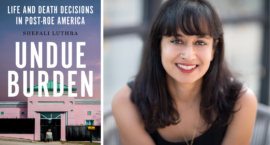
Roe v. Wade was overturned on June 24, 2022. But according to Shefali Luthra, author of Undue Burden: Life and Death Decisions in Post-Roe America, “it had been on the verge of collapse for decades.” After all, most Medicaid recipients had lost insurance coverage for the procedure in 1977 and a plethora of restrictions—from parental consent and notification requirements for minors, to mandated counseling sessions to dissuade people from ending their pregnancies—had long kept procedural abortion out of reach for large segments of the population.

Undue Burden digs into this lack of preparedness by introducing diverse people who have been directly impacted by the decision—people who have had to travel hundreds of miles to have an abortion, people whose highly-anticipated pregnancies became untenable, a trans man who became pregnant shortly after beginning his transition, and a young couple who lacked the emotional and financial resources to welcome a second child, among them. Their stories are juxtaposed with those of overwrought clinicians as well as staff at abortion funds. The result is a poignant and dramatic look at the stakes of losing Roe and a compassionate assessment of the human toll wrought by Dobbs.


Meet the Anti-Feminist Women’s Group Leveraging Their ‘Independence’ to Convince Americans to Vote Republican

The anti-feminist Independent Women’s Voice/Forum (IWF/V), backed by billionaires and anti-abortion zealots, is poised to use its leaders’ identities as women to convince voters that the GOP will protect Americans’ rights and freedoms, like access to birth control and the ability to choose if and when to have children. IWF/V’s past positions, the known agendas of their funders and their membership to Project 2025 belie their true intentions. 

Care Is About Democracy

Because of women, care has become a top concern among voters and a unifier across gender, race and party identification. And care issues are most powerful as a motivator for civic engagement when linked with other top priorities for voters—including reproductive rights, tax equity and kitchen table economics.

(This essay is part of a Women & Democracy package focused on who’s funding the women and LGBTQ people on the frontlines of democracy. We’re manifesting a new era for philanthropy—one that centers feminism. The need is real: Funding for women and girls amounts to less than 2 percent of all philanthropic giving; for women of color, it’s less than 1 percent. Explore the “Feminist Philanthropy Is Essential to Democracy” collection.)

To Defend Democracy, We Must Protect Bodily Autonomy

It is no coincidence that at the same moment U.S. democracy is facing existential threats, we are also witnessing profound assaults not only on the body politic but on our bodily autonomy. 

One of the biggest threats to the consolidation of power is an empowered and engaged populace—particularly women, the LGBTQ community and people of color. Which is why anti-democratic leaders are doing all they can to limit and curtail the power of these communities. This moment requires progressive and pro-democracy funders to understand the attacks to reproductive freedom, LGBTQ liberation, and racial justice not as distinct or disparate—but as central to the attacks to our democracy itself, and to fund accordingly.

(This essay is part of a Women & Democracy package focused on who’s funding the women and LGBTQ people on the frontlines of democracy. We’re manifesting a new era for philanthropy—one that centers feminism. The need is real: Funding for women and girls amounts to less than 2 percent of all philanthropic giving; for women of color, it’s less than 1 percent. Explore the “Feminist Philanthropy Is Essential to Democracy” collection.)

There Is No Democracy Without Gender Justice

This essay is part of a Women & Democracy package focused on who’s funding the women and LGBTQ people on the frontlines of democracy. We’re manifesting a new era for philanthropy—one that centers feminism. The need is real: Funding for women and girls amounts to less than 2 percent of all philanthropic giving; for women of color, it’s less than 1 percent. Explore the “Feminist Philanthropy Is Essential to Democracy” collection.

From the boardrooms of philanthropy to the halls of government, democracy and gender are often treated as separate issues.

I’ve been working to sound the alarm. Because while our side has been slow to connect the dots, the authoritarian right has been acting on these connections for decades. The consequences are deadly—and mounting.

American Autocracy: Trump Is Intent on Persecuting His Perceived Enemies

Trump has shown considerable indicators of autocratic tendencies—such as calling for the Department of Justice to prosecute his political enemies, claiming that Article II of the Constitution gave him the authority to do “anything I wanted,” shamelessly violating the Constitution’s Emoluments Clause to use his government position to enrich himself and his family, and many more. That all culminated in the attempted interruption of the peaceful transfer of power following the 2020 election.

In this three-part American Autocracy series, we track Trump’s comments on feminist issues. This installment: his stance on political enemies and those who disagree with him. 

Weekend Reading on Women’s Representation: Celebrating the Women Who Raised Us; ‘Mother of Juneteenth’ Opal Lee Receives Medal of Freedom

Weekend Reading for Women’s Representation is a compilation of stories about women’s representation. 

This week: Join RepresentWomen as we thank our mothers on Mother’s Day. Discover El’ona Kearny, aspiring to become Washington State’s first Black woman governor, and civil rights icon Opal Lee hailed as “The Mother of Juneteenth.” Explore the benefits of ranked-choice voting and how it can enhance presidential primary elections, and delve into the challenges facing our public schools as First Lady Jill Biden honors teachers for Teacher Appreciation Week. Finally, we celebrate the success of our “Breaking Barriers for Black Women Candidates” virtual roundtable discussion, where we heard invaluable insights from brilliant Black women about their political journeys and how we can offer more Black women support when running for office.