Ending Child Marriage—For Good: The Ms. Q&A With Clay Dunn, CEO at VOW for Girls

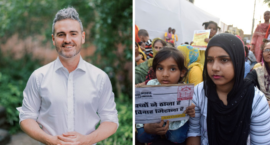
Oct. 11 is International Day of the Girl, an annual celebration that promotes advocacy for the rights, education and empowerment of girls across the globe. This year’s theme is “Girls’ Vision for the Future.” Child marriage, a practice that robs millions of girls of their childhoods, opportunities and dreams, prevents girls from realizing their own vision for the future. Each year, an estimated 12 million girls are married before the age of 18, perpetuating cycles of poverty and inequality. 

We got the chance to speak with Clay Dunn, CEO of VOW for Girls, an organization that partners with brands, individuals, and the wedding industry to raise money for local partners working to end child marriage in their community.


‘The Chronicler, the Microphone, the Billboard’: Jessica Valenti’s ‘Abortion’ Book Arms Us to Face the Violence of Abortion Bans

In her recently released book, Abortion: Our Bodies, Their Lies and The Truths We Use to Win, Jessica Valenti details the future. But, her gift is not prophecy, but clarity of facts. She is clear that the question of abortion access is a question of personal autonomy. She is clear that conservatives are carefully crafting a world where women who have the audacity to want sex on their own terms must be punished by a pregnancy. She is clear that conservatives want to take personhood from a person with a uterus and assign it to the embryo or fetus within it.

As Valenti writes, it is those who would “force children to give birth … make devastated women carry dead and dying fetuses, and make women raped by men prove their attacks really happened before receiving health care” that are the problem. 

Explainer on Proposal 1, the New York Equal Rights Amendment on the Ballot

A New York ballot measure to create constitutional protections for abortion and create explicit protections for people who experience discrimination, passed overwhelmingly on Tuesday.

How will the New York ERA change the state Constitution? How can the New York ERA address structural and systemic discrimination? Will the New York ERA protect reproductive rights? Will the New York ERA undermine or weaken parental rights?

October Reads for the Rest of Us

Each month, we provide Ms. readers with a list of new books being published by writers from historically excluded groups.

This month, our Ms. book editor recommends Abortion: Our Bodies, Their Lies, and the Truths We Use to Win by Jessica Valenti, Doll Seed by Michele Tracy Berger, Humans in Shackles: An Atlantic History of Slavery by Ana Lucia Araujo, and more.

Do You Remember the First Time You Voted?

The first year I could vote, the choices for president were Republican Sen. Barry Goldwater or the incumbent President Lyndon B. Johnson. LBJ won—the largest landslide in U.S. history. Voting for him as a first-time voter felt consequential.

This year, I’ll be voting with two very special first-time voters: my twin granddaughters, in the swing state of Georgia. Our daughters’ and granddaughters’ future is in danger.

‘That’s My Dad!’: Helping Men Find Purpose in an Angry World

Young men in the U.S. are in an existential crisis, and from even the most casual browsing of their online spaces, their anger and loneliness are obvious. For these male biological challenges, we need empathy and understanding. For the social constructions of masculinity, the way we raise boys and socialize men, we need a bold, new social project. As grandiose as it may sound, men are seeking purpose. 

(This essay is part of a Women & Democracy multimedia package focused on Gen Z and student voters. The future envisioned by young leaders is bright—it’s built on reproductive rights, bodily autonomy, sustainability, freedom from violence and economic opportunity. Explore essays, a brand-new podcast, videos and more from some of your most loved [or soon to be!] influencers and writers, brought to you by Ms., DoSomething, the nonprofit that helps make volunteerism “cool,” and The Anthem Awards, the social impact arm of The Webbys.)

Republicans in House Races Are Moderating Their Words on Abortion—But Not Always Their Policies

In Pennsylvania, Republican Ryan Mackenzie touted his “100 percent pro-life voting record” as recently as May before removing it from his website.

In Michigan, where Rep. Hillary Scholten is the only Democrat to win the seat since the early 1990s, her Republican opponent, Paul Hudson, has said he does not support a federal abortion ban—yet is endorsed by Citizens for Traditional Values, a conservative group that wants to overturn the will of the voters and restore a 1931 abortion ban.

In competitive U.S. House races from coast to coast, Republicans are distancing themselves—rhetorically—from their party’s hardline anti-abortion stances. In most cases, the policies they say they support or oppose now are undercut by their records and past stances. 

‘Now I Can Share My Story With Pride’: Thai Feminist Organization Collects Abortion Stories After Procedure Is Legalized

Abortions are sought by a wide range of people for many different reasons. There is no single story. Telling stories of then and now shows how critical abortion has been and continues to be for women and girls. (Share your abortion story by emailing myabortionstory@msmagazine.com.)

In this edition of Our Abortion Stories, Thai women share their own abortion stories along with their advocacy work with the queer feminist organization, Tamtang.

This Is What Autocracy Looks Like: How Turkey’s Justice and Development Party Turned Its Back on Women and Girls

Over the years, Turkey’s President Recep Tayyip Erdogan has deflected public discontent with his economic and social policies by pointing fingers at journalists and women’s rights defenders, among others.

Since a failed coup in 2016, the Turkish government has become “incrementally more repressive,” explains Asli Aydintaşbaş, a visiting fellow at the Center on the United States and Europe at the nonprofit Brookings Institution. The outcome of this year’s election “creates a bit of a breathing space in urban areas in terms of free speech issues, but there has not been an improvement on the Kurdish issue,” she says.

(This article originally appears in the Fall 2024 issue of Ms. Join the Ms. community today and you’ll get issues delivered straight to your mailbox! )