This Week in Women’s Representation: Why Democracy Runs on Women; a Win For Allison Riggs in N.C.; Rep. Jan Schakowsky to Retire After 14 Terms

Weekend Reading for Women’s Representation is a compilation of stories about women’s representation. 

This week: North Carolina Supreme Court Justice Allison Riggs’ victory was finally affirmed after partisans had sought to throw out thousands of votes; 80 percent of election officials are women; why creating new House seats would be one of the best ways to create more space for women to run; Polish women are on track for improving their political representation; Rep. Jan Schakowsky announced she will not seek reelection in 2026, ending a 14-term career representing Illinois’ 9th Congressional District; and more.

This Week in Women’s Representation: Women Voters Deliver Win for Canada’s Mark Carney; Latinas Set New Record in U.S. State Legislatures; Federal Job Cuts Threaten the Black Middle Class

Weekend Reading for Women’s Representation is a compilation of stories about women’s representation. 

This week: May milestones include May Day and Asian American and Pacific Islander Heritage Month; the gender gap in Canada’s latest election shows women delivered Carney’s win; Lt. Gov. Juliana Stratton may take Sen. Dick Durbin’s place in the Senate; and more.

‘Bluey’ Is a Feminist Parenting Tool (Missteps and All)

Bluey has been praised for challenging restrictive gender norms and modeling equitable relationships and, in a quite different take, for upholding “traditional” values by promoting respect for parents and marriage. Critics have also questioned whether the show is anti-feminist by pointing to misogynistic storylines and limited diversity. 

For me, Bluey is a tool. The seven-minute episodes often prompt conversation, offer a thoughtful guide for answering complex questions, and inspire creative and engaging play. The show has real value in our house. 

This Week in Women’s Representation: Women Shoppers Face Double Burden of Pink Tax and Tariffs; Happy Birthday, Dolores Huerta!

Weekend Reading for Women’s Representation is a compilation of stories about women’s representation. 

This week: Women worldwide have made giant strides in the 21st century toward parity, but that progress is stalling and, in some cases, being reversed; Virginia’s 2025 gubernatorial elections will likely result in the state’s first woman governor; the ‘pink tax,’ combined with new Trump tariffs, will without a doubt exacerbate income inequality and economic hardship experienced by women; and more.

Anti-Medicine, Anti-Science and Antiabortion: Preparing for Trump’s Incoming Cabinet

Since the election was decided in November, like many people, I have been paying close attention to the individuals selected for appointment by the incoming Trump administration. As an OB-GYN and abortion provider, I know firsthand that these appointees will have a direct and devastating impact on our community’s access to healthcare, public health and social safety net infrastructure and our ability to be well.

Collaboratively, these cabinet picks have gained popularity by way of anti-intellectualism, misinformation and scare tactics, ultimately preying on the most vulnerable members of our community. They are not just poorly qualified to lead this work—they are dangerous. 

Whatever Happened to CEDAW?

It’s been 45 years since the United Nations adopted the Convention on the Elimination of All Forms of Discrimination Against Women, often described as an international bill of rights for women. Yet some younger feminists haven’t even heard of it.

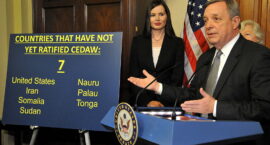
The vast majority of the world’s nations—96 percent—have ratified CEDAW. The U.S. is not a signatory because it has never made it to the Senate floor for a ratifying vote—making it only industrialized democracy in the world that has yet to ratify it.

(This article originally appears in the Summer 2024 issue of Ms. Join the Ms. community today and you’ll get issues delivered straight to your mailbox!)

In Hawai‘i, Where Traditional Midwives Can’t Practice

Two days after Alia Louise Stenback survived the Aug. 8 wildfire in Lāhainā, Maui—the deadliest wildfire the United States has seen in over 100 years—she parked herself at a medical tent. One month later, with no ambulances around to provide transport to a hospital, her grandson was born. With a donated birthing kit and the support of traditional midwives, Stenback “caught [her] grandson.”

Stenback grants herself “outlaw” status because she provided care during labor without a midwifery license in assumed violation of Hawaii’s HRS §457J, otherwise known as the Midwifery Restriction Law. Originally passed in the name of maternal and infant safety, the law is the subject of impassioned protests, new legislative proposals and a lawsuit filed by the Center for Reproductive Rights and the Native Hawaiian Legal Corporation.

Holiday Reading on Women’s Representation: The First Black Woman on Albuquerque’s City Council; The 50 Most Powerful Women in Philanthropy

Weekend Reading for Women’s Representation is a compilation of stories about women’s representation. 

This week: how the 14 countries of the Oceania region are doing on women’s representation; Nikki Haley is getting way less attention than her male counterparts; the need for a feminist perspective in discussions around climate change; is Alaska the secret to saving U.S. democracy?; Nicole Rogers is the winner of the Albuquerque City Council District 6 runoff election; and more.

Ms. Global: Iran Passes New Hijab Laws, Mexico Moves to Elect First Female President, Western Australia Decriminalizes Abortion

The U.S. ranks as the 19th most dangerous country for women, 11th in maternal mortality, 30th in closing the gender pay gap, 75th in women’s political representation, and painfully lacks paid family leave and equal access to health care. But Ms. has always understood: Feminist movements around the world hold answers to some of the U.S.’s most intractable problems. Ms. Global is taking note of feminists worldwide.

This time with news from Mexico, Iran, Brazil, Somalia and more.