Keeping Score: Renee Good Fatally Shot by ICE; Women Work Longer and Are Paid Less Worldwide; N.Y. Fights Back Against Federal Childcare Freeze

In every issue of Ms., we track research on our progress in the fight for equality, catalogue can’t-miss quotes from feminist voices and keep tabs on the feminist movement’s many milestones. We’re Keeping Score online, too—in this biweekly roundup.

This week:
—”We had whistles. They had guns,” said Becca Good, wife of Renee Good, who was killed in Minneapolis by ICE agent Jonathan Ross.
—In central Texas, five months after the Sandy Creek flooding, “many are still homeless, and only 36 percent of FEMA claims in our area have been approved,” said survivor Brandy Gerstner. “FEMA must be independent, fully funded and strengthened—because when it fails to function, real families pay the price.”
—Anti-Muslim and anti-South Asian hate increased around the election of NYC Mayor Zohran Mamdani.
—The Department of Veterans Affairs announced new abortion bans.
—Meta has removed the social media accounts of dozens of reproductive health and LGBTQ groups.
—Women worldwide earn just a third of what men do when unpaid domestic labor is taken into account.

… and more.
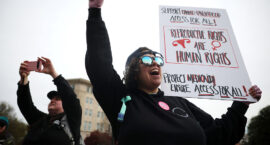
Seven Ways the Trump Administration Has Made Pregnancy More Dangerous

Trump has been in office for less than a year. The Supreme Court killed Roe v. Wade less than three years ago. And today, if you are a woman in the United States, your rights change when you cross state lines—men’s rights do not. 

It’s easy to lose sight of just how debilitating this administration has been for reproductive rights, because they are doing so much else so loudly. (Apologies to Greenland.) But this administration has quietly attacked abortion rights from just about every angle. A new report from the Center for Reproductive Rights makes clear just how aggressive they’ve been. 

Here are seven quiet moves from the Trump administration that are costing women and girls their lives.

Ms. Global: Iraq’s Child Marriage Surge, Hurricane Devastation in Jamaica, Historic EU Abortion Vote and More

The U.S. ranks as the 19th most dangerous country for women, 11th in maternal mortality, 30th in closing the gender pay gap, 75th in women’s political representation, and painfully lacks paid family leave and equal access to health care. But Ms. has always understood: Feminist movements around the world hold answers to some of the U.S.’s most intractable problems. Ms. Global is taking note of feminists worldwide.

This week: News from Iraq, Jamaica, the EU, Cambodia and Thailand, and more.

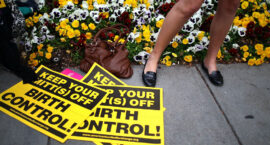
What 200 Gen Z Women Told Me About Birth Control Should Alarm Every Woman in America

Birth control is the single most powerful tool for women’s economic mobility and autonomy in modern history. It changed everything: When women could plan if, when and with whom they wanted to have children, college enrollment soared, dropout rates fell and poverty rates declined. The ability to access contraception has been directly tied to women’s ability to stay in school, build careers and make decisions about their own futures.

So why, in 2025, are we finding ourselves in a messaging war on birth control?

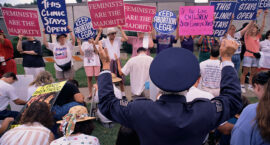
Arrests in Memphis as Antiabortion Training Camp Sparks New Era of Clinic Blockades

Randall Terry, the founder of Operation Rescue, is trying to make a comeback by teaming up with antiabortion extremist group PAAU (the so-called “Progressive” Anti-Abortion Uprising group associated with dozens of clinic and pharmacy invasions), to kick off “Rescue Resurrection.” Their stated goal is to revive large-scale clinic blockades with a formal kick-off training and series of events starting Dec. 3 in Memphis, Tenn.

On Friday morning, Dec. 5, approximately 25 individuals participating in the Rescue Resurrection training blockaded the Planned Parenthood health center in Memphis, even though abortion is already banned in Tennessee. Fourteen individuals were arrested.

Terry was one of the leaders of mass clinic blockades that took antiabortion extremism to a new level in the late 1980s and early 1990s. Operation Rescue’s (OR’s) orchestrated blockades in Atlanta, Memphis and Wichita drew massive media coverage. During the sieges, accessing a targeted abortion clinic meant getting through a gauntlet of bodies blocking clinic doors and driveways. Antiabortion activists traveled state to state in order to participate, blockading clinics, going limp when arrested (to represent the “unborn”) and requiring three to four police officers to remove each protester arrested and carry them to waiting police buses.

Keeping Score: Democrats Dominate Key Elections; Federal Government Reopens After 43 Days; ICE Targets Childcare Centers

In every issue of Ms., we track research on our progress in the fight for equality, catalogue can’t-miss quotes from feminist voices and keep tabs on the feminist movement’s many milestones. We’re Keeping Score online, too—in this biweekly roundup.

This week:
—Democratic candidates won elections across the country.
—At Crooked Con last week, Rep. Pramila Jayapal (D-Wash.) laid out her priorities for when Democrats regain power in Congress: “We’ve got to fix the Voting Rights Act, we have to deal with the money in politics, we have to deal with the Supreme Court and we need immigration reform.”
—ICE targeted childcare workers and is accused of inhumane detention conditions.
—Nancy Pelosi announced her retirement in 2027.
—Trump’s approval ratings continue to fall, a year out from the 2026 midterms.
—Many popular lubricants aren’t safe for vaginal health.

… and more.

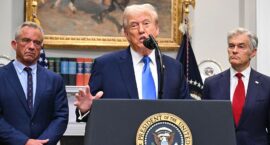
Fighting MAGA Medical Disinformation: States Must Confront Trump’s War on Science and Reproductive Health

Backed by Robert F. Kennedy Jr. and Mehmet Oz, Trump’s attacks on safe, widely used medications are part of a larger strategy: sowing fear, undermining trust in science, and exerting political control over people’s most intimate health decisions.

The administration’s disinformation campaign extends far beyond Tylenol. Officials are questioning the safety of mifepristone despite decades of evidence to the contrary and spreading the falsehood that birth control causes abortion—all while defunding Planned Parenthood and funneling taxpayer dollars to crisis pregnancy centers that mislead and manipulate patients. Together, these actions threaten to upend decades of progress in reproductive health and put millions of women at risk.

It’s time for a coordinated response. Just as states have joined forces to counter anti-vaccine propaganda, public health leaders must now unite to defend reproductive healthcare. State and local governments can share strategies, strengthen protections for evidence-based medicine, and push back—loudly and collectively—against the Trump administration’s dangerous campaign of medical disinformation.

A Call to the Muslim Community: Fighting for Reproductive Justice Is in Line With Our Faith

The Islamic ethical concepts of communal obligation (fard kifayah) and compassion for others (rahma) call on us to fight back against injustice wherever it arises—whether from within our community, or the cruel attacks on our bodily autonomy and accessibility to safe and affordable reproductive care, including abortion care. 

What Muslims need is nonjudgmental support grounded in compassion (rahma), the ability to consult (shura) experts with medically accurate information, and the agency to make decisions that align with their faith.

(This essay is part of a collection presented by Ms. and the Groundswell Fund highlighting the work of Groundswell partners advancing inclusive democracy.)

The Ripple Effects of the U.S. Retreat from International Reproductive Care

The U.S. withdrawal of international reproductive health funding is already having devastating effects around the world. Clinics are closing, health workers go unpaid, and essential medications and contraceptives sit unused in warehouses while millions of women and families lose access to life-saving care.

These abrupt cuts are not just administrative—they are a direct attack on decades of global health progress, putting children, pregnant women and marginalized communities at heightened risk of preventable disease, unintended pregnancy and death.

Yet there is still a path forward. The infrastructure to deliver reproductive and public health services remains in place, and health workers are ready to act. If funding is restored, we can prevent the worst outcomes, safeguard global health, and ensure that the fundamental human rights to health, life and bodily autonomy are protected.

The global community must act urgently to reverse the harm and prevent a full-scale public health and human rights crisis.

Technical Difficulties: How Social Media Is Impacting the Landscape of Misinformation About Reproductive Health

There’s a lot of unreliable information circulating about birth control—and it’s doing real harm.

The Trump administration is mischaracterizing contraceptives as abortifacients and using that false claim to justify plans to destroy nearly $10 million worth of birth control. For now, the supplies sit in a Belgian warehouse, their fate uncertain.

Meanwhile, social media is flooded with misleading videos about hormonal contraception, watched billions of times. This wave of misinformation is helping drive a decline in contraceptive use among young women that can’t be explained by access alone.

We know from experience that accurate, engaging storytelling can counter these lies—shows like East Los High have proven it—and the same approach could transform TikTok and other short-form platforms.