As President, Harris Could Not Easily Make Roe v. Wade Federal Law—But She Could Still Make It Easier to Get an Abortion

There is much that a potential Harris administration and Congress could do to offset the impact of the Supreme Court’s 2022 Dobbs ruling.

Congress could amend existing federal laws—starting with repealing the Hyde Amendment, which prohibits federal money from being used to fund abortions, or the Comstock Act, a Victorian law which some judges have interpreted as prohibiting the mailing of abortion pills. Congress could also enact legislation that protects the right to interstate abortion travel. Or Harris could ask Congress to pass a law that would guarantee the same kind of access to mifepristone that the FDA currently allows.
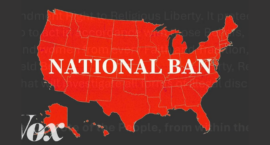
The Comstock Act Is a Backdoor Approach to a National Abortion Ban—And Justices Alito and Thomas Are Interested

A general consensus seems to have emerged after last week’s oral arguments in the case against the abortion pill that the Supreme Court is likely to rule that the anti-abortion physicians and their umbrella group, the Alliance for Hippocratic Medicine, lack sufficient legal grounds to challenge the FDA’s loosening of restrictions on mifepristone.

While dismissal based on a lack of standing would be a welcome result, it is not a guarantee given the Court’s anti-abortion supermajority. But even if this occurs, the apparent zest manifested by Justices Samuel Alito and Clarence Thomas towards the Comstock Act from 1873 brings a lurking danger fully out into the open. 

‘Comstocked’: How Extremists Are Exploiting a Victorian-Era Law To Deny Abortion Access

In June 2019, the all-male city council in Waskom, Texas, unanimously voted to make the tiny town of just 2,000 residents the nation’s first “sanctuary city for the unborn.” Characterizing fetuses as the “most innocent among us [who] deserve equal protection under the law,” the ordinance expressly bans abortion within its municipal boundaries. The man behind the ban, anti-abortion zealot and pastor Mark Lee Dickson, has since expanded his campaign to outlaw abortion “one city at a time” into at least six other states.

(This article originally appears in the Fall 2023 issue of Ms. Join the Ms. community today and you’ll get issues delivered straight to your mailbox!)

Today in Feminist History: Griswold v. Connecticut is a Win for Both Privacy and Contraception (June 7, 1965)

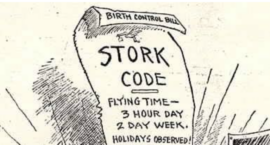
Ninety-two years after the war on birth control began when Congress passed the Comstock Act, declaring contraceptive devices and information about them to be obscene, un-mailable articles, and states soon enacted their own total bans, Connecticut’s 1879 statute outlawing birth control has been declared unconstitutional by the U.S. Supreme Court in the case of Griswold v. Connecticut (381 U.S. 479).

How William Sanger Inspired Me to Pro-Choice Activism

In my family, being pro-choice comes naturally. This is not just because the ghost of my grandmother, Margaret Sanger, would rise from her grave to wreak vengeance on any of her relations who dare stray from the path. It is also because the guys have the model of my grandfather, William Sanger, to emulate. My […]