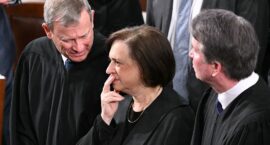
Late on Monday, the Supreme Court rejected the Trump administration’s emergency request to enforce new U.S. Postal Service restrictions on mail-in ballots, leaving in place a lower-court injunction blocking the rule ahead of the midterm elections. In an unsigned order, the Court said the government was “unlikely to succeed on the merits” and had not justified emergency relief.
Justice Brett Kavanaugh concurred, writing that election officials did not have enough time to implement the rule before November.
Justices Samuel Alito and Clarence Thomas dissented. The underlying legal challenge will continue, but the restrictions will remain blocked for the 2026 elections.
Legal analyst and professor Steve Vladeck called the ruling “heartening” since it means “a majority of the Court was unwilling to abide President Trump’s transparent effort to make it harder for a large number of lawfully registered voters to actually cast their ballots in the 2026 general election. But it continues to be deeply sobering that it came to all of this in the first place.”
Election officials and voting rights experts, like Voto Latino executive director Beatriz Lopez, have this advice and takeaway for voters: “To every voter wondering if your vote by mail is safe: It is. Make sure you’re registered, request your ballot, fill it out, and return it early.”