This Mother’s Day weekend arrives amid extraordinary legal and political upheaval over reproductive freedom, voting rights and the economic survival of mothers.
Right now, access to mifepristone in America hangs on a one-week Supreme Court pause.
On May 1, the Fifth Circuit Court of Appeals ordered the FDA to prohibit telehealth prescribing and mailing of mifepristone while litigation continues—effectively threatening nationwide telehealth access to the most common form of abortion care in the country. On May 4, the Supreme Court temporarily paused that ruling, keeping current access in place until May 11 at 5 p.m. ET.
Meanwhile, the Trump administration has been pulled directly into a political and legal crisis of its own making, and pressure is mounting on Trump and his allies to publicly answer a question they spent years trying to avoid: Should women in every state be able to receive abortion medication through the mail?
Mary Ziegler, one of the nation’s leading historians of abortion law and a regular contributor to Ms., put it plainly this week: Abortion “was not supposed to be a major issue in the 2026 elections.” Republicans hoped they could quietly move past Dobbs while continuing to appoint extremist judges and advance antiabortion litigation behind the scenes. That strategy has now collapsed.
The Fifth Circuit’s ruling has forced the issue back into public view—and the consequences would reach far beyond red states. Because mifepristone is regulated federally through the FDA, restrictions on prescribing rules would apply nationwide, including in states with strong abortion protections. Pharmacies could be prohibited from filling prescriptions if antiabortion extremists get their way.
Women in rural communities, women relying on telehealth, women balancing childcare and work obligations, women living hours from clinics, would face immediate barriers and confusion. And that uncertainty is part of the strategy.
As we head into Mother’s Day, it’s impossible to separate these attacks on reproductive healthcare from the economic realities facing employed mothers across the country. After all, abortion is an economic issue too: Mothers working outside the home (and from home) face soaring childcare costs, workplace discrimination and a persistent pay gap—earning just 64 cents for every dollar paid to working fathers. The cost of raising a child now exceeds $300,000.
The Trump administration has worsened these pressures through deliberate rollbacks of workplace protections and programs designed to support women and families.
The consequences are staggering: Between January and August of 2025, more than 455,000 women left the workforce—the steepest decline in women’s workforce participation in over 40 years. (Included in that number is the 319,000 U.S. labor market jobs lost by Black women, attributed to a myriad of factors, most notably the Trump administration’s sweeping cuts of federal jobs.)
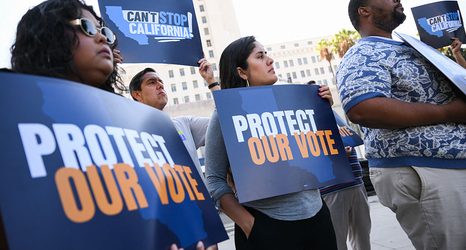
We are seeing the same pattern play out in voting rights: Last week’s Supreme Court ruling in Louisiana v. Callais further weakened the Voting Rights Act and threatens Black political representation nationwide. Justice Elena Kagan warned in dissent that the Court is once again allowing elected officials to choose their voters, rather than voters choosing their representatives.
At moments like this, independent feminist journalism matters more than ever. Thank you for reading, sharing and supporting Ms. Your readership helps ensure these stories—and the people most affected by these policies—are not ignored.
Look to these trusted groups if you or a loved one needs to know more about reliable abortion care:
- A one-stop-shop for abortion seekers: I Need An A
- Other websites to explore all your options for abortion care: Plan C Pills, Abortion Finder
- Safe websites to buy abortion medication: Aid Access, Massachusetts Medication Abortion Access Project, Hey Jane
- If you need help affording abortion care, tell your telemedicine provider or contact an abortion fund near you.
- To protect your digital privacy when planning your abortion, click here.
- For free legal help as a patient or doctor, call If/When/How’s Repro Helpline—844-868-2812—or contact Pregnancy Justice.
- For medical advice, contact the Miscarriage & Abortion Hotline: 833-246-2632.
- If you need to know the abortion law in your state, look to the Center for Reproductive Rights. or Guttmacher Institute.