In This Edition:
Birthdays: Sally Ride, astronaut; Rachel Carson, author of Silent Spring; Lucy Gettman, editor, Gender on the Ballot; Melissa Hortman, former speaker of the Minnesota House of Representatives; Kimberly Peeler-Allen, co-founder of Higher Heights; Roxy Szal, digital editor of Ms. magazine; Laverne Cox, actress & LGBTQ advocate; Jheanelle Wilkins, Maryland state delegate; Liuba Grechen Shirley, CEO of Vote Mama Foundation; Cathy Carlson, Women Donors Network; Sonia Pressman Fuentes, co-founder of NOW; Margaret Sloan-Hunter, feminist, civil rights advocate, and one of the early editors of Ms. magazine.

Milestones: Genevieve R. Cline became first woman named to the federal bench (1928), The Civil Rights Act of 1965 signed into law by President Lyndon B. Johnson, guaranteeing the right of Black men and women to vote; Sojourner Truth, abolitionist and suffragist delivers her famed “Ain’t I a Woman?” speech (1851); The Equal Credit Opportunity Act of 1974 was introduced in the House (Congress); Carla Anderson Hills, first woman to serve as U.S. Secretary of Housing and Urban Development.

Buckle Up for June Primary Contests in 18 States

Buckle Up for June Primary Contests in 18 States
June marks the busiest month for primaries, with 15 states holding regularly scheduled primaries and three more states holding statewide runoffs on June 2.
The best state for women is likely to be New Mexico, where Democrats are poised to nominate women for governor (Deb Haaland), lieutenant governor (current secretary of state Maggie Toulouse Oliver, who must defeat Harold Pope) and secretary of state (a choice between county clerks Katharine Clark and Amanda Lopez Askin, both backers of ranked-choice voting who have run local elections with the system)—all of whom will be favored in November in a state where women have a super-majority of seats in the legislature, two of three congressional seats, and have won the last four gubernatorial elections.
With current Gov. Michelle Lujan Grisham term-limited, New Mexico offers a glimpse of a broader trend this cycle: Women are competing for executive offices at every level, from governor to secretary of state, in a year with an unusually large number of open and competitive statewide races.
California has big races up and down the ballot for women, with former U.S. Rep. Katie Porter seeking to break through a crowded top-two primary field and become the state’s first-ever woman governor.
Other June 2 primary states are Iowa, Montana, New Jersey and South Dakota. The June 2 slate also underscores how women’s gains depend not just on headline gubernatorial races, but on down-ballot contests for offices like lieutenant governor and secretary of state. Keep an eye out for women candidates’ primary results from the Center for American Women and Politics.
Women Are Winning Seats Around the World. The Systems Behind Their Success Matter.
One of my favorite things to do (and I say this knowing it might sound like a peculiar obsession) is to follow international elections. Not just the headlines, but the details of them: the voting systems, the candidate quotas, the placement mandates, the turnout numbers and the women running. To me, there is something genuinely hopeful buried in those details, even in the moments when the news closer to home feels heavy.
Earlier this month, I wrote about the all-male U.S.-China diplomatic summit in Beijing—a room full of consequential decisions made without a single woman at the table. I called it what it was: not an oversight, but a choice. And choices like that are precisely why I find it so important to keep my eye on what is happening in the rest of the world, where different choices are being made that reflect real improvements in women’s political power.
This month’s international elections are a reminder that, despite women being left out of certain rooms of power, they are being increasingly included in others.
This month, elections wrapped up across the Bahamas, Cabo Verde, Cyprus and Malta, and the results tell a story worth sitting with.

In the Bahamas, which uses a first-past-the-post system with no gender quota, nine women were elected to Parliament for the first time in 24 years, a record that is both genuinely encouraging and a reminder of how fragile progress without structural support can be.
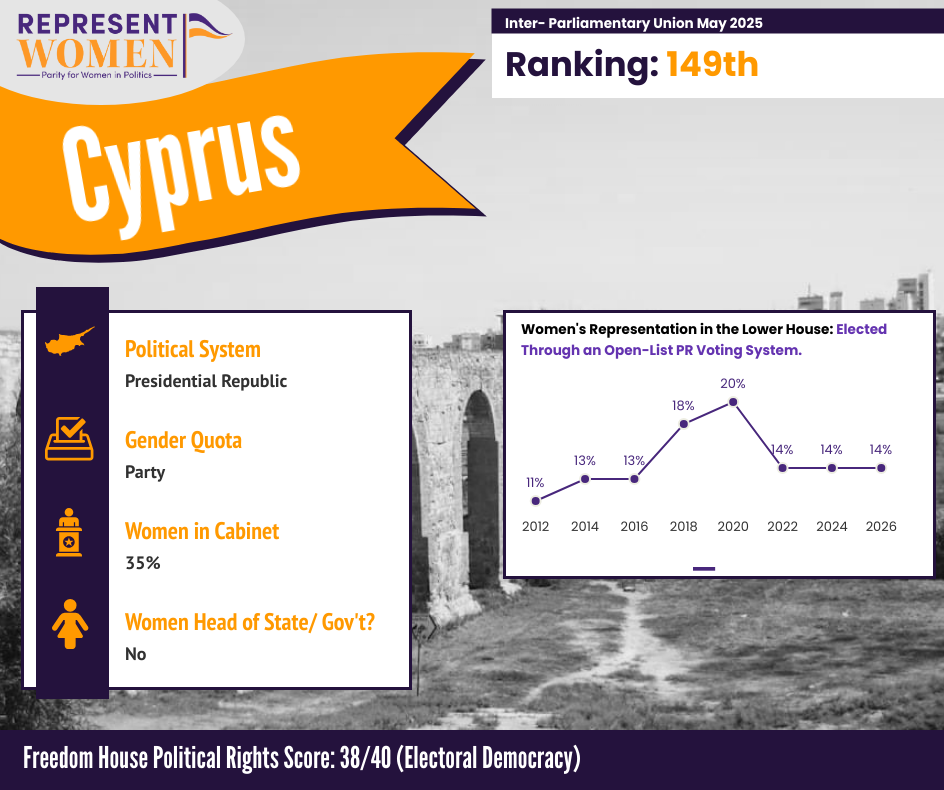
Cyprus saw 11 women elected to its 56-member Parliament through the ballot box—proof that open-list proportional systems create more possibility, even if they don’t guarantee it.
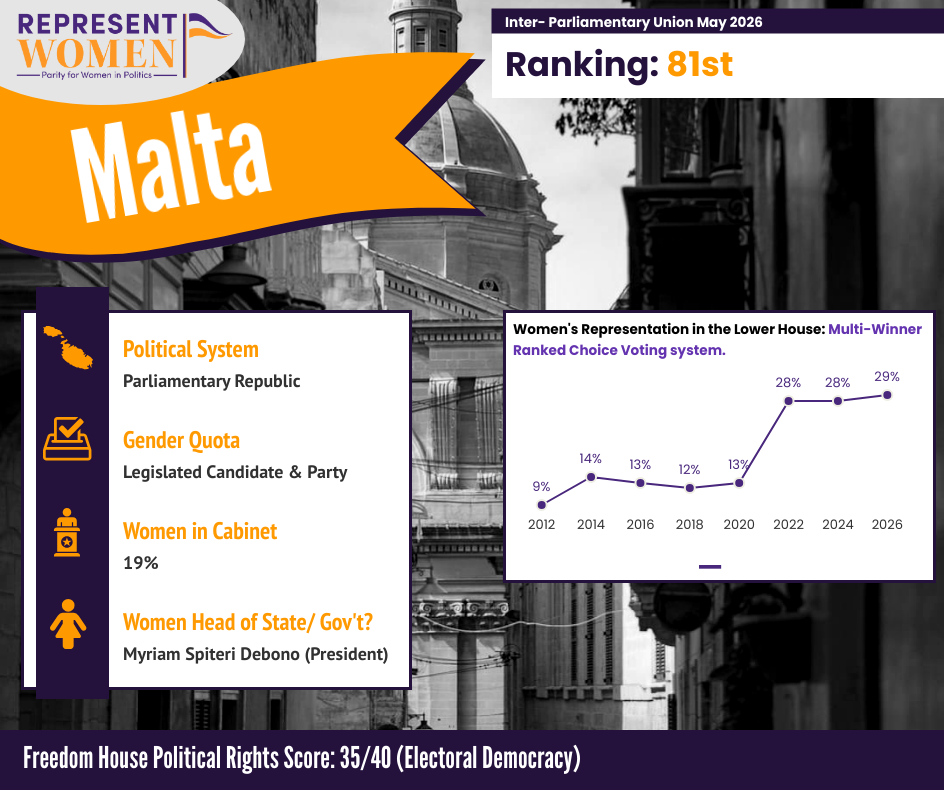
Malta, which introduced a gender corrective mechanism alongside its ranked-choice voting system in the last election and saw a 13-point jump in women’s representation, held steady at 28 percent this cycle—a sign that the floor it built is real and durable.

Cabo Verde, whose combination of proportional representation, a 40 percent legislated candidate quota, and placement mandates has kept women’s representation at 46 percent, is expected to maintain that strong showing.

We are also watching two races still unfolding: Colombia’s presidential election, where three women—Paloma Valencia, Aída Quilcué and Claudia López—are competing in a race widely expected to go to a runoff, and Guinea‘s legislative elections, where we will report back as results become available.

What runs through every election is the same truth we return to repeatedly at RepresentWomen: the countries making the most durable progress for women are the ones changing the rules and designing systems where women can succeed. Our international research dashboard clearly showcases this to be true. Records built on individual candidacies and favorable political winds can recede, but records built into a system’s design tend to hold. That distinction is at the heart of everything we do, and this month’s elections illustrate where reform is working and where it still needs to take hold.
I’m grateful for our research team for tracking these races with such care, and I look forward to providing another analysis next month covering the June election results for women around the globe.
Honoring Melissa Hortman’s Legacy and Defending Women’s Place in Democracy
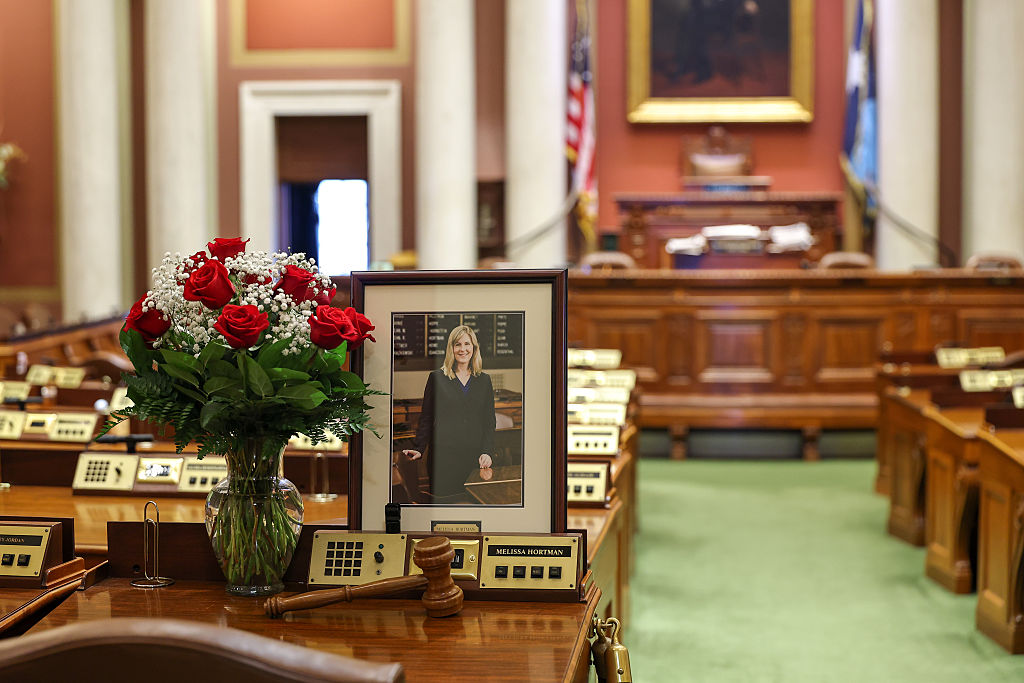
This week marks the birthday of former Minnesota House Speaker Melissa Hortman, and next month will mark one year since her assassination—an act of targeted political violence that shook all of us who believe in the promise of democratic leadership. Hortman was a tireless champion for women’s representation and democratic institutions, and her absence is felt deeply. We honor her this week by remembering not just what was lost, but what she stood for and what we must continue to build in her name.
At RepresentWomen, we do not believe that safety is a footnote to women’s political participation, but a prerequisite for it. That is why we are honored to dedicate a conversation on exactly this topic in her memory, as part of our Democracy Solutions Series: Safety as a Barrier to Women’s Political Participation. This webinar will be held on June 30 at 7 p.m. ET via Zoom. Register now to join us for this important conversation.
Women Leaders and Coalition Partners Convene in Colorado

Last week, members of the RepresentWomen team had the privilege of spending the afternoon with a group of outstanding women in the Denver region for our 2026 Denver Women’s Leadership Luncheon, co-hosted with our partners at Courageous Colorado and the League of Women Voters Colorado.
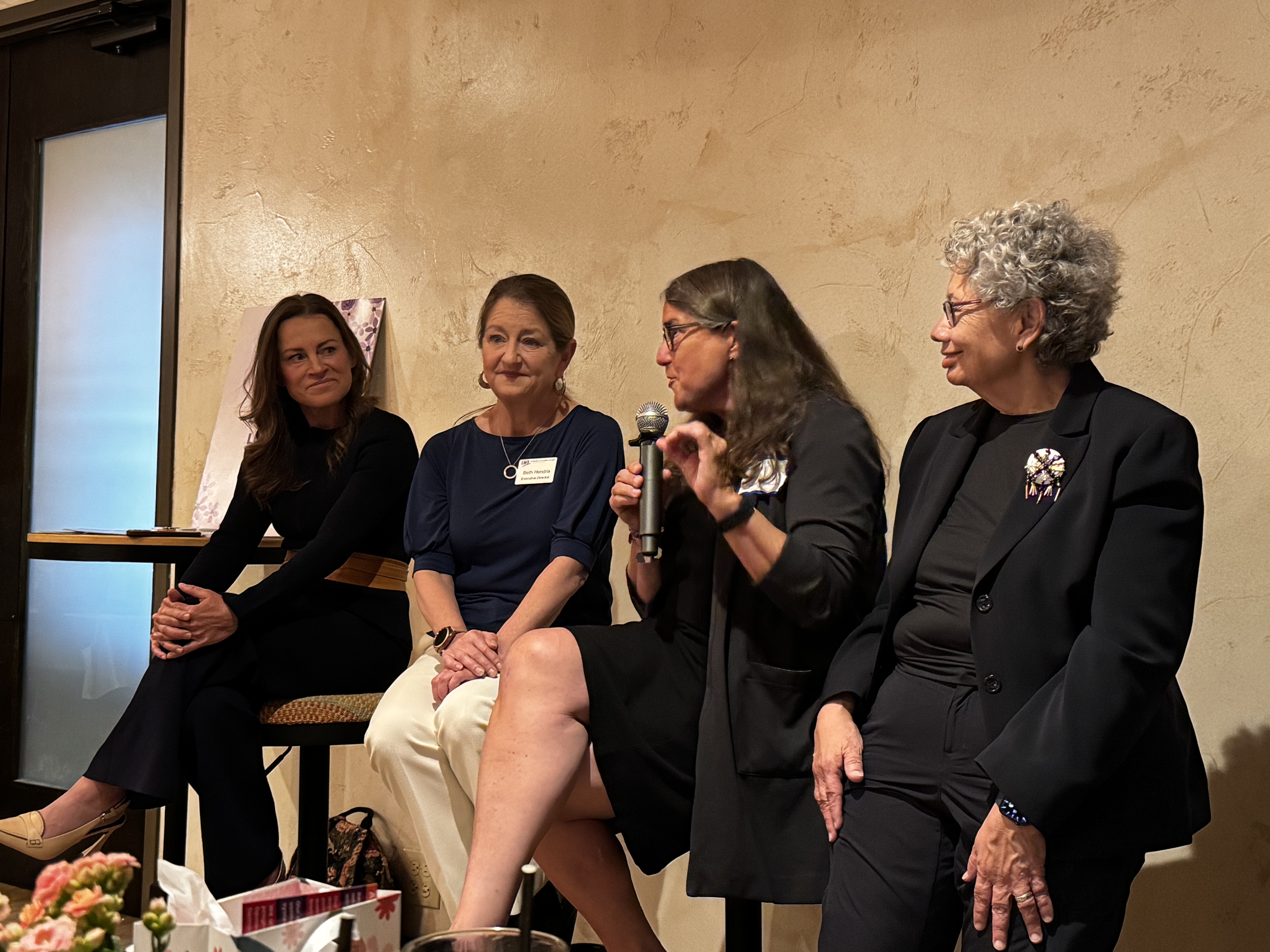
The heart of the afternoon was a panel discussion about building the systems that make women’s political power stick, moderated by Bianka Emerson of Colorado Black Women for Political Action. Amber McReynolds, RepresentWomen’s board member and a nationally recognized elections administration expert, opened the event by grounding us in the stakes of this moment for Colorado politics, and then joined the panel herself. She was joined by Beth Hendrix of the League of Women Voters Colorado, and Gloria Rubio-Cortes of CLLARO, who brought a powerful perspective on what it takes to build political power from the ground up.
Together, they explained why structural reform must be paired with deep investment in the communities that have historically been farthest from the table. And I had the honor of anchoring the conversation in the national research: what we know about which reforms actually produce durable outcomes for women, and what Colorado can do to lead the way.
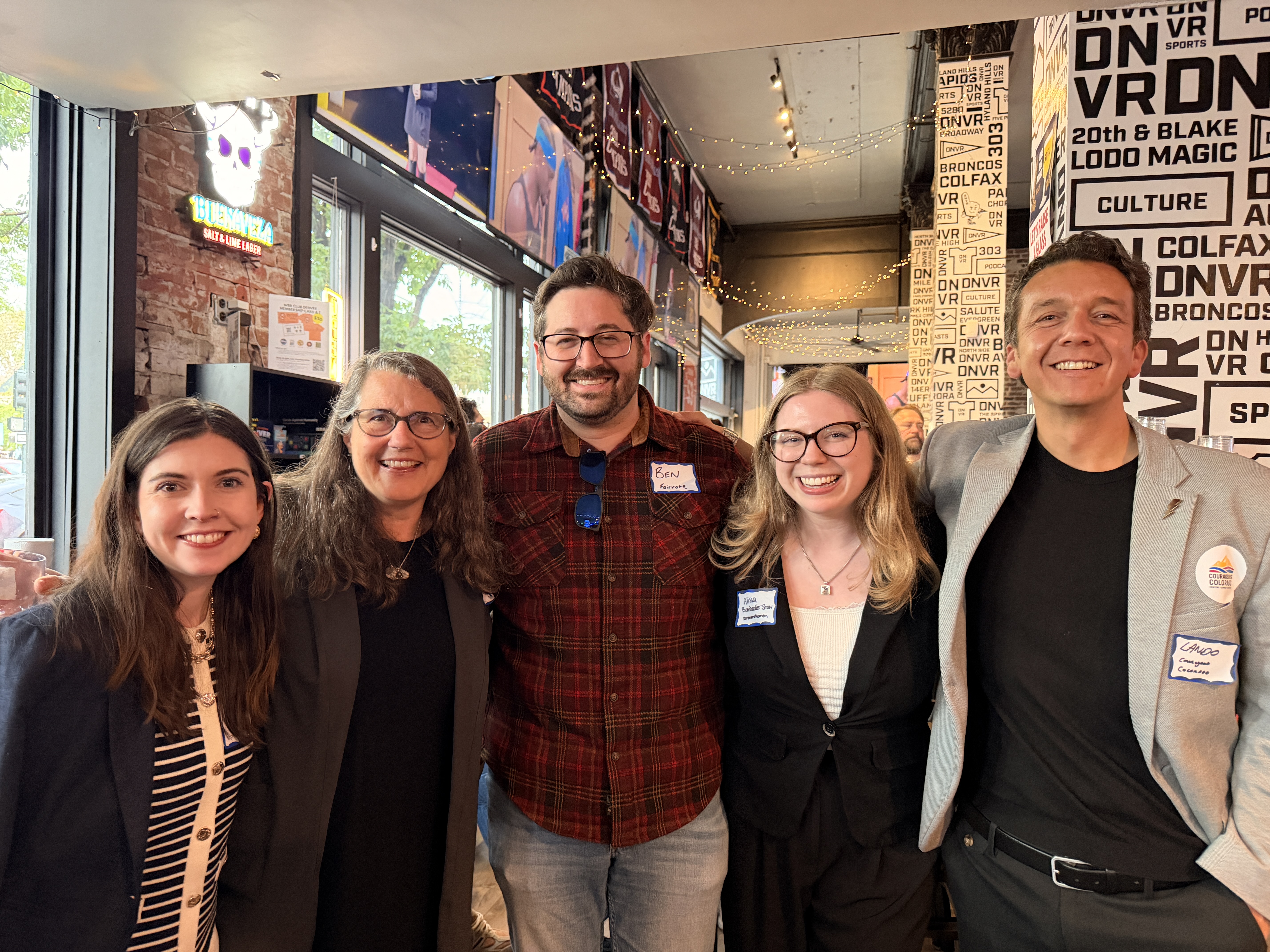
The festivities continued into the evening, as we joined the Civic Collaboratory happy hour, hosted by Courageous Colorado. It was wonderful seeing familiar faces from the movement, including Ben Williams, senior policy counsel and researcher at FairVote, and Landon Mascareñaz, founder and executive director of Courageous Colorado.
It is exciting to see electoral reform expand across Colorado, with new cities considering the implementation of ranked-choice voting, including Lafayette. The Daily Camera covered the newly introduced proposal for ranked-choice voting in a recent article, outlining the following:
“Lafayette leaders are floating a new voting system for the city, a proposal that could go to the ballot for voters to decide this year.
The City Council in March discussed potential ballot measure ideas for the upcoming November election, and councilmembers ultimately requested more information from city staff about ranked-choice voting—a method of casting and counting votes that allows voters to rank candidates in order of preference. […]
The next steps for implementing multiple-winner elections would “likely begin with the legislature and Secretary of State’s Office,” the memo adds. “The Secretary of State would write rules for the certification of STV ranked-choice voting systems. Voting system providers would then submit their systems for certification according to those rules.”
However, Lafayette voters could still be asked in November whether to add language about ranked-choice voting to the city’s charter. If voters approve a ballot item to change the charter, the City Council could later discuss funding and implementation for the scenario of STV elections becoming available in Colorado.”
As opportunities for reform expand across the state, partnerships with local coalition partners and leaders become even more important. We are grateful to be working alongside Courageous Colorado and supporting these efforts.
Maine and Washington, D.C., Primaries Showcase Ranked-Choice Voting in Action

RepresentWomen data shows how powerful a tool ranked-choice voting is for women candidates—earning more than half of seats on city councils elected by RCV and achieving breakthrough wins in RCV elections in Maine’s gubernatorial races and many mayoral races. This progress isn’t accidental—it’s tied closely to the incentives created by RCV for candidates to reach out to more voters to earn a ranking and to look for common ground with other candidates rather than pursue scorched-earth attacks.
I’m enjoying seeing this all play out in a string of big RCV elections coming up in Maine on June 9 (with open seats for governor and the second congressional district) and Washington, D.C., on June 16 (having its first RCV primaries in open-seat contests for mayor, D.C. delegate, and several down-ballot races). In both the Democratic and Republican primaries for governor in Maine, candidates have publicly endorsed other candidates, including the two women candidates for governor (Secretary of State Shenna Bellows and former state house speaker Hannah Pingree), joining with former Senate President Troy Jackson.
FairVote this week released a video from both D.C. and Maine, providing a string of examples, with excerpts from candidate videos and an explanation of how it works. Polls show tight races for Democratic primaries for mayor in D.C., to replace Muriel Bowser, with councilwoman Janeese George one of the two frontrunners, delegate in D.C. to replace Eleanor Holmes Norton, with councilwoman Brooke Pinto one of the two frontrunners, and governor in Maine to replace Janet Mills (with Bellows and Pingree running strongly).
CAWP Research: Women Stalled in Local Election Representation
In April, the Center for American Women in Politics (CAWP) released a critically important, albeit concerning, report comprehensively reporting on and analyzing representation of women in local elections in all 50 states. Notably, women hold one-third of such seats, but with large regional differences. RepresentWomen has found structural changes matter too—such as women now holding more than half of council seats in cities with ranked-choice voting—and we applaud CAWP for lifting up the need for more attention to structural changes. Here’s an excerpt from the report:
“CAWP’s annual release of data regarding women’s representation in mayoral and local councils shows that women hold just 32.7 percent of these seats nationwide, barely more than the 32.4 percent held by women in April of 2025. CAWP’s data on women in municipal offices contains state-by-state information, comparisons to women’s representation in state legislative office, and a ranking of states by women’s representation in municipal offices…
The geographic divide in women’s representation in local offices is a stark one, reflecting the reality that where women live affects their leadership opportunities. The ten states where women hold greater proportions of municipal offices are concentrated in the West and Northeast, while the bottom ten are clustered in the South and Great Plains, a geographic divide that is in fact a partisan one. For example, most of the states in the top ten have Democrat-led state legislatures, while all of the states in the bottom ten are Republican strongholds. Not a single state from the South appears in the top ten, and not a single blue-leaning state appears in the bottom ten.
“It’s dispiriting to see such glacial progress in women’s representation in these offices, which, before CAWP’s regular data collections on local office began, were long assumed to harbor higher rates of political representation for women,” said CAWP Director Debbie Walsh. “We must look at ongoing structural impediments to representation for women, including within our political parties. In local office, in state legislatures, in Congress, we see the same pattern repeating: women are faring well among Democrats and in blue states but are largely struggling in red states and among Republicans. Without buy-in across the political spectrum, women will never reach parity in American government.”
CAWP Report: Concerning Trends in Women’s Representation in New Jersey

RepresentWomen’s 2025 Gender Parity Index gave New Jersey a “D”. Despite voters electing Mickie Sherrill as governor last year, a new report from the Center for American Women in Politics (CAWP) suggests the state’s challenges run deep. Here’s an excerpt from its report released this week:
The annual New Jersey County Report Card from the Center for American Women and Politics (CAWP) reveals that progress for women is stalling or falling in terms of their share of seats in local and county government. The annual data collection from CAWP, a unit of the Eagleton Institute of Politics at Rutgers University, tracks women’s share of seats in town councils, county commissions, and mayoralties around the state and provides a ranking of counties based on each of these categories and overall.In 2026, the share of county commission seats held by women fell by two percentage points, marking the first time in five years that the proportion of women serving on county commissions statewide fell below 35 percent. The number of women serving as mayors increased by just one, and the number serving on town councils increased by just 11—raw-number increases so small that they do not increase the overall percentage of those offices held by women.
“Progress for women here in New Jersey politics has skidded to a stop,” said CAWP associate director Jean Sinzdak. “Thankfully, every year is an election year in the Garden State, and perhaps primary elections next week will put us on a path to a more representative government. But this work starts long before primary day, and intentionality matters. When the same counties appear at the bottom of the rankings every year, it becomes clear that there is a lack of commitment from political gatekeepers to recruit candidates who reflect the state’s population.”
Texas Poised to Regress on Women’s Representation Absent Upsets

Texas held its primary runoffs this week, with turnout, as usual in runoffs, plunging from the first round in March. Already in the nation’s bottom five states in the RepresentWomen Gender Parity Index, it’s poised to decline after Julie Johnson lost her bid for re-election in a primary runoff with her predecessor, Colin Allred, who decided to try to retake his old seat and heavily outspent her.
In 2024, Johnson became the first openly gay person elected to Congress from the South. Jasmine Crockett will also leave Congress after losing her primary for U.S. Senate. Democratic women running for governor and Lt. Governor face an uphill battle this fall, while several women face tougher re-election bids in the wake of the state’s aggressive gerrymander last year.
Here’s more on Rep. Johnson’s historic win in 2024 from KUT News:.
“Julie Johnson has reached plenty of milestones since she first ran for office six years ago. Now, she has become the first openly LGBTQ person elected to Congress from a Southern state. Johnson on Tuesday won the race to replace Colin Allred, who stepped down to challenge U.S. Sen. Ted Cruz. The North Texas seat represents parts of Collin, Dallas and Denton counties.
Johnson handily beat GOP hopeful Darrell Day, a former Arlington city councilman. In a post to Instagram late Tuesday, she called her win “a testament to the power of collective action.”
“It’s about the countless individuals who fought for equality and inclusion and the belief that our government should reflect the will of its people,” Johnson wrote. “This win belongs to you.”
Johnson has served since 2019 in the Texas House of Representatives, where she was a founding member of the LGBTQ Caucus. As a state lawmaker, she prioritized public health issues like lowering barriers to drug access and targeting potentially dangerous doctors.
Several national LGBTQ rights groups track representation among elected officials and said Johnson was the first openly LGBTQ person elected to Congress from the South. A spokesperson for Human Rights Campaign said Johnson will take her fight “for civil rights and those most marginalized” from the state’s to the nation’s capital. This and other LGBTQ rights groups marked Johnson’s win as a milestone for queer women, especially in this part of the country.
“The South is often a battleground for LGBTQ+ rights, and in Julie Johnson, we now have one of our own fighting for freedom at the federal level,” said Janelle Perez, executive director of LPAC, a national group that works to elect LGBTQ women and nonbinary candidates.
For the First Time, a Woman Could Lead the United Nations

The United Nations has never been led by a woman in its 80-year history. That may change in this year’s selection of a new Secretary-General, with women making up three of the five candidates. They are, as reported by Reuters:
- Rebeca Grynspan, 70, depicts herself as a reform‑minded multilateralist who has battled gender barriers and has had a lifelong belief in the U.N. and its commitment to peace, development and human rights.A former vice president of Costa Rica who heads the U.N. Conference on Trade and Development, Grynspan said she stepped back from duties until September to avoid conflicts of interest during the campaign.
- María Fernanda Espinosa was the foreign affairs minister and defense minister in Ecuador in the government of former leftist President Rafael Correa… A published essayist and award-winning poet, Espinosa has also advised the U.N. and non-government organizations on biodiversity and climate change, social equality, Indigenous peoples’ policies and sustainable development. At 61, she is the youngest candidate to succeed Guterres.
The field also includes the current frontrunner, Argentine nuclear chief Rafael Grossi. The final decision rests with the Security Council, where the five permanent members, including the U.S., Russia and China, retain veto power, making the path to the secretary general’s office as much about geopolitics as qualifications.
American Women’s History Museum on the Mall at Risk

The 19th covered an important —and extremely frustrating—development in Congress last. Week about the admirable effort to establish the American Women’s History Museum on the National Mall in Washington, D.C. Here’s more on the story:
The Smithsonian American Women’s History Museum has been years in the making—and now, transphobia is threatening to derail the whole thing. A bill to approve building the museum failed to pass on a 204-216 vote, after House Democrats voted in opposition. The Democratic Women’s Caucus pulled support after Republicans amended the legislation to require that the museum exclude transgender women. …
During an hour of debate on the House floor Thursday, Democrats cautioned that the amended version of the bill also gives Trump too much sway over the museum’s design—and leaves progress on the Museum of the American Latino up in the air. Their attempt to return to the original bipartisan version of the bill failed.
“This bill used to be a bipartisan success story,” Democratic Rep. Emily Randall of Washington state said on the House floor. “Republicans inserted culture war language limiting the museum to biological women. That language was not added to improve the museum, it was added to erase trans women from American history.”
The Democratic Women’s Caucus has been publicly pushing for Republicans to drop the amendment since March, when it was first proposed. Reps. Teresa Leger Fernández of New Mexico, Hillary Scholten of Michigan and Emilia Sykes of Ohio—the chair and vice chairs of the caucus, respectively—said Republicans amended the bill to give President Donald Trump and his allies “unregulated power” over the content and location of the museum.
“A museum about women, fought for and supported by women, should not be controlled by one man. We strongly oppose this bill as amended. It completely flies in the face of the museum’s intention,” they said in a statement. “We urge our colleagues to join us in opposing this bill and demand that the bill be restored to the bipartisan version.
Tulsi Gabbard Is the Fourth Woman to Leave Trump’s Cabinet

All 15 men in Donald Trump’s original Cabinet remain, but four of its seven original women are now left. Here’s The 19th’s coverage of Tulsi Gabbard’s departure:
Tulsi Gabbard, the nation’s chief intelligence official, is the latest woman to leave President Donald Trump’s Cabinet. Gabbard is resigning to care for her husband, Abraham, who has been diagnosed with “an extremely rare form of bone cancer” and “faces major challenges in the coming weeks and months,” she said in her resignation letter, which was first reported by Fox News….
Her resignation as director of national intelligence is effective June 30. Trump said a deputy, Aaron Lukas, would take over as the nation’s intelligence chief. Gabbard, a former Democratic congresswoman from Hawaii who switched parties and became part of the MAGA coalition, was confirmed last year as the nation’s chief intelligence official. She is the only Pacific Islander member of Trump’s Cabinet.
Gabbard, a military veteran who was staunchly anti-war during her time in Congress and vocally opposed Trump’s military actions in Iran during his first term, faced intense scrutiny in recent appearances on Capitol Hill over the administration’s current war in Iran. The Guardian reported that Trump was asking advisers whether he should replace Gabbard after she declined to denounce a deputy, Joe Kent, who resigned over his disagreements over the U.S. war with Iran. Gabbard also sparked concern for being present at an unprecedented FBI seizure of 2020 election ballots in Fulton County, Georgia, which took place five years after Trump’s unsuccessful efforts to overturn his election loss in the state.
Gabbard is the fourth woman to leave Trump’s Cabinet in the past three months, following Homeland Security Secretary Kristi Noem, Attorney General Pam Bondi and Labor Secretary Lori Chavez-DeRemer.
The Impact of Supporting Childcare Expenses for Women Candidates

Hats off to Vote Mama for its leadership on allowing candidates’ campaign funds to be used for childcare expenses. Here is its founder, Liuba Grethen Shirley, explaining its impact on her Substack.
“We need moms seated at the decision-making table, not just advocating from the outside hoping that politicians will listen. We need them on the inside as well, but to do that, we need to break the structural barriers that keep moms out of office and out of power.
That’s where Campaign Funds for Childcare (CFCC) comes in. This policy allows parents to use their privately raised campaign dollars to pay for childcare while they are campaigning, at no cost to taxpayers. It helps level the playing field, so we get more moms in office to deliver paid leave, universal childcare, and so much more.
I got CFCC authorized at the federal level when I ran for Congress in 2018. I can still remember doing call time back then, holding my 1-year-old in one arm and dialing with my other hand, all while my 3-year-old daughter put way too many hair clips into my hair. I became the first woman in history to receive approval from the Federal Elections Commission to use CFCC, a decision that is still cited when federal candidates use CFCC now.
To date, 40 states and DC have also authorized CFCC for state and local candidates, thanks to the efforts of Vote Mama Lobby. In 2025, state legislatures enacted 29,000 new laws, compared to fewer than 40 new laws passed by Congress. If we actually want to make life better for families, we have to improve our representation in state legislatures.
New data from Vote Mama Foundation shows that CFCC is making a difference. The research found that state and local candidates have collectively spent over $700,000 on CFCC between 2018 and 2025, with spending increasing by over 1400 percent in that seven-year period. More and more parents—moms and dads—are using CFCC to be able to run for office.
If we look at the demographics of candidates using CFCC, it shows exactly how this policy can transform the political system. Nearly 60 percent of CFCC users were women, and of the Top 10 spenders, eight were candidates of color, and seven were women….
To be clear, CFCC alone will not erase sexism from politics. But in a political system that already throws up so many hurdles to everyday people, especially parents, running and serving, there are a lot of barriers we have to break to make government fully representative. CFCC moves us in the right direction, and given that Vote Mama Foundation has identified that we’d need to elect 763 more moms of minor children to state legislatures to reach full mamas’ representation, we need all the help we can get.
Building Democracy, Together
It was fun to gather with fellow honorees in Washington, D.C., last week for Washingtonian Magazine’s Influential People in Policy reception—it’s wonderful to be working alongside so many dedicated and thoughtful people to protect and expand democracy.