
As 2025 comes to a close, we’re taking a moment to honor the wins—large and small—that reminded us progress is still possible. Here are a few feminist victories worth celebrating.


More Than A Magazine, A Movement

Femicide refers to the gender-based killings of women. This is often due to underlying cultural forces that encourage male violence and misogyny. BIPOC women are disproportionately victims of femicide.
As 2025 comes to a close, we’re taking a moment to honor the wins—large and small—that reminded us progress is still possible. Here are a few feminist victories worth celebrating.

The U.S. ranks as the 19th most dangerous country for women, 11th in maternal mortality, 30th in closing the gender pay gap, 75th in women’s political representation, and painfully lacks paid family leave and equal access to health care. But Ms. has always understood: Feminist movements around the world hold answers to some of the U.S.’s most intractable problems. Ms. Global is taking note of feminists worldwide.
This week: News from Nigeria, Afghanistan, Japan and more.
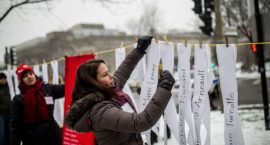
The professor and The Age of Sex Crime author explained in the latest episode of Looking Back, Moving Forward why the backlash we’re facing is proof that we’re winning—and urged feminists not to abandon their utopic visions for a world without misogyny.
Listen to the latest episode of Looking Back, Moving Forward, “How Feminists are Breaking the Cycle of Gender-Based Violence and Harassment (with Ellen Sweet, Jane Caputi, Vanessa Tyson, Victoria Nourse, and Debra Katz)” on Spotify, Apple Podcasts or wherever you get your podcasts.

A spate of 11 femicides in Italy so far this year is making global headlines and prompting calls for “cultural rebellion.” Yet femicide is far worse in the U.S., claiming thousands of lives a year, and comparatively normalized. It’s where the cultural pushback is needed most.
Last month, the U.N.’s annual two-week Conference on the Status of Women wrapped up in New York, having barely addressed growing threats of gender-based violence and without acknowledging the elephant in the room: how Trump administration policy swerves threaten to undo decades of progress for women, including women in the U.S.

President Donald Trump restored gun rights to his friend Mel Gibson, who admitted to abusing his girlfriend. In a reality where domestic abusers are armed, women will suffer most.
—A gun in a domestic violence situation makes a woman five times more likely to be killed.
—Homicide is the leading cause of death for pregnant and postpartum women, with 68 percent of those homicides involving firearms.
—Black women face higher rates of intimate partner violence and are more likely than white women to be fatally shot.
—Forty-one percent of perpetrators in mass shootings between 2016 and 2020 had a history of domestic violence.
So why would any administration push policies that arm abusers? As always, follow the money.
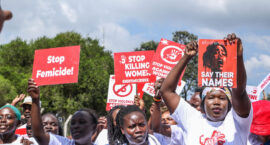
Home is one of the most dangerous places on earth for women, a new United Nations report reveals. More than 60 percent of homicides of women are carried out by their intimate partners or by other relatives.
The femicide index just released by the U.N. Women entity found that at least 51,000 women were killed globally in 2023, and 6 out of 10 women who were victims of homicide were killed by their spouse or another family member. Femicide is the deliberate murder of females because of their gender.

The U.S. ranks as the 19th most dangerous country for women, 11th in maternal mortality, 30th in closing the gender pay gap, 75th in women’s political representation, and painfully lacks paid family leave and equal access to health care. But Ms. has always understood: Feminist movements around the world hold answers to some of the U.S.’ most intractable problems. Ms. Global is taking note of feminists worldwide.

The persecution of witches has never been about magic, it’s always been about punishing (mostly) women who do not conform to patriarchal standards. It’s as true today as it was in 1692.
Are you a witch? If you wear trousers, can read, and want control over your own body and money, you bet your pointy-hat you are. As you prepare for this scary season, don’t despair—use your magic power. In 2024, don’t cast a spell, cast a vote.
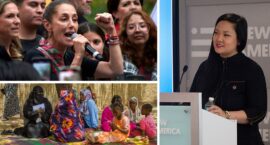
The U.S. ranks as the 19th most dangerous country for women, 11th in maternal mortality, 30th in closing the gender pay gap, 75th in women’s political representation, and painfully lacks paid family leave and equal access to health care. But Ms. has always understood: Feminist movements around the world hold answers to some of the U.S.’s most intractable problems. Ms. Global is taking note of feminists worldwide.
This week: news from Sudan, Mexico, Kazakhstan, and more.

Mexico is on the precipice of electing its first woman president this June. What are the priorities of feminist movements in Mexico and how do they relate to the next presidency?
“Here in Mexico, we focus on women who have been the victims of femicide.”