A Groundbreaking U.N. Resolution Calls Forced Pregnancy What It Is: Reproductive Violence

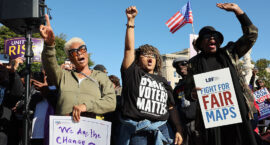
It took until July 7, 2026, for the world’s leading human rights body to call forcing someone to be pregnant—or forcing them not to be—what it is: reproductive violence. In a landmark resolution adopted unanimously, the U.N. Human Rights Council formally recognized “reproductive violence” as a specific, systemic form of gender-based violence. 

This historic U.N. declaration has implications for the United States, where 41 states ban abortion at some point during pregnancy. These bans block medical providers from offering needed care, and enable police and state attorneys to arrest and criminally prosecute pregnant women whose reproductive decision-making they oppose.

Any law or government action that requires a person to carry a pregnancy to term against their will is a form of bodily assault. The dynamics mirror domestic violence and sexual assault. The core of rape is the violation of consent—taking control of another person’s body and forcing them to submit. Abortion bans likewise hijack a person’s body, stripping them of their bodily integrity and self-determination.

As anti-violence advocate Irene Weiser once asked: “How can we ever begin to end violence against women if the laws of our society will not even guarantee the most fundamental of human right to women—to say at all times, under all circumstances, what we allow to happen to our bodies?”


War on Women Report: Abortion Access, Academic Freedom and Trans Rights Under Fire

MAGA Republicans are back in the White House, and Project 2025 is their guide—the right-wing plan to turn back the clock on women’s rights, remove abortion access, and force women into roles as wives and mothers in the “ideal, natural family structure.” We know an empowered female electorate is essential to democracy. That’s why day after day, we stay vigilant in our goals to dismantle patriarchy at every turn. We are watching, and we refuse to go back. This is the War on Women Report.

Since our last report:

—President Trump lost his latest appeal effort against paying New York writer E. Jean Carroll an $83.3 million defamation judgment.
—The government is using family separation as an antiabortion tactic via Child Protective Services.
—The House passed HR 2616, the so-called Stopping Indoctrination and Protecting Kids Act, with support from eight Democrats; if enacted, the bill would bar federally funded public elementary and middle schools from acknowledging transgender students and require educators to notify parents if a student identifies as transgender at school.
—A reminder: People can order abortion pills from all 50 states, no matter what the courts decide.

… and more.

Motherhood as Patriotic Duty: The Dangerous Politics Behind Trump’s New Messaging

Moms.gov may present itself as a resource for “new and expecting mothers,” but its deeper message is unmistakable: motherhood as patriotic obligation, reproductive autonomy as suspect, and declining birth rates as a national crisis. The site promotes crisis pregnancy centers, fertility treatments and anti-contraception talking points while echoing a long history of pronatalist politics that frames women’s bodies as tools of the state rather than sites of personal choice.

History offers chilling parallels. Governments facing demographic anxiety—from Nazi Germany to the modern U.S. right—have elevated childbirth through propaganda, financial incentives and attacks on reproductive healthcare. Nazi officials restricted access to contraception and abortion information while glorifying motherhood through state medals and nationalist media campaigns; today, conservative lawmakers and influencers similarly cast hormonal birth control and medication abortion as dangerous while promoting “natural” fertility and larger families as social imperatives.

The result is not simply antiabortion policy, but a broader attempt to reshape gender roles and define which families are valued.

Moms.gov fits into a growing body-politics movement that ties reproduction to nationalism, morality and demographic control—using government-backed messaging to pressure women toward motherhood while undermining reproductive freedom.

A Government for Big Tobacco and Bigger Families

The Department of Health and Human Services (HHS) made multiple headlines last week—starting with the apparent implosion of Dr. Marty Makary’s tenure as Food and Drug Administration commissioner. But beneath the chaos lies something more troubling: a federal health apparatus increasingly shaped by antiabortion pressure campaigns, pronatalist messaging and culture-war governance masquerading as public policy.

From the Supreme Court fight over mifepristone access to the Trump administration’s bizarre new moms.gov initiative—complete with links to antiabortion crisis pregnancy centers and rhetoric about Americans being “under-babied”—the week offered a revealing snapshot of where U.S. health policy is headed. Meanwhile, flavored vape approvals for Big Tobacco sailed through the FDA, even as reproductive healthcare access remains under constant attack.

Chaos may be Trump’s currency, but the throughline here is ideology: rewarding conservative allies, policing reproductive autonomy and repackaging motherhood as a nationalist project while offering little meaningful material support to actual families.

Keeping Score: Supreme Court Blow to Voting Rights Will ‘Silence Our Voices’; Conservative Judges Try to Restrict Mifepristone; Moms Worry About Putting Food on the Table

In every issue of Ms., we track research on our progress in the fight for equality, catalogue can’t-miss quotes from feminist voices and keep tabs on the feminist movement’s many milestones. We’re Keeping Score online, too—in this biweekly roundup.

This week:
—The Supreme Court gutted the Voting Rights Act, slashing protections against racially discriminatory voting laws.
—A record high amount of books were censored from libraries in 2025, often due to LGBTQ characters or plotlines addressing racism.
—A third of moms living on low incomes have gone into debt or skipped meals so their kids could eat.
—Just 22 percent of American voters have significant confidence in the Supreme Court.
—In 2025 the number of abortions in the U.S. remained stable, but more patients in states with bans turned to telehealth services instead of traveling out of state.
—The Department of Justice announced plans to expand the use of the federal death penalty.
—An Epstein-Maxwell survivor, who asked to remain anonymous, laments, “I kept my identity protected as Jane Doe. I woke up one day with my name mentioned over 500 times. While the rich and powerful remain protected by redaction, my name was exposed to the world.”
—The Trump administration launched a Moms.gov site on Mother’s Day that refers pregnant people to unregulated crisis pregnancy centers.
—A Ms. piece on solitary confinement by Kwaneta Harris and her daughter Summer Knight won Kwaneta second place in the Collaboration category of the Stillwater Awards for prison journalism.
Liberation, a play about 1970s feminism by Bess Wohl, won the Pulitzer Prize for drama. It was also nominated for the Tony Award for Best Play. Wohl was inspired by her own life: Her mother, Lisa Cronin Wohl, was an early Ms. contributor.

… and more.

Trump’s Budget Plunders Birth Control and Reproductive Health Programs—With Open Derision for Americans Who Need Them

Title X is the federal program that funds family planning and reproductive health services nationwide—and under President Donald Trump’s proposed budget for 2027, it would be effectively eliminated, reshaping access to care for women across the country.

What is perhaps most jarring, on close reading, is not only what the budget proposes, but how it speaks. The language throughout the administration’s budget and HHS documents departs from traditional bureaucratic norms, adopting a tone that is at times openly mocking and vilifying. Programs serving women, LGBTQ people and marginalized communities are described in terms that signal not just opposition, but disdain. It is a stark reminder that federal budgets do more than allocate resources—they reflect who this government is for, and who it is not.

(This essay is part of an ongoing Ms. series examining the real-world impact of President Donald Trump’s proposed fiscal year 2027 budget. Across sectors—from healthcare and childcare to immigration enforcement and food assistance—the series explores what the administration’s funding priorities reveal about who government serves, and who it leaves behind.)

Supreme Court Hands Antiabortion Crisis Pregnancy Center a Procedural Win

On Dec. 2, the U.S. Supreme Court heard oral arguments in First Choice Women’s Resource Centers v. Platkin, an unregulated pregnancy clinic’s constitutional challenge to the New Jersey attorney general’s subpoena for information about its operations, including donor records. 

Despite being awash in revenue, and serial reports of fraud, waste and illegal use of taxpayer funds, these antiabortion clinics are positioning to realize a long-term goal: to “replace” Planned Parenthood and Title X programs and secure federal taxpayer funds to advance an agenda that promotes childbirth and undermines evidence-based healthcare. 

As right-wing politicians decimate the reproductive health delivery system for low-income and uninsured Americans, the UPC industry is ramping up the narrative that their unregulated pregnancy clinics are the answer to the maternal healthcare deserts their policies have created. 

Most media observers are predicting the Court will rule for the crisis pregnancy center, First Choice. If it does, unregulated pregnancy clinics nationwide will be further emboldened to resist any state oversight, including of their medical services. A bold, innovative, multi-front action by reproductive justice advocates, public health professionals and pro-choice officials is the only way we ensure they can’t succeed. 

***

UPDATE: In a unanimous 9-0 decision, the U.S. Supreme Court ruled in favor of the antiabortion pregnancy center at the center of this case, reversing the Third Circuit Court of Appeals’ prior decision and allowing the organization to challenge a New Jersey subpoena in federal court. The Court did not rule on the merits of the subpoena itself, but held that the pregnancy center had standing to bring its constitutional challenge in federal court, rejecting lower court findings that the dispute was premature.

She Was an Antiabortion Poster Child. Now She’s a Reproductive Freedom Activist.

At the age of 15, Charlotte Isenberg took to social media to process complicated feelings about a miscarriage after alleged sexual abuse. That was what first brought her to the attention of antiabortion groups.

“Almost immediately, anti-abortion actors threaded a narrative for me between my grief, my miscarriage and anti-abortion sentiment. I clung to it with desperation,” Isenberg wrote.

Feeling isolated from peers due to both her traumatic experiences and the COVID-19 pandemic, Isenberg found a sense of belonging in these online spaces.

But in May 2024, at age 20, Isenberg says her birth control failed, and she became pregnant for the second time. The timing was devastating: She was unemployed, without stable housing or transportation, and preparing to relocate for college—the first in her family to access higher education. 

When she couldn’t find adequate support for her unplanned pregnancy, Isenberg scheduled an appointment at her local Planned Parenthood for an abortion consultation, unsure of what she would ultimately decide. Another prominent antiabortion activist, one of Isenberg’s best friends in the movement, found out about her appointment; she and other members of the group intervened aggressively.

Despite this pressure, Isenberg was able to make the decision that was best for her and her body. Since her own abortion, she’s become a reproductive freedom activist, educating others about extremist antiabortion tactics and promoting systemic protections for people navigating reproductive healthcare. 

Keeping Score: 137 Women Are Killed by Partners or Family Per Day; Bipartisan Push for Epstein Files; Trans Day of Remembrance and Native Women’s Equal Pay Day

In every issue of Ms., we track research on our progress in the fight for equality, catalogue can’t-miss quotes from feminist voices and keep tabs on the feminist movement’s many milestones. We’re Keeping Score online, too—in this biweekly roundup.

This week:
—137 women and girls are killed by intimate partners or family members every day.
—Congress votes overhwlemingly to force the Justice Department to release their Epstein files.
—Donald Trump snaps at women journalists: “Quiet, piggy” and “you are an obnoxious—a terrible, actually a terrible reporter.”
—Violence against trans women remains high.
—DACA recipients are being targeted and detained under the Trump administration.
—Higher-income college students often receive more financial support than they need, while low-income students struggle.
—Tierra Walker died from preeclampsia in Texas after being repeatedly denied an abortion.
—Viola Ford Fletcher died at age 111. She was the oldest living survivor of the 1921 Tulsa Race Massacre. 
—North Dakota’s total abortion ban was reinstated after the state’s Supreme Court reversed a temporary injunction from a lower court. There are now 13 states with total bans.

… and more.

The War on Women Report: Government Shutdown Continues; Another Woman Denied Emergency Abortion Care; FDA Approves Generic Mifepristone

MAGA Republicans are back in the White House, and Project 2025 is their guide—the right-wing plan to turn back the clock on women’s rights, remove abortion access, and force women into roles as wives and mothers in the “ideal, natural family structure.” We know an empowered female electorate is essential to democracy. That’s why day after day, we stay vigilant in our goals to dismantle patriarchy at every turn. We are watching, and we refuse to go back. This is the War on Women Report.

Since our last report:
—Turning Point hosted an event at the University of Alabama advocating the death penalty as punishment for abortion patients.
—After being denied care for her ectopic pregnancy by an antiabortion OB-GYN, a 28-year-old woman in Illinois was forced to travel to multiple hospitals and healthcare centers before receiving life-saving care.
—Vocal abortion opponent Sen. Josh Hawley (R-Mo.) introduced the Prohibiting Abortion and Transgender Procedures on the Exchanges Act, seeking to halt any healthcare plans under the Affordable Care Act (ACA) from funding abortions, even in states that preserve abortion access. 
—The Texas Supreme Court has ruled that judges can decline to marry same-sex couples if doing so goes against their religious beliefs.

… and more.