As abortion pills and telehealth expand access nationwide, antiabortion crisis pregnancy centers are rebranding as ‘telehealth providers’ to mislead and delay patients seeking real care.

For decades, antiabortion crisis pregnancy centers (CPCs) have preyed on vulnerable women, planting themselves next to abortion clinics to misdirect and confuse women seeking abortion care. Now, as telehealth abortion is becoming a more common way to access abortion care—accounting for one in four abortions in 2024—the CPC industry is moving to sabotage this vital option, especially for women living in states with abortion bans and restrictions. The $2 billion CPC industry is now developing telehealth strategies to mislead women seeking telehealth abortion and divert them away from legitimate providers.
“The CPC industry is failing in its mission to eliminate abortion and control women, so now these unregulated pregnancy clinics are posing as telehealth providers, exploiting the regulatory grey zone of telehealth provision to dupe and ensnare people seeking abortion information online,” said Jenifer McKenna, senior adviser at Reproductive Health and Freedom Watch, which tracks the CPC industry.
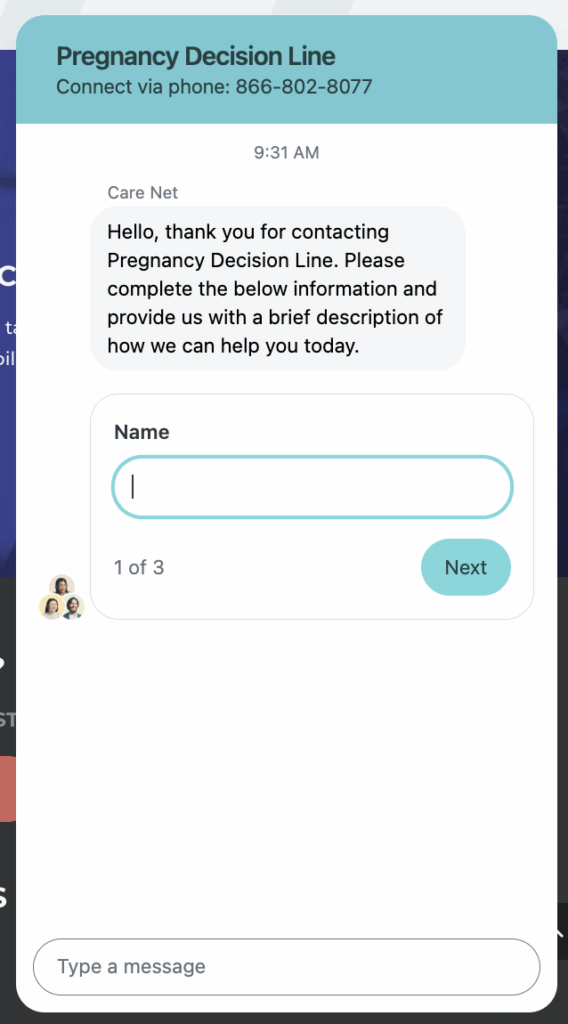
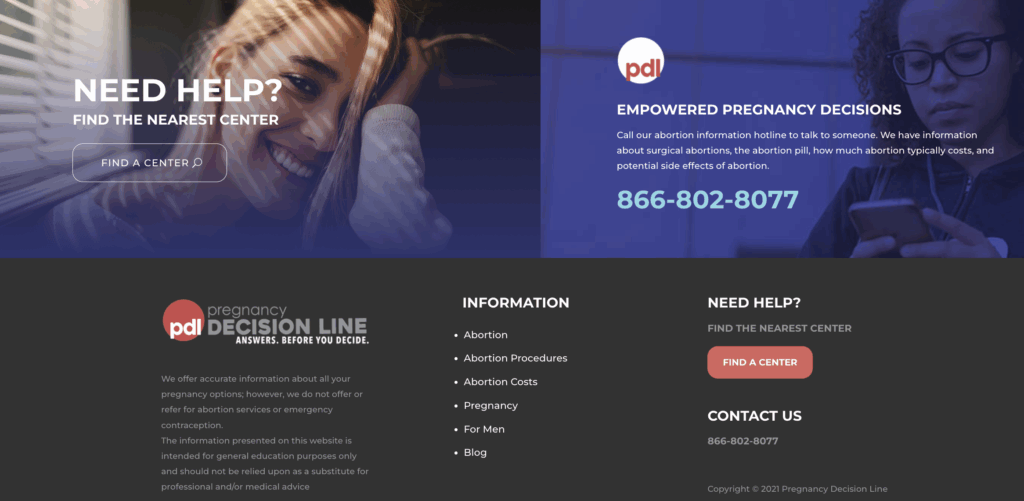
Crisis pregnancy center networks have long operated hotlines. In 2003, Heartbeat International—the country’s biggest CPC network—launched its Options Line, which now claims over 1,000 calls a day. Care Net also operates a similar service: the national hotline called the Pregnancy Decision Line.
Many CPC websites feature pop-up chats purportedly offering consultations with nurses. What’s new today is that more and more CPCs are marketing themselves as telehealth providers, claiming to offer appointments with medical professionals.
At its 2024 national conference, Heartbeat International (HBI) announced plans to prioritize telehealth.
“As a movement, it is time to aggressively add virtual ministry outreach through telecare and telehealth,” said Jor-El Godsey, president of Heartbeat International, at the organization’s 53rd annual conference on April 25, 2024. “We as a movement must do more to incorporate virtual outreach as an integral method to champion lifesaving ministry, just like we did when we added mobile unit outreach. Our best opportunity is for each of our organizations to envision a new team of virtual missionaries.”
According to a recent HBI report, the number of CPCs offering telehealth rose from 46 in 2023 to 125 in 2024—a 176 percent increase.
HBI assists CPCs to launch telehealth services using its Next Level client data platform called “Telecare.” CPCs run by other CPC networks such as Human Coalition, for example, use Telecare. The anti-abortion medical practice Obria is also offering telehealth appointments, which it disingenuously markets as “Real Options.”
We can adapt and meet women where they are—online, in their homes, and on their phones.
Heroic Media, an antiabortion advertising group
In February 2024, Arkansas launched the first statewide CPC telehealth program, MyARNurse, sponsored by the state-funded Arkansas Pregnancy Network. The initiative runs a hotline staffed by registered nurses whose role is to discourage women from ordering abortion pills or crossing state lines for abortion care. Promoting the initiative, the Arkansas Pregnancy Network said, “The telehealth program in Arkansas is helping to reach women by offering a local pro-life medical presence in the digital world and increasing the speed-to-care by being there when she needs it, where she needs it.”
In 2024, the Dallas-based antiabortion advertising group Heroic Media—operating with a budget of over $2.4 million—launched a telehealth brand, Her First Women’s Health, which combines a telehealth platform with physical locations. On their website, they lay out their strategy of “leveraging telehealth” to block women’s increasing access to medication abortion: “We can adapt and meet women where they are—online, in their homes, and on their phones. … Innovation has given us powerful tools to do just that.”
CPCs are using telehealth in blue states as well. In Pennsylvania, CPCs are promoting “virtual counseling,” including North Care Women’s Clinic, Women’s Choice Network and ThriVe. In Illinois, the Purple Clinic uses telehealth to direct clients to physical CPC locations in the Chicago area.
“It’s another cynical appropriation of the trappings of medical legitimacy to intercept people seeking abortion—and an especially insidious one,” said McKenna. “The veneer that an unregulated pregnancy clinic is a normal healthcare office may slip at an in-person visit. But in a virtual visit, all you see is the person on the screen. Maybe it’s a nurse, but a nurse that reports to whom? What are this person’s credentials?”
According to Melissa Fowler, chief program officer of the National Abortion Federation, one website called Discreet Care was “an antiabortion crisis pregnancy center falsely posing as an abortion concierge service.” Fowler described the organization as “part of a phishing campaign intended to gather patient and provider information under false pretenses.”
Since the FDA approved telehealth abortion in 2021, access to abortion care has expanded dramatically across the United States. In Massachusetts, for example, patients can choose from 20 online clinics that mail pills for $0-150 with one-to-five-day delivery. California has 22 telehealth abortion providers and Illinois has 18.
For women in states with bans, telehealth abortion has provided a life-saving option, as clinics in eight states are legally able to service patients nationwide. Most telehealth abortion providers operate asynchronously, asking patients to fill out an online form, which is then reviewed by medical providers. If patients are eligible, providers prescribe the medications and mail them directly to patients.
… in a virtual visit, all you see is the person on the screen. Maybe it’s a nurse, but a nurse that reports to whom? What are this person’s credentials?
Jenifer McKenna, senior adviser at Reproductive Health and Freedom Watch
CPCs masquerading as telehealth abortion providers are exploiting this model of care to block women’s access. They mimic legitimate abortion clinics in language and appearance, promising non-judgmental counseling and unbiased information about abortion. In reality, they delay women’s access to care, misinform them about abortion safety, pressure them to carry unwanted pregnancies to term, and harvest women’s private medical information to advance their anti-abortion goals. Because they do not bill insurance, the vast majority of CPCs are not subject to federal HIPAA law—the Health Insurance Portability and Accountability Act—that protects medical privacy, leaving patients’ data exposed.
To find a legitimate telehealth provider, experts recommend verifying the provider before contacting them and ensuring they clearly state that they provide abortion services. Comprehensive and regularly updated information on telehealth abortion providers is available from Plan C, I Need An A and AbortionFinder.
“CPCs target the most vulnerable—young people, uninsured and underinsured people, women of color and immigrants—the very people with the fewest options and greatest barriers to abortion and all reproductive healthcare,” said McKenna. “As our country faces worsening maternity care deserts, provider shortages and devastating cuts to the reproductive healthcare safety net, pregnant women and teens need honest, evidence-based care more than ever, not ideologically driven pseudo-healthcare.”