States Already Enacting Harmful SAVE Act Policies, Requiring Proof of Citizenship to Vote

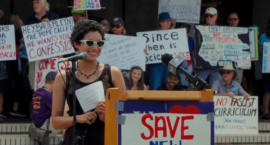
Congressional Republicans are once again prioritizing the SAVE Act, legislation that would force Americans to show documents like a passport or birth certificate to register to vote. The House has already passed yet another version of the bill, but so far it has stalled in the Senate.

If the SAVE Act becomes law, it would block millions of eligible American citizens from voting.

As the Senate considers the SAVE Act, state legislatures are advancing similar “show-your-papers” policies. Florida, South Dakota and Utah have enacted similar laws in recent weeks. Other states that already have similar laws have experienced the difficulties of implementing them.

Including Arizona, which has had a proof-of-citizenship requirement for over 20 years, five states will have a show-your-papers requirement for all voters for the 2026 midterms: Arizona, New Hampshire, South Dakota, Utah and Wyoming. A sixth state, Louisiana, has one on the books that it has not yet implemented.

That’s a lot of strain on the election system to solve a problem that doesn’t exist. The U.S. Senate would be wise not to inflict those obstacles on every election official nationwide.

From Smith College to Florida’s New College: MAGA’s Campaign Against Universities, Women’s Studies and Liberal Arts

As a professor at Smith College and chair of the Program for the Study of Women, Gender and Sexuality, I have closely followed the Trump administration’s attacks on higher education—and on my field in particular.

This week, those attacks landed squarely on my own campus: The Department of Education has opened a civil rights investigation into Smith’s policy of admitting transgender women, arguing the college may be violating Title IX by recognizing gender identity rather than “biological sex.” The probe—prompted by a complaint from a conservative advocacy group—questions whether a women’s college can remain legally “single sex” while including trans women, and raises the possibility of federal penalties or loss of status.

This move is not an isolated action. It is part of a broader campaign to redefine civil rights protections in ways that exclude transgender people, and to pressure colleges and universities into compliance with that vision.

It is also one of many recent attacks on higher education—especially liberal arts institutions—by Republican lawmakers and the Trump administration, aimed at universities they view as out of step with a conservative, anti-feminist agenda. In a 2021 speech titled “Universities Are the Enemy,” JD Vance declared, “We must aggressively attack the universities in this country. … Maybe it’s time to seize the endowments, penalize them for being on the wrong side of some of these culture war issues.”

Women’s, gender and sexuality studies teaches students to think critically, to question the status quo and to understand how power shapes our lives across gender, race, class, sexuality and more. These are precisely the kinds of questions that have made the field a target. Rather than engage with this work, critics have increasingly sought to discredit or dismantle it altogether. The Heritage Foundation’s Project 2025 provides a roadmap for doing just that—but many of these strategies have already been tested at the state level.

The Supreme Court Gutted the Voting Rights Act. Women Will Pay the Price.

The Court didn’t strike down Section 2 of the Voting Rights Act—but it didn’t need to. By requiring proof of intentional discrimination, the majority has made it dramatically harder to challenge maps that dilute the voting power of communities of color. As Justice Elena Kagan warned, the provision is now “all but a dead letter.”

For the women elected from majority-minority districts, that shift is not abstract. These are the very districts that made their representation possible—and now, those districts are among the most vulnerable to being redrawn or erased.

The consequences were immediate. Within hours of the ruling in Louisiana v. Callais, Florida lawmakers advanced a new congressional map targeting majority-minority districts, including seats held by women.

In the 11 states most likely to face redistricting pressure, up to 36 such districts could be redrawn—12 of them currently represented by women.

As voting rights litigator Yael Bromberg explained, the Court is now effectively looking for a “smoking gun” of discrimination. Short of that, legislatures can redraw maps along partisan lines, even when the racial impact is clear.

The statute remains on the books, but its practical force does not. And what replaces it is not neutrality—it is discretion. State legislatures can choose which incumbents to protect and which to leave exposed, creating new opportunities to sideline women and weaken the political power of the communities that elected them.

What happens next will not hinge on another sweeping ruling, but on a series of decisions that are easier to overlook and harder to challenge—and that will determine, district by district, who gets to remain represented at all.

‘Who Will Revere the Black Woman?’ Remembering Nancy, Cerina and So Many More

Even though I did not know Nancy Metayer, my heart is utterly broken by the loss of her life and the violence of her death. The night before her funeral, I joined a virtual vèyè in her honor—a space to keep watch, to remember her impact and to hold one another in communal care.

That same day, news broke about Dr. Cerina Fairfax, also killed in her home. I did not know her either, and still, I was gutted.

Nor did I know Pastor Tammy McCollum, Ashly Robinson, Qualeisha Barnes, Davonta Curtis or Barbara Deer—Black women killed in just a matter of weeks. And to think these are only the names we know.

In moments like this, I find myself returning to a question first posed by Abbey Lincoln decades ago: “Who will revere the Black woman?” The reality of this violence—and the way it is so often explained away or softened—makes that question feel as urgent as ever.

Black feminists have long named the patterns, the structures and the stakes. And still, we are left mourning, naming and insisting: We will not let their lives be forgotten. We will continue the work in their honor—because we revere them.

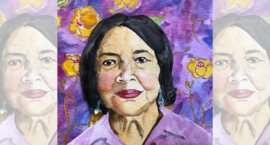
From Dolores Huerta to Cynthia Richie Terrell, Celebrating the Birthdays of the Women Keeping Movements Alive

Weekend Reading on Women’s Representation is a compilation of stories about women’s representation in politics, on boards, in sports and entertainment, in judicial offices and in the private sector in the U.S. and around the world—with a little gardening and goodwill mixed in for refreshment!

This week:
—Chris Taylor wins her race for Wisconsin Supreme Court.
—Emily Gregory flips a Florida House seat in Trump’s backyard.
—New data says that women could definitely win the 2028 presidential election.

… and more.

‘First They Came for My College’: The Takeover of a Florida College and the Students Who Refused to Disappear

When I told coworkers and friends I was going to see a documentary about the right-wing takeover of a small public Florida college, the reaction was immediate and unanimous: Why would you do that to yourself? Too depressing. I’d be too angry.

They weren’t wrong. Premiering at SXSW last month and directed by Patrick Bresnan, First They Came for My College is, at times, almost unbearable to watch—a slow, procedural dismantling of a public institution, carried out in meeting rooms and press conferences and budget lines.

But what stayed with me wasn’t only the anger—it was the stubborn, surprising insistence on community, joy and showing up anyway.

War on Women Report: Georgia Woman Arrested for Self-Managed Abortion; Idaho Forces Teachers to Out Trans Youth; Ohio Bill to Force Doctors to Report Pregnancies to the State

MAGA Republicans are back in the White House, and Project 2025 is their guide—the right-wing plan to turn back the clock on women’s rights, remove abortion access, and force women into roles as wives and mothers in the “ideal, natural family structure.”

We know an empowered female electorate is essential to democracy. That’s why day after day, we stay vigilant in our goals to dismantle patriarchy at every turn. We are watching, and we refuse to go back. This is the War on Women Report.

Since our last report:
—More restrictive abortion laws in a particular area are linked to a higher risk of depression for women residents.
—Texas Rep. Tony Gonzales has dropped his bid for reelection after the House opened an inquiry into his sexual relationship with Regina Santos-Aviles, a subordinate (Gonzales’ Uvalde district director) who died by suicide last year. Texts between Santos-Aviles and Gonzales show her attempting to deter her boss’ advances.
—An Ohio appeals court dealt a final blow to Senate Bill 27, permanently blocking the state’s attempt to mandate the burial or cremation of fetal tissue.
—New Mexico legislators passed a first-of-its-kind bill ensuring fully funded universal childcare for families of all income levels.
—More than 8 million people worldwide took to the streets for the third No Kings protest on March 28, protesting Trump, ICE raids and the war in Iran.
—Louisiana Attorney General Liz Murrill is spearheading a legal offensive to criminalize the mailing of mifepristone and misoprostol into the state. 
—In Georgia, 31-year-old Alexia Moore, an Army veteran and mother of two, has been arrested on murder and drug charges for an alleged abortion in December.
—In Montana, 20-year-old Charles Felix Jones has been charged with planning to shoot and kill a Missoula abortion provider.
—The latest installment of rePROs Fight Back’s annual 50-State Report Card finds that access to sexual and reproductive healthcare in the United States remains deeply unequal and increasingly under threat, with the nation once again earning an overall failing grade.

… and more.

The SAVE Act Is Designed to Erode Access to the Ballot. The Woman Who Built the Largest Voter Protection Operation in History Is Not Surprised.

The Senate has begun debating the SAVE America Act—a bill that would require Americans to show a birth certificate or passport just to register to vote.

Rachana Desai Martin is not surprised. She has spent her entire career watching exactly this happen.

Desai Martin is one of the only people in the country who has spent her career building the infrastructure to protect both voting rights and reproductive rights. She has seen both fights from the inside. And what she sees—clearly, consistently, without drama—is that these are not two separate battles.

“At base, both of these things are really about power and control,” she told me. “When we’re advocating for reproductive rights, it’s to give people power over their own bodies and their lives and their families and their futures. When we’re talking about voting rights, it’s to give people the power to pick their representatives and have their government work for them.”

Same target. Same architecture. Same playbook.

‘This Is Our Country Too!’: The Enduring Legacy of Spanish-Speaking Women in Early America

Centuries before the American Revolution, Spanish-speaking women crossed oceans and deserts to build communities whose legacies still shape the United States.

As anti-Latino sentiment coincides with the 250th anniversary of the United States, we must remember that long before the American Revolution, Spanish-speaking women inhabited territory that would become the United States. 

Like their English Protestant counterparts in New England, Spanish-speaking women were founding mothers of our nation. Their legacies live on through their descendants and the many other Latinas who immigrated to the U.S. over the past 250 years. Faced with the widespread detention of Spanish-speaking women, it is crucial to remember that it has long been their country too.  

(This essay is part of the FEMINIST 250: Founding Feminists series, marking the 250th anniversary of America by reclaiming the revolution through the women and gender-expansive people whose ideas, labor and resistance shaped U.S. democracy.)