Rewriting Herstory: Proposing an AP U.S. Women’s History Course

Washington, Jefferson, Hamilton, Lincoln, Roosevelt, King, Kennedy and Reagan each played critical roles in the history of our country and remain household names. Yet what of Murray, Chisholm, Eastman, Stone and Stanton? These women contributed greatly to the success of America, yet remain largely unknown to most Americans, including high school students. 

We are advocating to change this. As AP history students and educators, we propose the creation of a standalone AP United States Women’s History course. The youth of America are entitled to these stories traditionally left untold: the history of 50 percent of our population, who are currently a mere sidebar of token inclusion within a generic textbook on men’s history.
Weekend Reading on Women’s Representation: SCOTUS Is ‘Making History for the Wrong Reasons’; America Had More Than One Founding

Weekend Reading for Women’s Representation is a compilation of stories about women’s representation. 

This week: America has far more than just one set of founders; the architects of American democracy were inspired by the system of checks and balances practiced by Indigenous peoples; why the number of women candidates filing to run for office is lower than in recent years; and more.

Weekend Reading on Women’s Representation: Remembering Women Civil Rights Leaders; Toni Morrison’s New USPS Forever Stamp

Weekend Reading for Women’s Representation is a compilation of stories about women’s representation. 

This week: 15 women who were key figures in the Montgomery bus boycott; the U.S. Postal Service features writer Toni Morrison on a new forever stamp; what motivates women to consider running for office, and the systematic barriers they face; and more.

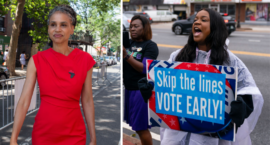
‘Voters Showed Up for Democracy’ Despite Record-Breaking Suppression: The Ms. Q&A With Maya Wiley

U.S. voters have faced significant changes in the voting rights landscape over the years—but when it comes to restrictions, the last two years take the cake. Since the beginning of 2021, lawmakers have passed at least 42 restrictive voting laws in 21 states, making last year the worst on record for voting access. Many of the same trends continued into 2022, affecting both midterm turnout and race outcomes, and putting U.S. democracy through the ultimate stress test.

The Leadership Conference on Civil and Human Rights has been fighting laws like these for over seven decades. Today, it’s led by Maya Wiley. In a conversation with Ms., Wiley gave her frank take on the 2022 midterms and the upcoming Georgia Senate race; discussed the role of voter suppression in key races this year; and shared her vision for the future of U.S. civil rights.

The Importance of Talking About Women in the Fight Against Abortion Bans

The most powerful argument for abortion rights is to highlight the sex-based nature of these restrictions and argue that they violate equal rights. To succeed in arguing that sex equality requires the right to abortion, we need to be able to talk about how sex shapes access to abortion and how anti-abortion legislators target women with devastating consequences. The elimination of sex-based language in abortion politics makes this argument impossible, and reinforces the long-term right-wing strategy of suppressing information about sex-based disparities.

‘The Three Mothers’ Shines a Light on Untold Herstories of Black Motherhood

In her debut, The Three Mothers, author Anna Maliaka Tubbs tells the stories of Berdis Baldwin, Alberta King, and Louise Little—the mothers of James Baldwin, Martin Luther King Jr., and Malcolm X respectively. Tubbs emphasizes that although these men are some of the most recognizable names in the Civil Rights Movement, the movement didn’t start with them.

Black Women in Martin Luther King Jr.’s Neighborhood Will Soon Receive Monthly Cash Payments

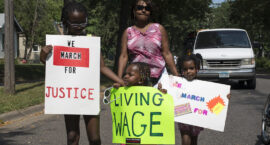
A new guaranteed income program will send $850 monthly payments to Black women over two years, beginning in Atlanta’s Old Fourth Ward, where King popularized the idea of direct cash payments half a century ago.

“Oftentimes our communities are viewed as lacking knowledge, lacking resources, lacking assets. We want to flip that narrative. Communities closest to the problem are rich with resources and insight on how to solve our deepest social issues, our deepest economic issues,” said Hope Wollensack, executive director of the Georgia Resilience and Opportunity Fund. “We want to put agency over one’s future in [women’s] hands.” 

Coretta Scott King, a Revolutionary Woman (January 2006)

From the Vault: Coretta Scott King, a Revolutionary Woman

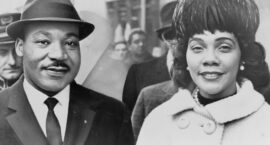
While Coretta Scott King has been celebrated as a civil rights icon, her vision of “the beloved community” was bolder and more revolutionary than her husband Martin’s. When we retell the story of radical African American activism in the 20th century, we can finally embrace Coretta Scott King as the truly revolutionary figure she was.

*This article was originally published in the Spring 2006 issue of Ms.—a few months after Coretta Scott King’s death on January 30, 2006.*

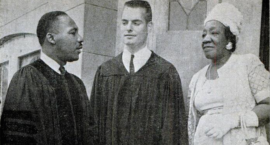
Martin Luther King, Jr., on Feminism

Dr. King, whose birthday we celebrate today, didn’t live long enough to see the flowering of Second Wave feminism—we relied on his widow, Coretta Scott King, to carry the torch for women’s rights and LGBT rights. But we can take heart from so many of the great civil rights leader’s words in our ongoing global struggle […]