The societal privilege of marriage is damaging humanity.
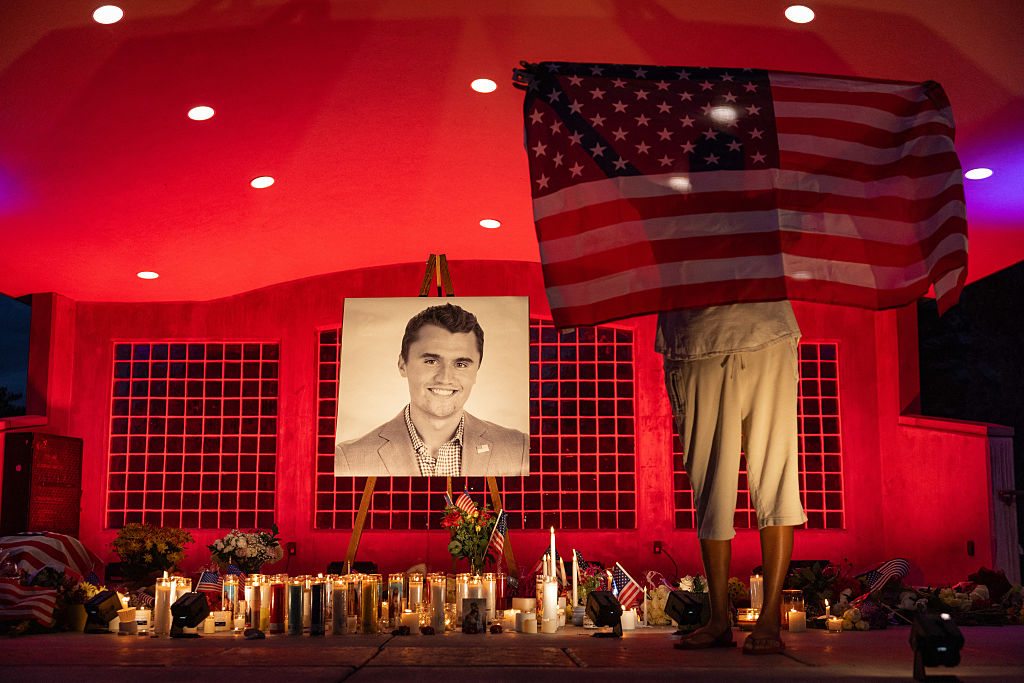
After Charlie Kirk’s assassination, many mourners grieved the untimely death of a “father and husband.” Opinions of his rhetoric aside, the unintended implication is that he would be less worthy of being mourned if he were single and childless.
As a 47-year-old male who’s never been married and has little to no interest in dating, you’d better believe I’ve been asked questions like, “When are you gonna settle down?” and “why are you still single?” But this isn’t about me venting. It’s about what’s behind these questions: the core assumption that not having a partner is lacking.
Despite this assumption, the Pew Research Center has predicted that by 2030, one in four Americans will have never married by the age of 50. At present, 50 percent of the U.S. population over the age of 18 is single.
These statistics are frightening to The Heritage Foundation, who recently published a position paper entitled, “We Must Save the American Family,” the goal of which is to encourage more people to follow the traditional path of getting married and having children.
If one’s going to talk fairly and accurately about singlehood, they must understand two major terms, both coined by Dr. Bella DePaulo: “singlism,” the stereotyping and discrimination against people who are single; and “matrimania,” the over-the-top societal obsession with marriage as the ultimate mark of happiness. These two ideas are pervasive around the world.
There is conflicting data on whether married people are happier and healthier than single people. Some studies show that very finding. However, there is also research that proves marginalized groups suffer greater happiness and health deficits, which contributes to this finding. It stems from a variety of sources, such as:
- Popular media. For example, the protagonist, at the beginning of the film, is “broken” in some way, and by the end, they’re coupled, and the romance has magically fixed them;
- Our laws. Example, when I die, I could leave my Social Security benefits to a spouse or child, but not to the brother I’ve known for the past 43 years;
- Microagressions. The types of microagressions mentioned above, which have the potential to affect how a single person views themselves, thus causing them to enter a relationship and stay in it past its expiration date.
It carries over to how doctors treat their patients. My friend and colleague, Joan DelFattore, was diagnosed with cancer. An oncologist suggested a less aggressive course of treatment due to the fact that she doesn’t have a spouse or children. Fortunately, she had a group of friends to provide support; they helped her find a doctor who was more understanding, and she’s currently in remission.
This example coincides with findings that singles have larger networks of friends than married people do; they’re also more connected with their communities and families of origin. Women do especially well in this area because they’re encouraged to form networks; for this reason, single women have been shown to be happier than married women. The opposite holds true for men because my gender falls victim to the violently masculine myth that to be vulnerable is to be weak. I’m an anomaly in this area; I refer to myself as a “childless cat lady” with male parts. (My cat’s name is Chester.)
I’m not anti-marriage. I do believe some people are meant to follow that path, but it’s overprescribed and overprivileged.

Involuntary, unhappy singles are prey for scammers on dating apps. There have been many cases where a person’s given copious amounts of money to people they believed was a romantic partner, even though they hadn’t met said partner. As a result, they lose a lot of money and endure years of mental health struggles. Many suffer from internalized singleism, which often results from societal thinking that “single is bad.”
I can’t measure whether they want to partner innately or if they’re being socialized into it. But the conditioning we receive doesn’t help. That said, I’m not anti-marriage. I do believe some people are meant to follow that path, but it’s overprescribed and overprivileged. And it’s certainly not for everyone. In the Bible, the Apostle Paul’s first letter to the Corinthians, chapter 7, verses 8-9 even states this: “To the unmarried and the widows, I say that it is good for them to remain single, as I am. But if they cannot exercise self-control, they should marry.”
If we can modify our thinking, singles as a population will be happier, and those who marry will be happier because they’re entering a union they’re meant to be in, not one society forces upon them.