As the Supreme Court weighs whether to narrow birthright citizenship, one formerly stateless woman warns that stripping children of automatic citizenship would turn her lifelong fear and uncertainty into a reality for countless more families.
I never knew if it was safe for me to have a child. For most people, that question is about timing or readiness. For me, it was about something more fundamental: not whether my child would belong in the United States, but whether I would be able to stay with them, have access to them, and be able to be their parent without fear. To show identification when asked. To walk into a school building. To simply be present in their life.
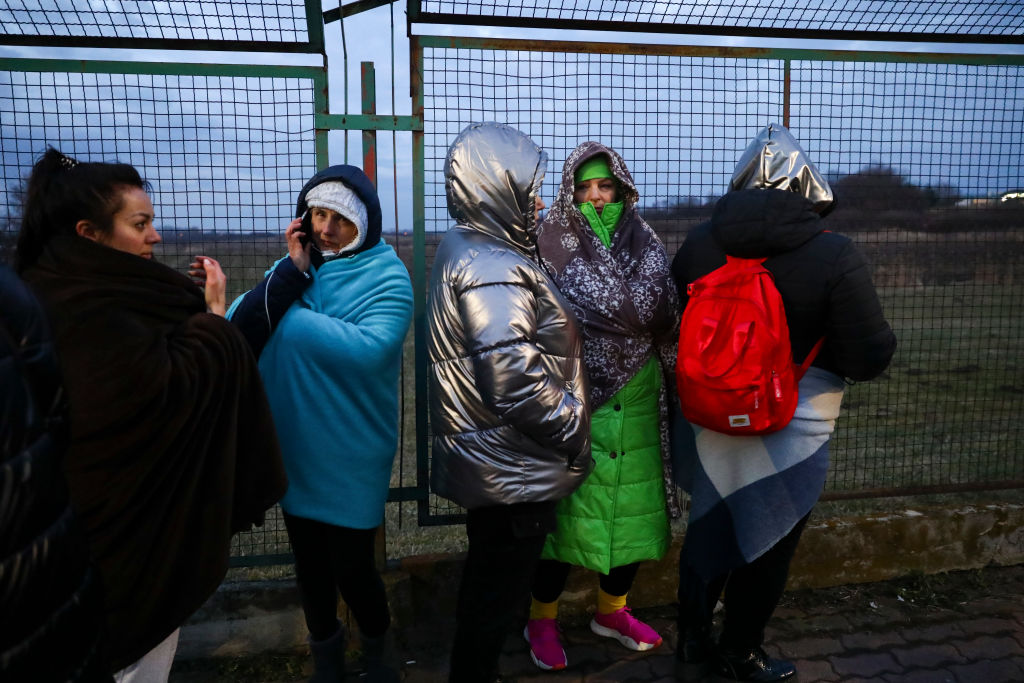
I came to the U.S. as a child with my parents to seek asylum. By the time our claim was denied and we were ordered to leave, the Soviet Union had dissolved and we were no longer recognized as citizens by Ukraine. There was nowhere for us to return. We became part of the estimated 218,000 people living in the United States who are stateless.
For years, I navigated a system that did not recognize me, even as I built a life here and married a U.S. citizen.
It took years of legal advocacy to cancel the removal order issued to me as a child. All that time, I worked, paid taxes, held a Social Security number, but I could not feel safe.
Without citizenship from any country, ordinary parts of life become uncertain. Basic things—proving who you are, opening a bank account, applying for work—can turn into bureaucratic dead ends because no system is designed for people without a country. Crossing state lines is easy enough, but traveling abroad to reunite with family is impossible without a passport.
When you are stateless, marriage to a U.S citizen does not mean that you automatically become a citizen. The law required me to depart the country and process the paperwork from abroad, but without a country to return to and no valid travel documents, I was trapped. If I left the United States, the final removal order issued to me as a child would mean that I could not return. It took years of legal advocacy to cancel the removal order. All that time, I worked, paid taxes, held a Social Security number, but I could not feel safe.
Through all of this, I carried a quiet fear. What would happen if I brought a child into this uncertainty? What if something happened to my husband? Would I have the right to remain with my child? Would I be able to protect them, or even stay out of ICE detention, or could I be deported to a third country?
These were not abstract questions. They shaped my entire 20s.
I ultimately had to undergo a hysterectomy for my health. My body made the decision for me. I will never become a mother.
But long before that, statelessness had already shaped how I thought about becoming a parent.
And now, that fear is no longer just personal.
The Supreme Court is considering whether to narrow birthright citizenship, one of the strongest safeguards against statelessness in the world, reflecting a core international principle that children should acquire a nationality at birth.
Without that safeguard, thousands of children born to parents without permanent legal status in the United States, risk losing automatic citizenship. And for the children of stateless parents, statelessness could be passed from parent to child.
This is not a theoretical concern. The United States has lived through systems where belonging was inherited, and where entire families were denied recognition across generations. Birthright citizenship was meant to put an end to that.
In April, I sat in the courtroom and listened as the justices debated the meaning of citizenship. So did the president of the United States.
The distance between us was small. The distance in what citizenship meant could not have been greater.
The arguments were framed in legal terms. Constitutional interpretation. Statutory language. Precedent.
But as I listened, I could not separate those arguments from what they would mean in practice. I thought about the years I spent asking the system to recognize me. I thought about the fear that shaped whether I felt safe building a family.
At United Stateless, the organization I lead, we see how these legal questions shape real lives.
We work with people who are stateless or at risk of statelessness, many of whom are navigating legal limbo in the United States. Some, like Daiana Lilo, a Harvard graduate and Tulane Law School student, must now add to their own worries about immigration status the fear that their children—if they risk having children—could be born stateless.
Citizenship is often discussed as a legal status. But in reality, it shapes the most intimate parts of our lives. Whether we feel safe to raise a family. Whether our children will belong, or inherit uncertainty. Whether we can imagine a future without fear.
No one should have to weigh the risk of their child not belonging anywhere. And no country should create that risk where it does not yet exist.