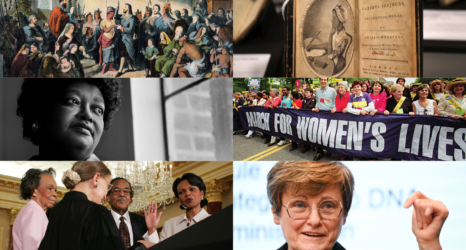
At the start of a revolutionary moment, we must create open spaces for leaders and activists to be awakened.

In 2016, just after President Donald Trump was elected to his first term, a small group of women crowded together in an apartment in Brooklyn. Balancing mugs and sitting crisscross on the floor, they began to share what they had been afraid to say out loud.
Their goal was to create space for people to come together not for debate, but to listen and to help people find their voice during an uncertain time in U.S. history. As people expressed their fears and feelings, they discovered the power of being heard. The practice caught on and, in time, the group expanded, becoming the national community group I Will Not Be Quiet.
“It felt like a dam had been broken, and all this fear and anger was pouring out into the open. But underneath all of that noise, I noticed that there was something else: this impenetrable silence. It was a silence of people who didn’t feel safe enough to say I don’t really know, or I don’t know everything about this topic,” says Adrianne Wright, co-founder of I Will Not Be Quiet and founder and CEO of Rosie, a community storytelling agency for nonprofit organizations.

Wright says that she didn’t expect just how much the community practice would grow. Over time, the group started bringing in community voices, nonprofit leaders and advocates to speak to the group.
When COVID hit in 2020, the group pushed to create a sense of community during the shutdown. They created a toolkit so that anyone, anywhere could start their own circle. Chapters sprung up across the country: From Seattle to Portland, Ore., to Spokane, Wash., to Nashville to Atlanta, thousands of people were meeting in person and virtually, gathering in circles across the country to learn about the political and social issues impacting their lives.
I Will Not Be Quiet circles have broadened their impact over the five years since the organization’s founding including everything from rallies for survivors of gender-based violence to voter outreach efforts across the U.S.
If we don’t feel like we belong, we can’t speak up, and if we don’t speak up, it’s very hard for us to realize our power.
Adrianne Wright
“There are people who wanted to understand, who were searching for their place in all of it, but just didn’t feel like they belonged anywhere in the conversation. It was like we were surrounded by information, but we were starving for understanding and for belonging, and that silence felt dangerous to me, because if we don’t feel like we belong, we can’t speak up, and if we don’t speak up, it’s very hard for us to realize our power,” says Wright.
While the talking circles Wright helped to create were borne out of recent events, they are far from a new idea.
“From Black churches during the Civil Rights Movement, to women’s groups in the 1960s, these spaces helped people name what they were living through and turn that into collective action. There’s a real pattern there: When people are given the space to speak truthfully about their lives, movements begin,” says Wright.
How to Start Your Own Talking Circle
You don’t need much to start your I Will Not Be Quiet chapter. You don’t need any training, or even a big group of people. All you need is a few people and a space where you can sit together as a collective. Wright encourages people to start with who you love and those you feel comfortable with.
Make a list of the people you’d like to invite. Ideally, they live in your area. They don’t all have to know each other, but they should all share a common drive to create change in their communities and learn more about how they can do so.
“Start a small group chat and say, ‘Hey, I’ve been wanting a space to talk about everything that’s happening,’ or, ‘The specific news moment has really triggered me. Would you want to try talking this through with me?’”
Then go ahead and set some shared agreements—one person speaks at a time, no interruptions, stress confidentiality, speak from your own experience—in order to create safety within the group.

While starting your group, Wright stressed that it’s not about perfection. “Take the stress out of yourself. The world is complicated enough as it is, life is complicated enough as it is, and just think about bringing people together to have a conversation and starting with the people that you love and that you trust, and then you can decide for yourself.”
With agreements set and people joined, set your first meeting. Select an issue that matters to the group and research the topic as it pertains to your local community. Then invite a guest speaker using the template provided on the I Will Not Be Quiet toolkit.
“We have been living in a time where our voices are questioned and silenced, and where our trust in ourselves has been eroded. So to be witnessed becomes incredibly powerful. But it’s not just emotional—I’ve seen it become activating. People start believing in themselves. They share more, have deeper conversations, and bring forward ideas they might have held back. I’ve seen people start initiatives, organize campaigns, even channel it into their art. That one moment of being seen can change how someone shows up in the world.”
To start your own talking circle, access the toolkit here.