“I don’t go to bed at night feeling bad about what MAGA has to say regarding critical race theory, intersectionality or Black people—they are on brand,” says Crenshaw, ground-breaking feminist thinker and author of a new memoir, Backtalker.
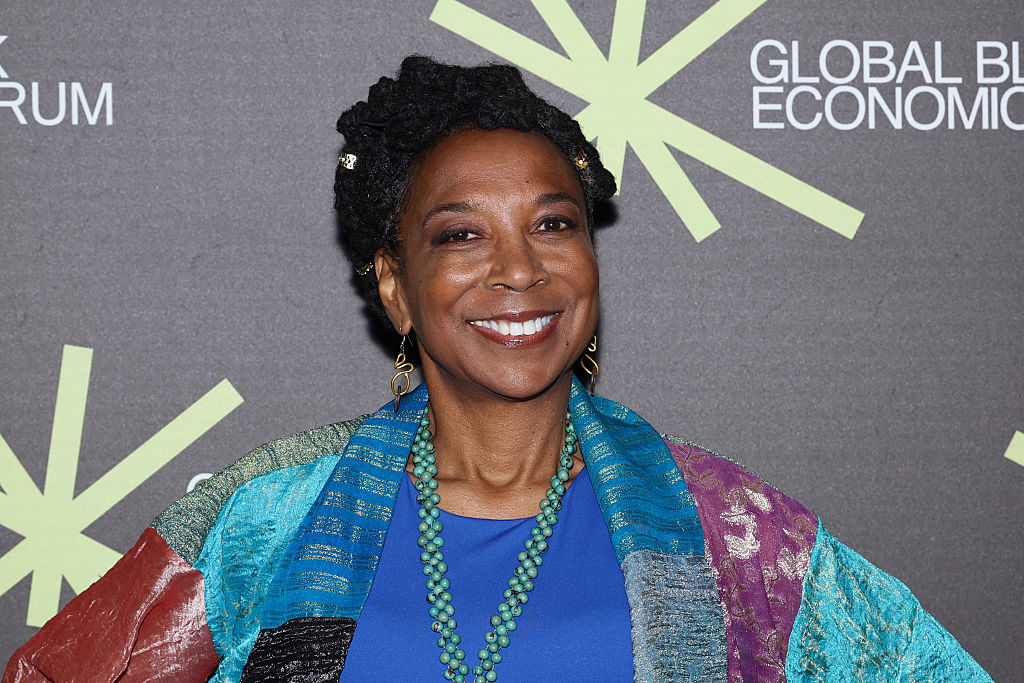
For decades, pioneering legal scholar and activist Kimberlé Crenshaw has helped expand the language we use to understand systemic injustice and the possibilities for uprooting it.
Her groundbreaking work, which includes the development of intersectionality theory and foundational contributions to critical race theory, has shaped social movements, influenced legal policy, and offers critical tools for recognizing how systems of power intersect and reinforce one another.
In her new book, Backtalker: An American Memoir, Crenshaw shares the personal origins of her work, revealing how her earliest encounters with injustice shaped the ideas that would go on to influence generations.
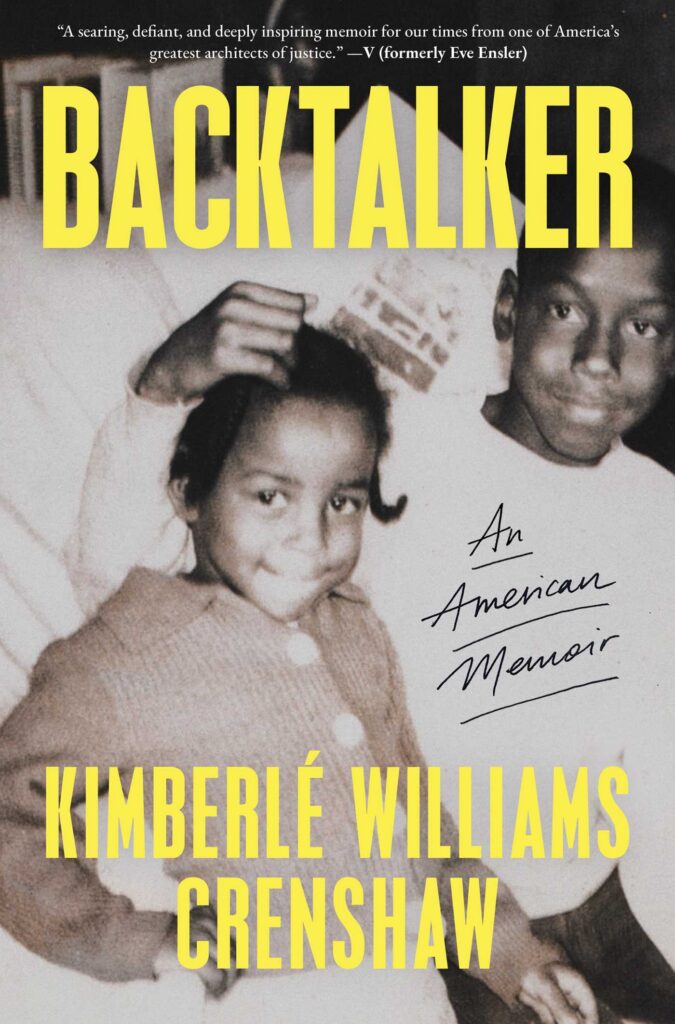
Crenshaw says crafting the term and framework of intersectionality was “part of my lifelong search to understand how the racial burden of Black girlhood and womanhood mattered, and ought to matter, to anyone concerned with fairness, justice and the fulfillment of the promise of America.”
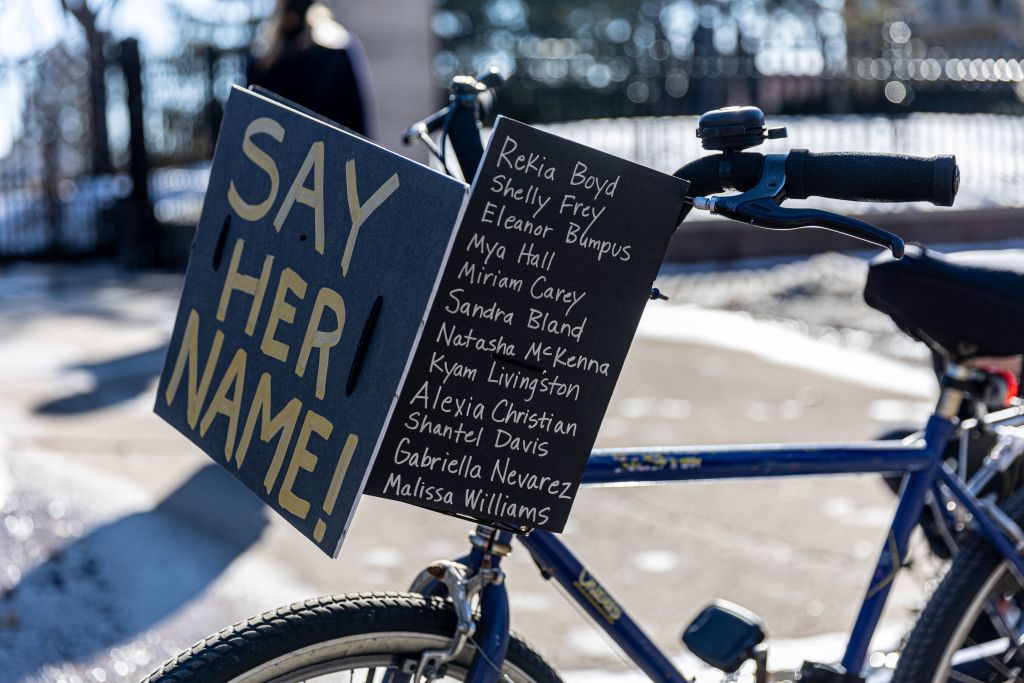
Crenshaw’s memoir offers an intimate look at her lived experiences and the pivotal historical moments that shaped her life and work. She recounts growing up in newly integrated Canton, Ohio, amid the Civil Rights Movement, recalling the profound image of her father in tears following the assassination of Martin Luther King, Jr. The narrative spans from the tragic, still-unresolved death of her brother to her decision to support Anita Hill when she courageously testified in the Clarence Thomas hearings. Later, she transformed her advocacy into action by launching the #SayHerName campaign through her organization, the African American Policy Forum, ensuring that the movement against police violence no longer overlooks the lives of Black women and girls.
At a moment when policies designed to confront inequality are being dismantled, and the very frameworks Crenshaw pioneered are being contested, mischaracterized and deliberately erased from the public record, her voice is more essential than ever. Backtalker is more than a memoir; it is a critical summons to not only remember the history and the voices that brought us here, but to recommit to the ongoing labor of building a just, equitable and inclusive future.
In our conversation, Crenshaw discusses the high stakes of our current political juncture, how gaps in our collective understanding—what she calls “intersectional failure”—have had profound consequences and contributed to the crises we face today. Crenshaw elaborates on her intellectual revelations as she wrote the book and concludes by discussing the public’s responsibility to continue challenging injustice and fighting for progress.
This interview has been lightly edited for clarity.
Marianne Schnall: In your memoir, you share the evolution of intersectionality, now one of our most vital frameworks for understanding and uprooting inequality. By grounding the concept in your lived experiences, starting with your childhood, you made it deeply human and tangible. Beyond its academic definition, how do you believe intersectionality can be effectively used to address the multifaceted crises we face today?
Kimberlé Crenshaw: There are a couple of levels. I’ll start with the condition of the possibility being rooted in what I call “intersectional failure.” My first realization of this failure came as I was sitting on the steps of the Supreme Court as Clarence Thomas was being sworn in.
This tragic moment was made possible by the fact that our understanding of racism and sexism was not intersectional and had no readily accessible interface. Consequently, our broad civil rights community either facilitated or was ineffective in ensuring the incredibly important fifth vote on the Supreme Court, which went on to dismantle key dimensions of the civil rights infrastructure, was made possible.
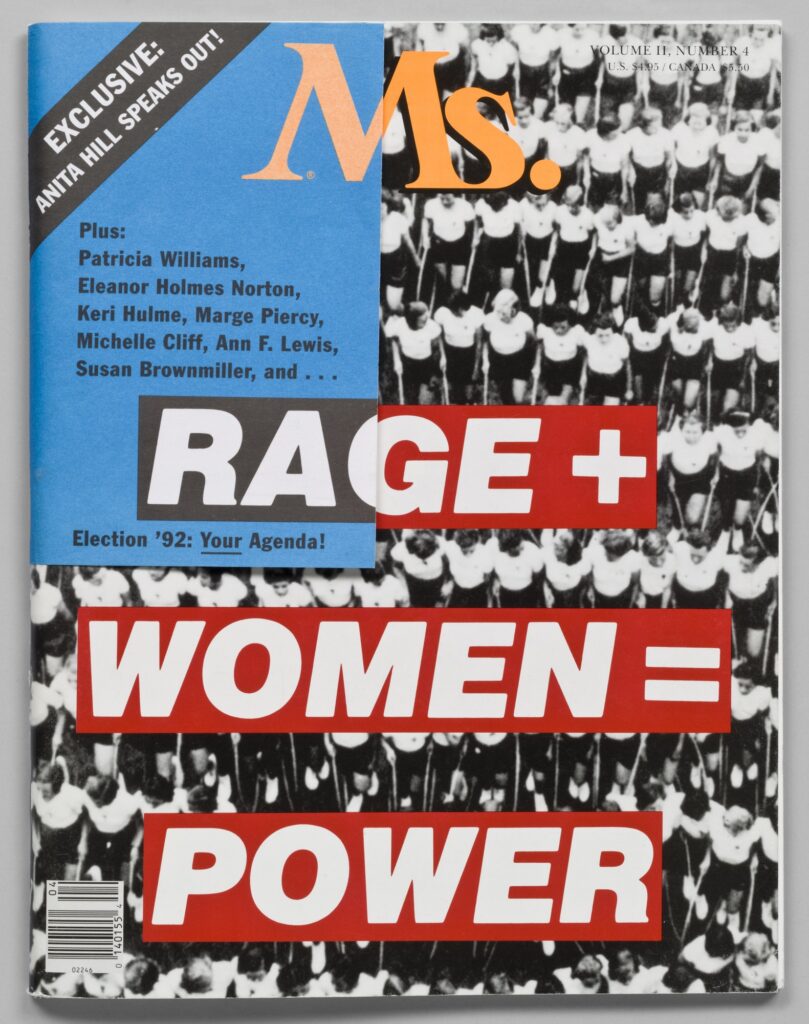
The intersectional gap made it impossible for people to fully understand what Anita Hill was saying. It made it hard for civil rights communities, particularly African Americans, to see her as an embodiment of a particular kind of discrimination that Black women faced. It was that failure that made some people perk up and give Clarence Thomas the benefit of the doubt when he called her testimony a “high-tech lynching.” It was the failure to know that Rosa Parks got her start, before she ended up being a hero in the Civil Rights Movement, representing a Black woman who was gang raped in the South. Our histories are intertwined, but our memories of that history and the words to capture it are not. The intersectional gap created the possibility of Clarence Thomas being affirmed.
Clarence Thomas went on to upend things like campaign finance reform, the Voting Rights Act, affirmative action and criminal procedure. When we look at almost every issue we have now with the deterioration of our democracy, you can point to one of those four or five decisions that changed the rules of the game so much that we now have an oligarchy set on destroying the basic principles of our democracy.
When we think about why intersectionality is important, if we understand how intersectional failure contributed to the crisis we are facing right now, then we can see that learning from our mistakes is important, but if you don’t learn from them, you’re bound to repeat them. That’s level one.
Level two is our non-intersectional understanding of larger systems of power. At long last, there is a recognition that we’re moving into a fascist, racist and patriarchal regime. While these regimes reinforce and set the terms for each other, much of our discourse treats them as separate.
Many pro-democracy thinkers don’t see intersectionality, critical race theory or feminism as necessary for a democratic recovery. Similarly, much of the coverage around feminism and race does not engage with the conversation around the collapse of our democratic institutions.
In this country, you can’t talk about any of these things without talking about the others. They are all conditions of this horrific possibility. If there is hope for what comes next, it has to come with a robust intersectional framework that addresses the terms of this moment.
The intersectional gap made it impossible for people to fully understand what Anita Hill was saying. … Clarence Thomas went on to upend things like campaign finance reform, the Voting Rights Act, affirmative action and criminal procedure.
Kimberlé Crenshaw
Schnall: Talking about what comes next, your work has contributed so much to making headway on these issues, but then there’s always backlash. There seems to be an ebb and flow between progress and pushback. Where do you think we are in that arc, and what’s on the horizon?
Crenshaw: There are some who see this as game over—the institutions that have been destroyed, the values that have been repudiated, the constraints that have now been let loose; they are formidable. We are not talking about putting this genie back in the bottle in two years or four years; I think probably not in my lifetime.
What we are fighting for now is the rest of the century and America’s future.
It makes a great deal of difference how this moment is memorialized. How is it made accessible and available to future generations? How are we able to frame this … [to say] here are the things that lined up; here are the places where we didn’t show up quickly; here are the institutions that the fascist faction was able to take over, while we might not have been paying as much attention to it.
There were gaps in our understanding and convictions that led some to think, “Well, we can throw that under the bus and still recover the republic.” The widespread process of bending the knee and kissing the ring, which we’ve seen in law firms, universities and foundations and even among politicians, stems from a belief that submission would save us.
In the future, these must be seen as mistakes, or what Timothy Snyder calls “anticipatory compliance.” This behavior signals to the opposing faction what we are unwilling to fight for and what we are willing to accept. There have been far too many yeses for a democracy to sustain.
We have to collect what’s happening now. We have to know what’s behind the 300,000 Black women who’ve lost their jobs. We have to know the consequences of the Department of Justice being weaponized away from its traditional responsibility, created in reconstruction, to ensure that the laws on the books, meant to create equal and full citizenship, would not be abandoned.
We have to be able to tell the story in clear, detailed terms in a way we never have.
We failed to tell the story of what happened when the rebels were let back into the Union, how they effectively “won” the peace, even though they lost the Civil War. Perhaps if we hadn’t allowed generations to learn the “lost cause myth”—namely that the Civil War was an honorable war rather than a rebellion, we would have recognized that releasing the Jan. 6 defendants without accountability for treason was a non-starter.
Accountability had to be swift and clear if we were to come back from the brink. Because we didn’t learn that lesson the first time, we are repeating it. My hope is that we recognize the cyclical nature of the ebb and flow. One step forward can lead to five or 10 steps back. When we see the forces of retrenchment coming on the horizon, we must pick up every weapon we have to fight against it. This isn’t just going to be a little pushback; it’s a monumental pushback.
… Releasing the Jan. 6 defendants without accountability for treason was a non-starter.
Crenshaw
Schnall: I’ve heard you say “backtalking” often comes with consequences. How have you navigated that, and what is your advice to others in terms of dealing with them?
Crenshaw: It is definitely the case when we talk back to power, it has something to say—and it is not just, “Well, you have your opinion, I’ll have mine.” Backtalking implicitly anticipates a response: Sometimes it’s punishment, marginalization, exclusion, incarceration or even violence. That is the reality of backtalking.
In my book, I explore one of the most difficult aspects of pushback I’ve experienced: when you backtalk at home, within the communities, formations and organizations you look to for security, support and love. Sometimes, those very conditions of security, support and love are weaponized to force you into silence and discourage you from speaking your truth. It creates an environment where we accept asymmetrical terms that should never be accepted, terms predicated on subordinating one part of yourself, so that the part of you that fits can be made comfortable. Navigating that has actually been harder.
I don’t go to bed at night feeling bad about what MAGA has to say regarding critical race theory, intersectionality or Black people. They are on brand. They are doing what they feel they must do to recreate a world in which I have no rights; at least they are consistent in their mission.

When I do feel anxious or distressed, it’s when folks on our side of the ledger fail to show up the way they should, or we’re still punishing those of us in the space for not toeing the line. That is a tough thing to learn how to deal with.
I have to remember these realities are part of the untold story of our various movements. Kept quiet in history, Martin Luther King Jr., when he was assassinated, had a lot of detractors in the Civil Rights Movement. It’s unclear what would’ve happened in the next chapter of his life, especially when he opposed the Vietnam War. We like to tell the story of, “We all embraced him, and if he had only lived, the entire Civil Rights Movement would’ve been on point and moving in the same direction.” But that’s simply not true.
I have to remember there were many moments in our history when we were not all aligned, and yet we still survived and thrived.
When we find ourselves in a moment like this, where the other side is claiming victories, it is because they are more aligned than we are. But there is also hope in that. It is one thing to have to persuade people who don’t believe we are human; it is quite another to persuade those who affirm our humanity, yet still insist that some of our rights are less important than others.
Personally, I prefer those odds. I would rather fight that battle, than a struggle against those who look at me and see my every breath as taking something away from them.
In my book, I explore one of the most difficult aspects of pushback I’ve experienced: when you backtalk at home. … Sometimes, those very conditions of security, support and love are weaponized to force you into silence and discourage you from speaking your truth.
Crenshaw
Schnall: In Backtalker, you reflect honestly about how you have navigated your life through ups and downs, painful moments and achievements. It’s clear how much time you’ve spent in self-reflection. You share so openly and candidly; it was very generous of you. What was your experience going through that process? Did you have any new realizations, or did anything surprise you when writing this?
Crenshaw: Yes. I just found the picture on the front of the book about a year ago. I am with my brother and father. I felt protected, secure and loved. I felt, “Yeah, that’s how it started.” There have been many things since, that have cut deep, but knowing that was me and I was embraced, that was everything to me.
There were wonderful discoveries in writing this book. One wonderful discovery was about my mother. As I share in the book, she was a kind of racial archeologist. She would take me around town and point things out: “That’s the Palace Theater where they tried to make me sit in the peanut gallery instead of the middle. That’s the root beer stand that didn’t want to serve us in the mugs.”
She would tell me these stories in a way that made history recent rather than ancient—because my mom was talking about when she grew up. History wasn’t black-and-white but in color, and I’m seeing all this stuff.
My mother told me how her father used to print out copies of the Ohio legal code. Even though segregation was illegal in Ohio, it was still routinely practiced. She told me, “Whenever that happened, I would read them the code. If they continued to discriminate against me, we had an open and shut case.”
I asked, “What? You were suing people?” And she said, “Yes, we were suing people.” We are talking about the 1930s and the ’40s. These stories had always been in my head, but like many stories you hear but never see, the reality rests in the storytelling, not in anything material.
As we were collecting images for the end pages of the book, now that many things are digitized, I put the names of my mom, my grandfather and my grandmother into the archive, and out popped pages of little notices about my mom and her parents. In the classifieds were these little notices, “Marian Williams, judgment, $500. Pearl Williams judgment is $300.” It was true; they were actually doing this. It’s not that I didn’t believe her, but what can you do with a history without the artifacts to prove it?
These artifacts made me realize why they’re targeting our museums and history books. Everything that tells the story of how our republic was structured—the fact that none of this was accidental—is under threat. It was intentional. These are the receipts.
They know the value of the receipts, which is why they’re trying to destroy them. The question is whether we know the value of the receipts. Uncovering this moment reinforced what we have always known in our gut. Now, we know it here [gesturing to head] as well.
The final discovery—and I guess I was probably the last person to recognize this—concerns my brother and the unfinished business about his life. I realized that one of the driving forces in my work with the mothers of #SayHerName is our shared experience with unresolved injustices, specifically the failure to even acknowledge that an injustice has occurred. I know that feeling; it lives in my gut. That is why I can’t look away.
Schnall: Wow. You have me a little emotional there.
Crenshaw: I sit on the edge of it every day.
The other side doesn’t want us to feel empathy. They are going after the very thing that makes it possible for us to come together and claim injustice as wrong. We’re led to feel weak when we’re sad or when we experience the pain of others, and to look away from it.
Our side has to recapture the moral imperative. It can’t all be transactional.
Yes, they’re taking money out of all of our pockets, but more importantly, they’re taking our humanity away, the thing that makes us humans and not a machine.
In the moments when we start to tear up, we can’t turn away; we have to say, “That’s my humanity calling me in.” I want to see more willingness to embrace humanity rather than saying, “That’s not going to persuade anybody, we’ve got to talk about it like this.” That has been a mistake on our part for some.
If you feel a twinge of frustration, it shouldn’t just be the anger you feel when you roll up to the pump—though I feel that twinge too. We should also be feeling it when we see people with placards at the gas station saying, ‘Can you spare something for me to eat?’
Crenshaw
Schnall: I hope the extreme conditions we live in right now will wake people up to the fact that those feelings can be converted into a force and that some new paradigm is emerging.
Crenshaw: Yes, I hope so. My mission over the next year or so is to bring people into those spaces where they can connect the current moment with the past and feel something about it. This is what I argue in my book: The things that made me pay attention were the things that made me feel something. Even before I had the words for it, I felt something was going on, and that it was where I would dig. We need to replicate that now.
If you feel a twinge of frustration, it shouldn’t just be the anger you feel when you roll up to the pump—though I feel that twinge too. We should also be feeling it when we see people with placards at the gas station saying, “Can you spare something for me to eat?” We have to connect the dots between the ‘power of the pump’ and the plight of the dispossessed. Those struggles must be connected if we are to build a truly sustainable resistance to this entire shit show.
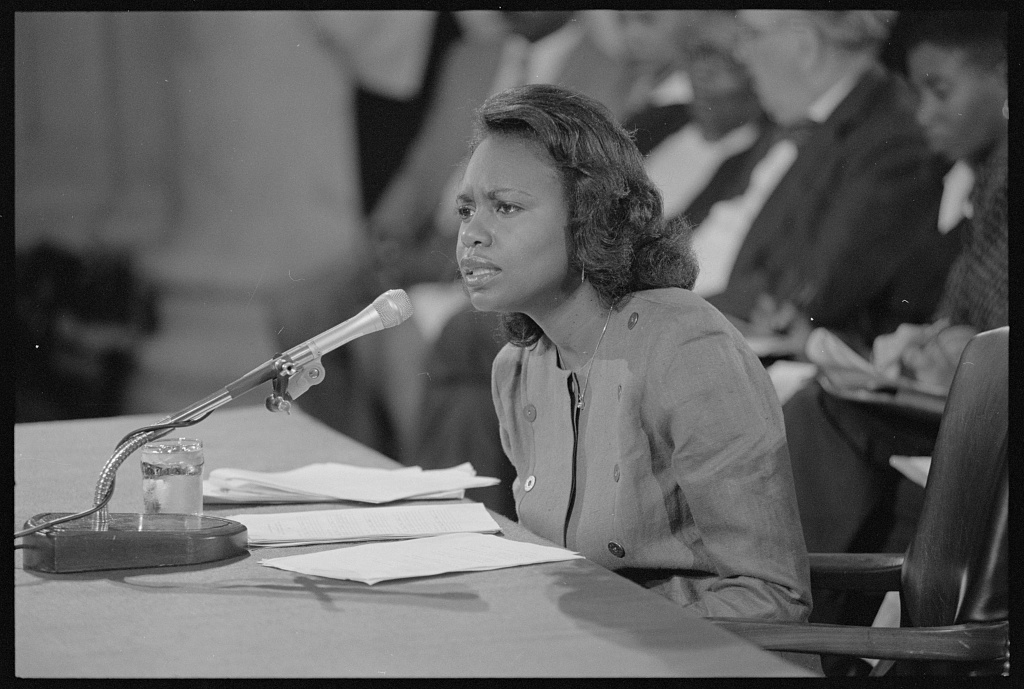
Schnall: You address many pivotal moments of history in the book. One moment that struck me was your support of Anita Hill when she testified in the Clarence Thomas hearings. I found a picture of you sitting behind her as she’s being sworn in to testify. I’ve had the honor of interviewing Anita, and both of you seem to be such powerful, inspiring examples and role models for courageously speaking out for causes greater than yourselves, even when there are risks.
What are your thoughts on the extra scrutiny and attacks that women leaders, particularly women of color leaders, face when speaking out? And do you think that is getting worse or getting better?
Crenshaw: In many ways, it feels like the situation has worsened. When we look back at the 2024 campaign, I won’t even repeat the words used by elected officials and people in positions of power to describe Kamala Harris. They said terrible things about Hillary Clinton, but there is a level of racialization in the way Black women are talked about that outstripped even that.
Moya Bailey calls it ‘misogynoir,’ and I believe that campaign was misogynoir on steroids. I am not at all surprised that the aftermath of that period served as a ‘green light’ for decision-makers and actors across the board to express a profound disdain for Black women. The message being sent is that they are not protected, they do not need to be respected, and their accomplishments do not have to be acknowledged.
We’re talking about hundreds of thousands of Black women, highly credentialed, at the top of their game, being removed from their position with little explanation other than they didn’t deserve to be there. What’s the message behind making it like that?
We know that this is something more than just politics, that the backdrop against which Black women have long been framed has never been substantially disrupted enough, so it’s not there, readily usable to cast onto their right to being seen as credible and qualified and valuable. I think this is a new moment in which misogynoir is being openly expressed and institutionalized and is not yet being met with the force of resistance that is required.
This is intersectional failure. Intersectional vulnerability is always present, but at certain moments, it kicks into overdrive. I believe that is exactly what we are witnessing right now. An intersectional response is consistently undervalued, especially now, given the degree to which these attacks on Black women are harming individuals, harming communities, and the nation.
Schnall: The news we are being fed isn’t always the full truth, and we’re receiving a lot of biased information. What most concerns you about that, and how can we combat it so we can all unite together?
Crenshaw: I was disabused of my trust in the news back when I was part of Anita Hill’s legal team. What was reported and what I knew to be true were as different as night and day. For example, the media claimed his nomination was already ‘wrapped up,’ even as I sat in senators’ offices watching them debate their votes in real time.
Then there were the character assassination attempts, narratives created out of whole cloth that were nonetheless reported by the paper of record and the Washington Post.
I realized then that the media is that additional estate, a critical force that contributes to inequalities by making myths and distortions more reproducible than the truths we are actually experiencing.
When intersectionality was co-opted and used as the Trojan horse that brought anti-wokeness to the center of the republic’s public discourse, it was like the moral panic of the century. I said to everyone who would listen, “Look, these are distortions. And it’s not just about us. They’re coming after everything to do with social justice. This is not going to end with putting our heads on the village spike. They’re coming after everyone.”
The difficulty of persuading people of that, even when the facts were on our side, reinforced for me how critical the media had become. The concentration of media ownership, combined with the internet now being the main source of news, was as important a factor in the rise of fascism and of using ICE as a federalized military arm of the White House. We must view the control of information as being just as dangerous as the deployment of ICE.
I believe there is a greater recognition of misinformation than before. The question is: how do we step into that newly open space to provide trusted sources of communication? The work you and all independent journalists do is essential.
One thing that surprises me is how funders who claim to be concerned about democracy have such small checkbooks when it comes to supporting independent media. They have deep pockets once every four years for ‘get out the vote’ efforts, but that checkbook goes back in the drawer for the three-and-a-half years in between. That is exactly when people need to be told the truth; they need their misconceptions challenged and the connections between issues made clear. That isn’t going to happen in the mainstream; it requires the consistent support of independent journalism.
Schnall: In the book, you talk about the collective “we,” and the sense of belonging and solidarity. This is where intersectionality becomes so practical—it allows us to recognize our common humanity. Currently, we are seeing attacks on vulnerable communities that are attacks on our shared humanity. It’s not on this group or that group; it’s all connected, and we’re a big force if we come together in that way.
Crenshaw: To come together, we must have difficult conversations within our groups, including difficult conversations with ourselves. We are speaking now in the aftermath of several unspeakable tragedies involving domestic violence; it seems as though something new happens every day. We must confront the ways that we, specifically men, but some women as well, have set the table for these atrocities. When we say, “Well, let’s see how he felt. Let’s understand. This is a mental health crisis,” on and on, we are prioritizing the perpetrator’s perspective. This creates a hierarchy in whose humanity we give privilege in moments of crisis. We have to learn how not to do that.
I have a hard time now with the word survivors, because there are some victims who don’t survive this thing. We must learn to begin with their humanity; everything else turns on that.
What conversations do we need to have among each other, with women, men, siblings and others in our lives, to ensure these forms of violence are never written off? We are all responsible for challenging the frames that characterize this violence as sad and tragic, but understandable. No, this is not understandable outside of an illegitimate system of privilege called patriarchy. We must find a way to elevate the humanity in all of us without allowing it to become an excuse for some of us.
For more about Kimberlé Crenshaw and her work, visit KimberleCrenshaw.com.