‘Who Will Revere the Black Woman?’ Remembering Nancy, Cerina and So Many More

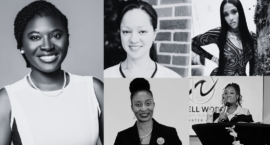
Even though I did not know Nancy Metayer, my heart is utterly broken by the loss of her life and the violence of her death. The night before her funeral, I joined a virtual vèyè in her honor—a space to keep watch, to remember her impact and to hold one another in communal care.

That same day, news broke about Dr. Cerina Fairfax, also killed in her home. I did not know her either, and still, I was gutted.

Nor did I know Pastor Tammy McCollum, Ashly Robinson, Qualeisha Barnes, Davonta Curtis or Barbara Deer—Black women killed in just a matter of weeks. And to think these are only the names we know.

In moments like this, I find myself returning to a question first posed by Abbey Lincoln decades ago: “Who will revere the Black woman?” The reality of this violence—and the way it is so often explained away or softened—makes that question feel as urgent as ever.

Black feminists have long named the patterns, the structures and the stakes. And still, we are left mourning, naming and insisting: We will not let their lives be forgotten. We will continue the work in their honor—because we revere them.

Sally Hemings and the Making of Democracy

The United States was founded not through declarations of equality, but through the labor of Black women whose political work reproduced the nation, even as it was erased from the democratic archive. 

Sally Hemings is rarely situated within the United States’ democratic legacy, despite her central role in the material conditions through which democracy was made possible.

In shaping the conditions of her children’s freedom, Hemings exercised a form of maternal political authority that governed who could move beyond enslavement. This labor stands in sharp contrast to Jefferson’s authorship of democratic ideals, which articulated freedom in abstract and ambiguous terms, while Hemings produced freedom materially through the governance of reproduction and kinship under constraint.

Hemings’ strategic negotiations secured her and her children’s futures within a political order that both denied her legal personhood and depended on her labor.

(This essay is part of the FEMINIST 250: Founding Feminists series, marking the 250th anniversary of America by reclaiming the revolution through the women and gender-expansive people whose ideas, labor and resistance shaped U.S. democracy.)

California Becomes First State to Enshrine Intersectionality in Law, Recognizing the Amplified Harms of Overlapping Discrimination

Thirty-five years ago, Professor Kimberlé Crenshaw coined the term “intersectionality” to explain how multiple forms of discrimination interact to exacerbate each other, resulting in amplified forms of prejudice and harm. Last week, California became the first state to explicitly recognize intersectionality in discrimination law.

Everything You Need to Know About Sandra Bland

“Once I put this baby in the ground, I’m ready…This means war.” These were the words spoken by Geneva Reed-Veal as she eulogized her late daughter, Sandra Bland, last week. On July 10, 28-year-old Bland was pulled over by police in Prairie View, Texas for allegedly failing to signal before changing lanes. According to police, she became […]

Black Girls Matter

The following is excerpted from the latest issue of Ms. To read the entire article, get a print or digital subscription today! In 2012, 6-year-old Salecia Johnson was arrested and handcuffed in a Georgia school for having a temper tantrum. In 2007, 16-year-old Pleajhai Mervin was arrested after she dropped cake on the floor in […]

#BlackGirlsMatter: When Girls of Color Are Policed Out of School

Last year, 12-year-old Mikia Hutchings was faced with expulsion from her Georgia middle school and possible felony charges by the local sheriff’s department. Her crime: writing the word “hi” on a locker room wall. Her white friend graffiti’d even more words on the wall, yet the school handled their punishments quite differently. Mikia’s friend paid […]

Sex, Power and Truth: Anita Hill 20 Years Later

Almost everyone has an Anita Hill story. Some of us remember exactly where we were when that theater of sex, race and gender called a “hearing” was broadcast in primetime. Others recall water-cooler and sidewalk conversations and debates about guilt and innocence, about sexual harassment as a “white lady’s problem,” about the effect of the […]