Mirlanda Sully’s story shows how investing in women’s leadership and economic opportunity can help entire communities thrive.
At 3:00 a.m., long before the sun rises over the mountains of central Haiti, Mirlanda Sully is already at work. In the darkness, she measures rice, sorts beans and packs flour, preparing goods to sell later that day in the market.
Then she turns to her 5-year-old son, Don Roosevelt, waking him gently, preparing breakfast and helping him get ready for school.
By the time many of her neighbors begin their day, Sully has already been working for hours.
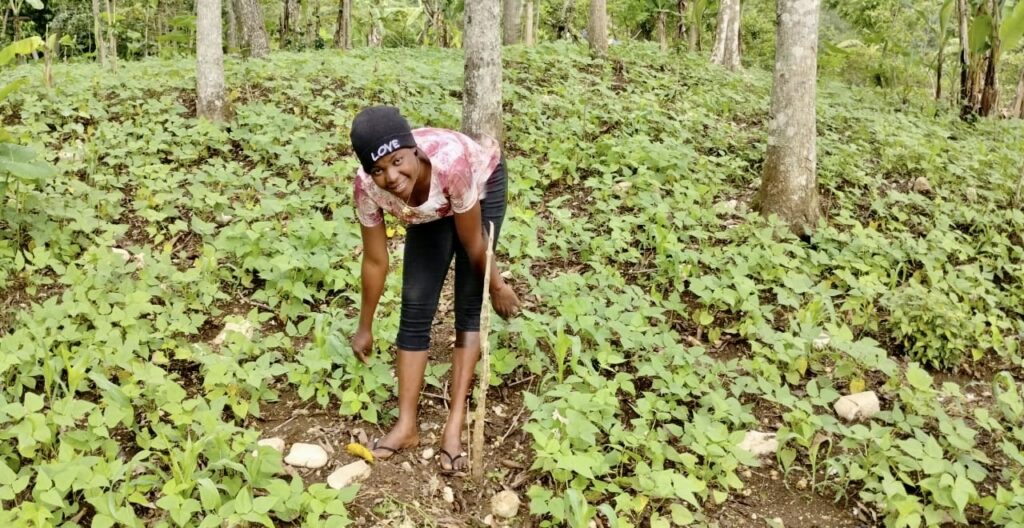
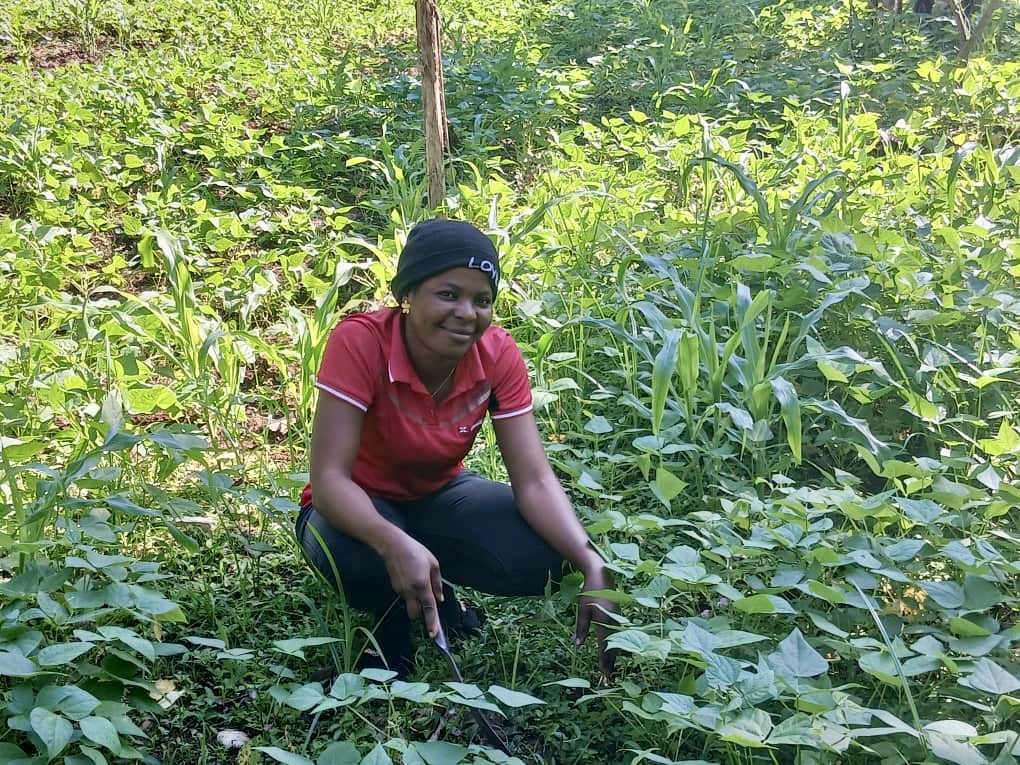
Her days stretch late into the evening. Some are spent at her market stall. Others are spent tending her small garden or traveling, on foot and by motorcycle taxi, across steep mountain paths to purchase supplies for her business.
Her routine is one of necessity. It is also one of determination.
Sully embodies fanm an aksyon: women in action.
Starting Again From Nothing
Sully is 30 years old, a farmer, woman in business, and a mother raising her son on her own in Medor, a remote community in Haiti’s Cajo Mountains.
But her life did not begin there.

Just a few years ago, she lived in Petite Rivière, a valley town about 15 miles from Medor. She and her husband ran a small business selling rice, oil and flour from their home.
Then, in 2023, everything changed: Armed gangs overtook the town. “They killed my cousin,” she says quietly. “They killed so many. They raped so many.”
Fear became constant. Mirlanda Sully and her family hid for seven days in Plasak, an eight-mile walk from their home. She was hoping the violence would pass. It did not.
“We realized we had to leave,” she says.
They fled on foot, carrying Don Roosevelt, who was then 2 years old, a few clothes and a small amount of food. Everything else—their home, their business, their possessions—was left behind. Soon after, what remained was looted.
When Sully arrived in Medor, she had nothing.
“I felt helpless,” she recalls. “I had to start over from ground zero. I felt like I hit the bottom of my life.”
A Small Loan, A New Beginning
In that moment of despair, she met a member of Medor’s women-focused microcredit program who encouraged her to learn more about the opportunity.
Sully sought out the program’s local agent. She attended meetings, listened and learned. The program offered small loans, business training and something equally important: a support network of women who would walk alongside her.
With nothing but their determination as collateral, participants would receive small loans, repay them over six months, and, if successful, qualify for larger loans. They would also join a “microcredit family,” a group of women who meet regularly to share advice, encouragement and mutual support.
Sully applied and was accepted. In October 2023, she received her first loan of $194.
“It made me so joyful,” she says. “It gave me hope. I knew I could take care of my son. I could be the mother I wanted to be.”
Building, Step by Step
With that loan, Sully set out for Verrettes, a larger market town. The journey took two days and required multiple forms of transport: long walks, motorcycle rides and finally a mule to carry her goods over the final stretch.
She returned with rice, beans and oil to sell in Medor.
The profits were small at first. Transportation costs were high. But the business had begun.
After repaying her first loan, she received a second. Then a third. Then a fourth. Each time, she expanded her inventory, improved her operations and increased her income.
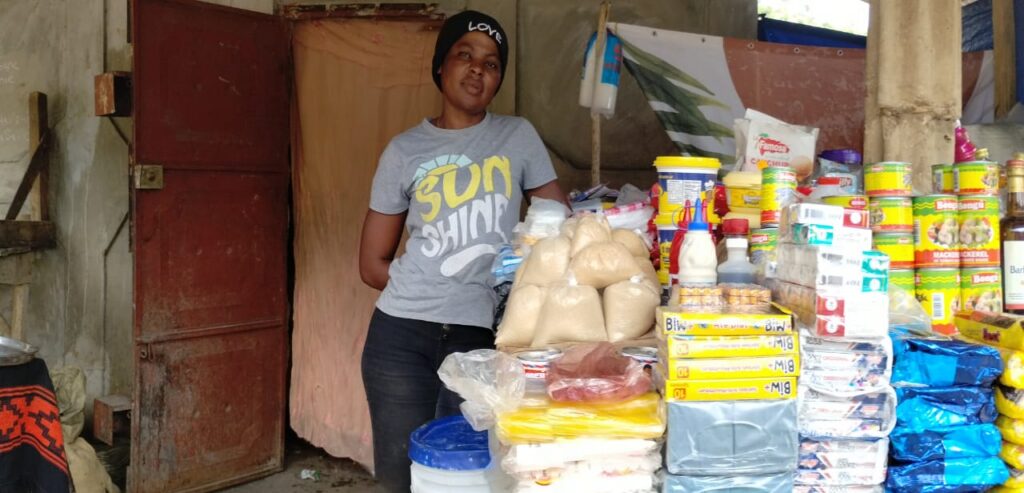
Today, where she once sold rice by the cup, she now sells it in 25-pound bags. Her business is no longer about survival—it provides stability and progress.
“The Microcredit Program has changed my life,” she says. “Now I am moving forward.”
More Than a Business
Mirlanda Sully’s work extends far beyond her own household.
Each week, she travels long distances to bring goods back to Medor so that others in her community do not have to make the same difficult journey.
“I walk great distances so that others do not have to,” she explains.
At her market stall, she is known for both her business sense and her compassion. When customers cannot afford basic food items, she allows them to take what they need and pay later.
“Because of my loans, I can help others,” she says. “I share what I have.”
Her leadership has not gone unnoticed. She is now a mentor within her microcredit group, advising newer members on how to manage their loans and grow their businesses. She has become a spokesperson for the program, encouraging other women to join and helping them believe that change is possible.
“We help each other,” she says. “We laugh. We support each other. We grow together.”
A Program Built for Women Like Mirlanda Sully
In rural Haiti, women like Sully rarely have access to traditional banking. Without formal documentation, collateral or credit history, they are excluded from financial systems that might otherwise help them build stable lives.
The microcredit program in Medor was created to change that.
Funded by the Raising Haiti Foundation and implemented by the Haitian organization Smallholder Farmers Alliance, the program began in 2020 with just 50 women receiving small loans of $25 to $35.
Today, it serves hundreds of women. Loans grow as trust and success grow.
But the program offers more than money: Participants receive training in business management, customer service and financial literacy. They learn how to track profits, manage inventory and build sustainable enterprises. And they gain something less tangible, but just as important: confidence.
For Sully, that confidence has been transformative. “I am now someone people listen to,” she says.
Providing for Her Family
At home, the impact of Mirlanda’s work is profound.
She can now pay her son’s school fees. She can provide consistent meals. She has invested in livestock: three pigs, a form of savings that can be used in times of need. She supports not only her son, but also extended family members.
Her husband, who left Haiti in search of work, has not been able to provide financial support for Mirlanda or Don Roosevelt. Mirlanda carries that responsibility alone. And she carries it with strength.
“Now I can defend my life and the life of my son,” she says.
Bearing Witness
Over the past 25 years, I have had the privilege of working alongside communities in Haiti, traveling there 35 times through my work with Our Lady Queen of Peace Church and the Raising Haiti Foundation.
I have met many people like Sully—women and men whose resilience, dignity and determination challenge the way we understand hardship. Her story is extraordinary, but it is not unique.
Again and again, I have seen that lasting change does not come from outside solutions. It comes from investing in the strength, ingenuity and leadership that already exist within communities.
The microcredit program is built on that belief. It does not impose answers. It provides tools, and trusts women like Sully to use them.
The Future, One Step at a Time
Sully’s dreams are both simple and expansive: She wants to grow her business, increase her income and build a stable future.
And for her son, she dreams even bigger: “One day, I want him to become a doctor,” she says.
It is a dream grounded not in wishful thinking, but in the steady progress she is making every day, with each early morning, each market sale and each loan repaid.
In a world that often focuses on crisis, Mirlanda Sully’s story offers something equally important: the quiet creation of opportunity.
It reminds us that transformation does not always begin with sweeping action. Sometimes, it begins with a small loan, a long walk and a mother determined to build a better future.
Fanm an aksyon.
Women in action.
Through them, entire communities rise.