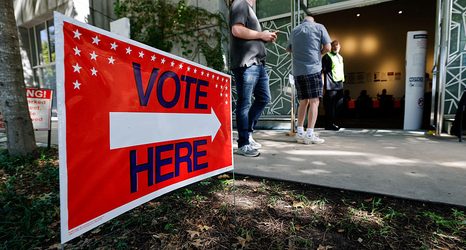
Four justices were willing to end birthright citizenship in Trump’s immigration purge, erasing the American Dream.

In a highly anticipated decision, the Supreme Court rejected President Donald Trump’s attempt to end birthright citizenship, reaffirming that children born in the United States are citizens under the 14th Amendment, regardless of their parents’ immigration status. The ruling preserves one of the Constitution’s clearest guarantees, and averts what would have been one of the most sweeping assaults on American citizenship since Reconstruction.
The ruling was authored by Chief Justice John Roberts, joined by Justices Sonia Sotomayor, Elena Kagan, Amy Coney Barrett and Ketanji Brown Jackson; Justices Clarence Thomas, Samuel Alito, Neil Gorsuch dissented in full, and Brett Kavanaugh in part.
The Court reached the correct result. But no constitutional democracy should take comfort in the fact that four justices were prepared to strip citizenship from children born on American soil, embracing Trump’s effort to narrow the Citizenship Clause and erase a constitutional promise that has defined U.S. democracy for more than 150 years. Their willingness to do so exposes just how vulnerable even our most fundamental constitutional commitments have become.
The Citizenship Clause provides that “All persons born or naturalized in the United States, and subject to the jurisdiction thereof, are citizens of the United States and of the State wherein they reside.” That language was written for a reason. It overturned one of the Supreme Court’s most shameful decisions—Dred Scott—which declared that people of African descent could never be citizens of the United States.
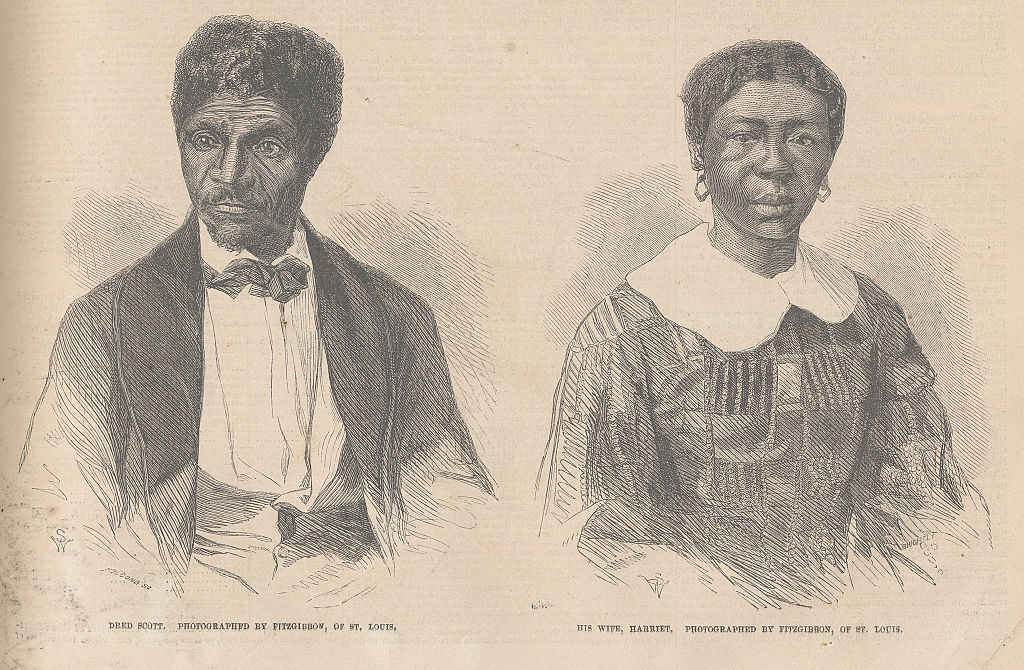
Chief Justice Roger B. Taney’s opinion in Dred Scott remains one of the Court’s most infamous defenses of racial caste—a legal declaration that Black people could be excluded from citizenship and reduced to property in a nation built by their labor. According to Taney, Black people “had for more than a century before been regarded as beings of an inferior order … so far inferior, that they had no rights which the white man was bound to respect.”
Taney’s opinion did not merely tolerate slavery; it constitutionalized its logic. He treated the bondage, sale and exploitation of Black people as compatible with the Constitution, the laws of the United States and the nation’s professed values. Taney claimed no one found it problematic to subject Blacks to the conditions of slavery. As he opined, these were not “matters of public concern,” and according to him, no one for a moment doubted the “correctness of this opinion.”
Nor was Taney detached from the slave economy he defended. He and his family profited from the human bondage of Africans. Similarly, of the nine justices, seven were appointed by pro-slavery presidents, and more than half came from slave-owning families.
History marks Taney’s opinion as uncharitable and regrettable, but it did not tarnish his reputation. His bust sat for decades in the halls of Congress.
The Citizenship Debate Returns to the Supreme Court
Trump’s case before the Court resurrected the debate on what it means to be a U.S. citizen.
It began with Trump’s executive order on his first day of the second term: Executive Order No. 14,160, “Protecting the Meaning and Value of American Citizenship,” which declared that individuals born in the United States are not U.S. citizens at birth if their parents lack “sufficient legal status.” Essentially the Trump administration deemed any offspring of a mother not lawfully in the U.S. or on temporary status could not attain citizenship at birth.
The order never went into effect because almost immediately, several federal judges issued preliminary injunctions that barred the implementation of the order while litigation continued.
In front of the justices, on behalf of the Trump administration, U.S. Solicitor General D. John Sauer argued the Citizenship Clause was adopted to confer citizenship on newly freed and formerly enslaved Black people and their children—not on the children of immigrants who are unlawfully or temporarily present in the United States. The government contended the EO was constitutional because the language “subject to the jurisdiction thereof” in the clause interpretively turns on an individual’s domicile, rather than place of birth; thus, they argued, children whose parents are not lawful permanent residents fall outside the Citizenship Clause.
These arguments lost before the Court.

According to Roberts:
“Citizenship, then and now, was the right to have rights— to freely participate in our political community. The Framers of the Fourteenth Amendment extended that promise to ‘every free-born person in this land.’ We keep that promise today.“
However, has the Supreme Court truly kept that promise? While the Court’s Tuesday ruling preserves birthright citizenship and upholds prior precedent in U.S. v. Wong Kim Ark, the Court has shown disregard for the protections afforded otherwise in the 14th Amendment and the other Reconstruction Amendments.
- In Shelby County v. Holder, and more recently in Louisiana v. Callais, the Supreme Court dismantled key protections of the 1965 Voting Rights Act and showed profound disregard for the guarantees of the 15th Amendment.
- In April, in a 6-3 decision, the Court in Callais ruled that Louisiana’s congressional map, which included a second-majority Black district to respond to voter dilution, was unconstitutional. In essence, the Supreme Court has deemed gerrymandering to pursue partisanship constitutional, while correcting for racial vote dilution is not.
- In Students for Fair Admissions, Inc. v. Harvard, another 6-3 decision, the Court effectively ended race-conscious admissions or affirmative action to correct for patterns of historic wrongs, including racial exclusion of students based on race.
- Last week, in Mullins v. Doe, the Supreme Court granted its imprimatur to Donald Trump’s effort to end temporary protections for people from Syria and Haiti. This program, which began with the presidency of George H.W. Bush in 1990 and has been continually reviewed, allows “foreign nationals to remain in the country for up to 18 months when a crisis such as an earthquake or armed conflict makes returning to their home countries unsafe.” It is now dismantled by the Supreme Court. In a fiery dissent, Justice Elena Kagan argued the Trump administration’s efforts to end the program were racially motivated: Trump’s “statements fairly shout, in their racial undertones and overtones alike, that race entered into the President’s resolve to remove Haitians from this country.”
- Finally, in Dobbs, the Supreme Court exposed its deep disregard for the constitutional protections afforded to women—including the right to be free from involuntary reproductive servitude, a matter the 13th Amendment was intended to address. In an extreme decision, written by Alito, the majority compared Plessy v. Ferguson, which served to defeat the Reconstruction and bring about Jim Crow racial codes and segregation, to Roe v. Wade, which liberated women’s reproductive autonomy, equality and privacy. According to Alito, Roe was an egregious decision, which he presumed no persons relied on. Notably, the case hailed from Mississippi, wherein all women, and particularly Black women, relied upon the freedom it accorded.

Across Roberts’ tenure on the bench, he has time and again shown limited, if any, regard for Reconstruction—its meaning, history and the legal record that established it. His jurisprudence suggests that racism warrants constitutional concern only when it takes its most overt forms—those associated with Bull Connor, White Citizens’ Councils and the like—not in the enduring badges and incidents of slavery that the Reconstruction Amendments were designed to eradicate.
America’s greatest dream rooted in the Reconstruction was a nation that could rid itself of the rot of racial animus, sexual exploitation and hate. This is a desire most deeply felt by those whose ancestors were kidnapped, traded, bought, sold, trafficked and punished and mocked for desiring freedom.
Given the continued patterns of racialized policing, disenfranchisement in voting, empirically documented discrimination in housing, health, education and beyond, these dreams remain deferred.
Roberts’ stewardship of the Supreme Court and his limited reading and understanding of the badges and incidents of slavery must be reconciled against Tuesday’s ruling on birthright citizenship.
*
A note from Ms. editors: We want to hear from you for The Majority, a new campaign collecting stories about how reproductive freedom has enabled readers to build the lives they want and need.
Poll after poll shows a majority of Americans support reproductive healthcare access. Yet public debate overlooks the lives shaped by abortion access, contraception, IVF, miscarriage care, maternal healthcare or comprehensive sex education—countless women who chose to pursue an education, have children, not have children, protect their health and chart their own future. What’s your reproductive freedom story? Add your voice. Together, these stories will help show not only why reproductive freedom remains a majority value, but also what it makes possible.
Look to these trusted groups if you or a loved one needs to know more about reliable abortion care:
- A one-stop-shop for abortion seekers: I Need An A
- Other websites to explore all your options for abortion care: Plan C Pills, Abortion Finder
- Safe websites to buy abortion medication: Aid Access, Massachusetts Medication Abortion Access Project, Hey Jane
- If you need help affording abortion care, tell your telemedicine provider or contact an abortion fund near you.
- To protect your digital privacy when planning your abortion, click here.
- For free legal help as a patient or doctor, call If/When/How’s Repro Helpline—844-868-2812—or contact Pregnancy Justice.
- For medical advice, contact the Miscarriage & Abortion Hotline: 833-246-2632.
- If you need to know the abortion law in your state, look to the Center for Reproductive Rights. or Guttmacher Institute.