What Iran’s Crackdown Looks Like From Inside: A Q&A With Nasrin Sotoudeh and Reza Khandan

As mass protests and a deadly crackdown grip Iran, human rights lawyer Nasrin Sotoudeh speaks from Tehran while her husband, activist Reza Khandan, calls in from Evin Prison—offering a rare, firsthand account of repression, resistance and the stakes for democracy inside the country.

“My message has always been to use all non-violent means to persuade governments to uphold democracy and human rights. Small actions can have big impacts.”

“… You can’t bomb a country into democracy.”

Reza Khandan’s Crime: Supporting Women’s Rights in Iran

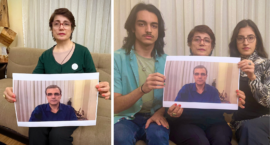
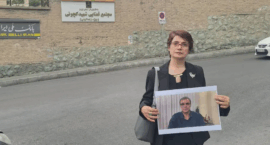
It has been a year since 60-year-old Iranian human rights activist Reza Khandan was arrested in what was clearly another official attack on his family. Political prisoners in authoritarian regimes are meant to disappear into hopeless silence, but Reza has become a force to be reckoned with.

“The crime for which Reza Khandan is in prison is the crime of love,” writes Ariel Dorfman, author and friend of Khandan and his wife, activist Nasrin Sotoudeh. “Not just love of his country and its culture. Not just love of humanity and our rights to be human. Not just love for the future. But also, the real reason why he is being punished: Reza loves the extraordinary Nasrin with whom he shares a life, a land, and a cause. How those who persecute Reza must fear his loyalty and steadfastness. He will prevail.”

“I will continue until I achieve legal rights, restore my family’s dignity, and change the conditions of the prison administration,” Khandan wrote. “May the shadow of terror and tyranny be removed from our beloved country one day. And finally, I would like to add: ‘I object to the compulsory hijab!’” 

With War Escalating, Iranian Political Prisoners Demand Their Release—Before it’s too Late

As Israel’s military campaign escalates and air raid sirens sound over Tehran, prisoners like by Reza Khandan, husband of renowned human rights attorney Nasrin Sotoudeh, are sounding an alarm of their own. Citing existing Iranian legal codes, they make an urgent, clear-eyed case for the immediate release of non-violent inmates—many of whom are political prisoners or behind bars for peaceful dissent. With bombs falling nearby, and prison facilities ill-equipped to safeguard detainees, their letter warns that inaction could turn incarceration into a death sentence.

Take Action: Nasrin Sotoudeh Shares Petition to Free Husband, Iranian Women’s Rights Activist Reza Khandan, From Prison

Nasrin Sotoudeh’s courageous husband Reza Khandan was arrested on Dec. 13, 2024, for his efforts on behalf of women’s rights in Iran. Sotoudeh herself has served over seven years in prison, with extra punishments because she refused to wear the hijab mandated by Iranian law.

Take action: Sign this petition calling for the immediate release from prison of Reza Khandan, organized by Reza’s wife and fellow activist Sotoudeh, among others.

Nasrin Sotoudeh Speaks Out: Husband Reza Khandan Sits in Evin Prison for Supporting Women’s Freedom in Iran

Amid Iran’s oppressive crackdown on dissent, activist and artist Reza Khandan, husband of human rights lawyer Nasrin Sotoudeh, faces brutal imprisonment for championing women’s rights and freedom of choice.

On Dec. 20, Reza called from Evin Prison to leave this message with a surprisingly strong voice: “I continue to stay true to my pledge of defending women and human rights. I continue to oppose the heavy and unjust sentences given to my wife and the difficult circumstances brought on my children, whose grace and patience through the ordeals have given us strength and peace of mind. I wish you a happy Yalda [Winter Solstice] and hope for better days.”

Reflecting on Mahsa Amini’s Short but Meaningful Life—and the Future of Iranian Women’s Rights—With Nasrin Sotoudeh

Monday, Sept. 16, marks two years since the murder of 22-year-old Mahsa Amini made international headlines and sparked an uprising in Iran. Her death triggered the longest citizen-led rebellion in Iran since the 1979 Islamic Revolution. 

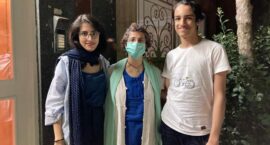
Nasrin Sotoudeh and her husband Reza Khandan are no strangers to brutal and violent government suppression. The two Iranian activists and attorneys have faced harassment, violence and imprisonment from a government that will do virtually anything to crush women’s rights and freedom of expression. 

Microcredit Is Transforming the Lives of Women Entrepreneurs in Haiti: ‘Business Is in My Blood’

In 2020, the Raising Haiti Foundation began funding the provision of small loans ($25-$50) to 50 women clients in two communities: Medor and Sarrazin. Most of the women use their loans to become entrepreneurs, or to expand their current businesses, selling goods in local markets. Some use them to purchase livestock or crop seeds, improving their farming outputs.

This interview with recipient and entrepreneur Benita Bien-Aimé exemplifies some of the achievements of the microcredit clients.

“I think what makes women like me successful in business is that we have courage, we have strength; we know what the market needs are, we go looking for these products, and we bring them to the community!”

‘I Earn a Profit. I Can Feed My Family’: How Microcredit Lending in Haiti Is Changing Women’s Lives

In 2020, the Raising Haiti Foundation began funding the provision of small loans ($25-$50) to 50 women clients in two communities: Medor and Sarrazin. Most of the women use their loans to become entrepreneurs, or to expand their current businesses, selling goods in local markets. Some use them to purchase livestock or crop seeds, improving their farming outputs.

This interview with recipient and entrepreneur Marimène Tijuste exemplifies some of the achievements of the microcredit clients.

“Having more and different types of products to sell in my business has changed my life. I have more clients. I earn a profit. I can feed my family. … Everything has changed for me!”

Human Rights Advocate Nasrin Sotoudeh on Activism in the U.S. and Iran: ‘Democratic Resistance and Belief in Civil Society Always Pays Off’

On Oct. 29, Iranian human rights advocate Nasrin Sotoudeh was assaulted, arrested and put in prison for attending the funeral of 16-year-old Armita Garawand, who was beaten to death for not wearing a hijab. Despite her injuries, Nasrin began a hunger and medication strike and was released on bail two weeks later. She still faces over 13 years in prison. 

But the activist and attorney is not giving up hope. “Democratic resistance and belief in civil society always pays off in the long run. Governments can be dictatorial and autocratic, and they can have all kinds of armies and weapons at their disposal. Despite this, we see them fail over and over again, and something better emerges because of humanity’s collective will. I draw strength from all these experiences. I hope you can, too.”

Nasrin Sotoudeh, Iranian Rights Lawyer, Home Temporarily: “We Are Hoping for a Better Future That Can Protect Us”

Iranian Human Rights Attorney Nasrin Sotoudeh Home From Prison Temporarily: "We Are Hoping for a Better Future That Can Protect Us"

Iranian human rights attorney Nasrin Sotoudeh is home from prison on temporary medical leave. That is a simple thing to write, but there is so much emotion, strength, sacrifice, vision and history involved. And so much at stake in what will come next.

“It’s very difficult to be there,” she continued, “but I carry a sense of beauty that is very sustaining from making new friends and having an opportunity to continue my work. For instance, an hour before leaving I was advising a particular prisoner about her legal case. I can help these women appeal for their rights and freedom. That is deeply rewarding.'”