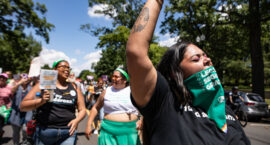
‘Comstocked’: How Extremists Are Exploiting a Victorian-Era Law To Deny Abortion Access

In June 2019, the all-male city council in Waskom, Texas, unanimously voted to make the tiny town of just 2,000 residents the nation’s first “sanctuary city for the unborn.” Characterizing fetuses as the “most innocent among us [who] deserve equal protection under the law,” the ordinance expressly bans abortion within its municipal boundaries. The man behind the ban, anti-abortion zealot and pastor Mark Lee Dickson, has since expanded his campaign to outlaw abortion “one city at a time” into at least six other states.

(This article originally appears in the Fall 2023 issue of Ms. Join the Ms. community today and you’ll get issues delivered straight to your mailbox!)
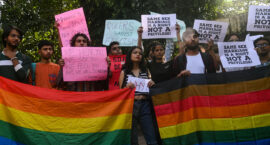
The Ms. Q&A With Elizabeth L. Silver, Author of ‘The Majority,’ an RBG Novel

When I heard the title of Elizabeth Silver’s new book, The Majority, I knew the lone word in the title held layers of resonance.

The novel’s main character is reminiscent of Ruth Bader Ginsburg, or “The Notorious RBG,” and the reader follows her arduous, yet steady, ascending legal career. The novel reveals an intergenerational weave of feminists still trying—sometimes in impossibly constricted ways—to break down doors, laws and spaces to effect change. In this book, we see a composite of personal and professional challenges that reflect the path of one character but represent so much more beyond just her.

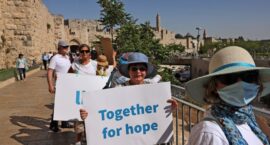
Women Speak Out for Pathway to Peace

There are times throughout recorded history when women have stepped up, spoken up, and taken action to resolve border and boundary disputes, to protect their cities, communities and families, and to demand and negotiate peaceful resolutions of long-term conflicts.

I am reflecting on those times today as the suffering, death and destruction in Ukraine, Israel and Gaza, and the violent oppression in Iran and Afghanistan, seem beyond our ability to do anything that would mediate the violence or end the suffering. Yet, sometimes, women have come together and accomplished just that.

The Hyde Amendment Continues to Be a Barrier for Accessing Abortion Care

Even in states where abortion is still legally protected, many in need of financial support may not be able to obtain abortion care due to the Hyde Amendment.

This amendment, passed 47 years ago last month, prevents federal funds from being used to cover the cost of abortion services except in very limited circumstances. Many people enrolled in public programs—such as Medicaid—have to pay out-of-pocket for their abortion care.

President Biden Needlessly Trails Trump on Judicial Confirmations

It’s a bittersweet time to reflect on President Biden and Senate Majority Leader Schumer’s legacy for our federal courts.  

On one hand, this administration and Senate majority are unrivaled in adding diversity to the federal bench. On the other hand, Biden and Schumer are now falling behind Trump and McConnell’s pace of confirmations.

Let’s confirm the president’s nominees and fill the vacancies where obstruction is impossible.  

A Freelance War Correspondent Covers Ethnic Cleansing of Her Indigenous Nation

For nearly three years, Siranush Sargsyan has documented Azerbaijan’s siege of the 120,000 indigenous Armenians in her disputed homeland of Artsakh (Nagorno-Karabakh). The former history teacher and state worker turned wartime freelance journalist is now among the over 100,700 forcibly displaced taking refuge in neighboring Armenia. 

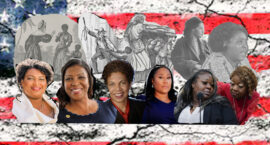
‘The Way We Were’: Eve Merriam and the Hidden History of American Feminism

The Way We Were premiered in 1973. Today, audiences are still drawn to the film’s unlikely romance. In creating the character of Katie, screenwriter Arthur Laurents drew on memories of classmate Eva Moskovitz, who became the successful author Eve Merriam.

Given that the 50th anniversary of The Way We Were is also the anniversary of Ms. magazine and a high point in the women’s liberation movement, it is worth considering what it means that in 1973, a successful female author could be recast in an iconic and beloved film as a woman willing to give up her ambitions to get the hunky guy.

Domestic Violence Calls About ‘Reproductive Coercion’ Doubled After the Overturn of Roe

Reports of abuse involving reproductive coercion—actions that prevent someone from making crucial decisions about their body and reproductive health—nearly doubled in the yearlong period after Roe v. Wade was overturned.

Reproductive coercion can take the form of any situation in which one partner is exerting power over another in a way that impacts their reproductive health: forcing someone to engage in sexual activity, refusing to use contraception, restricting a partner from seeing a healthcare provider, telling a partner they are not allowed to receive abortion care.