‘The Headspace Gap’: The Mental Load of Living in a World Designed for Men

There is a reality we seldom notice: the physical contortion constantly required and tolerated by women to get through the day.

It’s everywhere if you pay attention: the woman struggling to reach and hold on to the strap on the moving subway car; the corporate attorney changing her gait to avoid blisters from her heels; any woman choreographing her every move inside a public restroom stall, accommodating a space designed to be barely sufficient.

The distraction caused by an ill-fitting built world has a tangible consequence: Headspace that would otherwise be focused on a goal or fulfilling one’s potential is wasted on silly workarounds. (And we know these workarounds cost money too.) This is headspace that our male counterparts have available to them.

It is no longer the case that our labor market is predominantly male, and design should reflect that. In a century characterized by the emergence of some of the most frivolous comforts, to ignore gender bias in design is to convey indifference toward the health, safety, performance and comfort of our women.

I call this the headspace gap. It perpetuates patriarchy, operating as a product by design.

(Adapted from the new book Man-Made: How We Designed a World That Leaves Women Out, and How We Can Make It Right.)

Feminist Must-Reads: Our Favorite Books, Essays and Multimedia Projects for America at 250

We’ve made it to July—another eighth of the Trump administration’s days behind us, halfway through a hell of a long year, and the eve of a long weekend to commemorate the 250th anniversary of the Declaration of Independence.

President Donald Trump’s apparent glee that women were absent from his recent White House UFC Fight was just the shot of inspiration I needed to collect and curate some of the best feminist takes on democracy to carry us through the national holiday.

Revisiting the Speech That Made America See Farmworkers: Dolores Huerta and the Power of Saying, ‘We Exist’

In 1965, the National Farm Workers Association announced their decision to join the striking Agricultural Workers Organizing Committee on Sept. 16—Mexican Independence Day. The choice of date reflected the hybrid identity of Chicanos: straddling Mexican and American cultures, Spanish and English, rooted in the old country but with branches fully extended into the new one.

This was the identity Huerta embodied.

Huerta maintained a heavy bilingual speaking schedule to keep up mo­rale. In addition to the typical challenges of organizing, the farmworkers were standing up against bigotry and asserting their American identity—attaching their cause to the Civil Rights Movement.

“Abajo con racism! Down with rac­ism!” Huerta sometimes ended her speeches. “Viva la union! Viva la causa!”

The people in power, the ones who owned the companies that sold the food or wrote laws in the statehouse, had been able to ignore people like the farmworkers—the people who toiled out of sight to keep the system going.

Now, a crowd of people had walked across the state to watch Huerta declare: “We are here and we embody our needs for you.”

(Excerpted from the book ALL WE SAY: The Battle for American Identity: A History in 15 Speeches by Ben Rhodes.)

Looking to Black and Indigenous Foremothers to Resist Erasure

Free Black women and Indigenous women are the foremothers of generations of African Americans. Yet they remain largely absent from the official story of American freedom. Their lives, contributions and descendants have been systematically erased—from colonial records and legal classifications to public memory itself.

That erasure began in the earliest colonial records. The 1620 Virginia census recorded “four Indians in the service of several planters,” alongside 15 Negro men and 17 Negro women, reducing people to categories that obscured their identities, families and histories. Over the centuries, laws, court decisions and public institutions repeatedly reinforced that disappearance.

The best celebration of 250 years of American freedom—after the fireworks and celebrations by a newly blue-painted Lincoln Memorial Reflecting Pool are over—could be a visit to a cool, air-conditioned archive. In the quiet, anyone can search the records for the full story, of the enslaved and freeborn, Indian and African. Anyone can defy censorship and erasure with an open mind and a pencil, no fees required. 

War on Women Report: Trump Administration Defines Embryos as ‘Children,’ Eliminates LGBTQ Veteran Healthcare *and* Guts Teen Pregnancy Prevention Programs

MAGA Republicans are back in the White House, and Project 2025 is their guide: the right-wing plan to turn back the clock on women’s rights, remove abortion access, and force women into roles as wives and mothers in the “ideal, natural family structure.”

We know an empowered female electorate is essential to democracy. That’s why day after day, we stay vigilant in our goals to dismantle patriarchy at every turn. We are watching, and we refuse to go back. This is the War on Women Report.

Since our last report:
—This month marked the fourth anniversary of Dobbs. Today, 41 states have some form of abortion restrictions in place, including 13 states that ban abortion entirely.
—HHS has terminated 53 of its 67 grants for the federal Teen Pregnancy Prevention Program, totaling about $68 million and affecting grantees in two dozen states.
—Two family planning programs sued the Trump administration for curtailing the Title X grant program, which funded clinics providing reproductive healthcare services to low-income patients.

… and more.

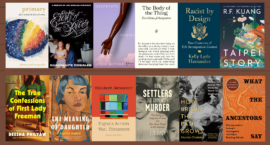
July 2026 Reads for the Rest of Us

Each month, Ms. provides readers with a list of new books being published by writers from historically excluded groups.

Dear feminist reader friends, I don’t ask you for much. But now, I want to hear from you. 

Do you prefer more titles with less descriptive summaries? Or fewer titles with more thoughtful annotations? Is there anything else I can do to improve the columns? 

If I don’t hear from you, I will just keep on keepin’ on, but I’d prefer to give you what you want. So, go to my website and use my contact form to send me some feedback, please!

And until next month, I hope you enjoy these 10 titles as much as I did.

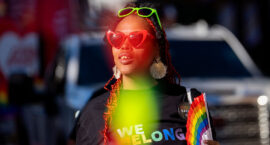
‘We the People’ Is America’s First Promise. Who Gets to Belong?

For much of my life, I thought belonging was something you found: a place, a community, a passport, a home. Now I believe belonging may be something we build together. That realization took me 30 years—and not because I lacked an identity. I arrived in the United States carrying one.

The challenge was never that I did not know who I was—it was whether all of who I was could belong, all at the same time, in the same place: the daughter of a proud Nigerian father, an immigrant, an engineer, an advocate, a woman comfortable in rooms of power, and a woman excluded from systems governing her own life.

In a year commemorating the 250th anniversary of the United States, the Obama Presidential Center opened to the public on Juneteenth. Juneteenth commemorates the moment freedom reached people who had already been declared free. It is a reminder that recognition and reality do not always arrive together. Perhaps that is true of nations as well as people: that legal status and lived experience are not always the same thing. There can be a painful distance between inclusion on paper and belonging in practice.

Who is “we”? For nearly 250 years, the U.S. has been trying to write that answer since the beginning.

The question now is whether we are brave enough to build a version of “we” large enough for people to bring all of who they are into the future we share.

The Equal Rights Amendment and the First Amendment: A Roadmap for a Feminist Future

Donald Trump’s jingoistic whitewashing of the 250th anniversary of the founding of our country will no doubt celebrate the 1773 Boston Tea Party, where the Sons of Liberty protested oppressive British import taxes. But throughout American history, women activists—the Daughters of Liberty to suffragists, journalists and civil rights advocates—have been making patriarchal governments tremble, by taking full advantage of the precious rights protected by the First Amendment: freedom of speech, freedom of the press, the right to peaceably assemble, and the right to petition the government for redress of grievances. 

That same spirit must now drive the final push to secure the Equal Rights Amendment. Although the ERA has been ratified by the required 38 states, it has yet to be officially recognized as part of the Constitution.

The First Amendment gives us the tools to change that: by speaking out, organizing, protesting and demanding that elected leaders make constitutional equality a national priority.

The Ranked Ballot Is the Pro-Women, Pro-Voter, Pro-Democracy Reform America Needs

For 250 years, the story of American democracy has been a story of expanding who holds power and who gets to decide who yields it.

The 15th Amendment, the 17th, the Voting Rights Act, the 19th Amendment and the 26th—each was a structural intervention, a deliberate redesign of the rules to bring more people into the democratic process. And at each iteration, a bet was made on the same proposition: Democracy works better when more people have real power within it.

We are overdue for the next chapter.

Women make up 51 percent of the American population and hold fewer than 29 percent of seats in Congress. That gap is not a product of insufficient ambition, inadequate candidates or a thin pipeline of viable women. It is the product of an electoral system that was designed before women could vote, and has never been fundamentally redesigned since.

Ranked-choice voting changes that. The ranked ballot is the single most powerful, best-documented structural reform available for advancing women’s political participation, and it serves every voter, at every level of government, on every ballot.

In a ranked-choice voting election, voters rank candidates in order of preference—first choice, second and third—and if no candidate wins a majority outright, the candidates with the fewest votes are eliminated and their votes are redistributed until someone reaches a winning threshold.

Under this system, voters can express a genuine preference without fear of wasting their vote on a candidate who can’t win, and qualified women candidates can run without fearing splitting the vote.

(This is part of a new series FEMINIST 250: Democracy’s Feminist Future, a special Ms. series examining the next chapter of U.S. democracy through a feminist lens. As the nation approaches its 250th anniversary, the series explores how women and marginalized communities have shaped democratic progress, what lessons history offers for the challenges ahead, and how a more inclusive, representative and equitable democracy can be built for the next 250 years.)

Who Gets to Be a Citizen Today?

In a highly anticipated decision, the Supreme Court rejected President Donald Trump’s attempt to end birthright citizenship, reaffirming that children born in the United States are citizens under the 14th Amendment, regardless of their parents’ immigration status. The ruling preserves one of the Constitution’s clearest guarantees, and averts what would have been one of the most sweeping assaults on American citizenship since Reconstruction.

The ruling was authored by Chief Justice John Roberts, joined by Justices Sonia Sotomayor, Elena Kagan, Amy Coney Barrett and Ketanji Brown Jackson; Justices Clarence Thomas, Samuel Alito, Neil Gorsuch dissented in full, and Brett Kavanaugh in part.

The Court reached the correct result. But no constitutional democracy should take comfort in the fact that four justices were prepared to strip citizenship from children born on American soil, embracing Trump’s effort to narrow the Citizenship Clause and erase a constitutional promise that has defined U.S. democracy for more than 150 years. Their willingness to do so exposes just how vulnerable even our most fundamental constitutional commitments have become.