

A (Brief) History of Women’s Rights, 1600 to Present

From the Haudenosaunee women who successfully challenged warfare in the 17th century, to today’s feminist organizers defending democracy, reproductive freedom and civil rights, the struggle for women’s equality has never been a straight line. It is a story of persistence, resistance and collective action spanning centuries.

Compiled by editors at Ms. and researchers from the National Women’s History Alliance, this women’s history timeline traces the interconnected histories of feminism, abolition, labor organizing, civil rights, reproductive justice, LGBTQ+ liberation and democratic participation.

No timeline can fully capture more than 400 years of feminist history, let alone every movement, leader, victory and setback that has shaped the ongoing fight for equality. Rather than offering a comprehensive account, this chronology highlights pivotal moments and turning points that help tell the story of how women have expanded the boundaries of freedom, democracy and human rights in the United States and beyond.

The timeline is part of Ms. magazine’s FEMINIST 250: Founding Feminists project, a multimedia essay series marking the 250th anniversary of the Declaration of Independence by examining the women and feminist movements that have worked to make the nation’s founding promises more fully realized. Through reported features, essays, interviews and historical analysis, FEMINIST 250 explores not only where we have been, but where we must go next to achieve true equality.

FEMINIST 250’s Parts 2 and 3—Feminist Lessons and Feminist Futures—drop this month on MsMagazine.com.

Three Ways Trump’s Weird Fixation on DEI Is Hurting Women

The Trump administration’s obsession with diversity, equity and inclusion has moved far beyond rhetoric. It is now reshaping how women’s stories get told, whose health crises are allowed to be named, and what kinds of research are permitted to survive.

Across history, healthcare and science, women are watching decades of hard-fought progress become collateral damage in a culture war designed to erase people in real time.

That damage is already visible.

Republicans derailed long-awaited progress on the American Women’s History Museum by inserting provisions policing which women count as women and handing Trump appointees sweeping control over the museum itself.

Meanwhile, the newly reintroduced Momnibus legislation—created in response to the maternal mortality crisis devastating Black women and families—has been forced to strip much of the word “Black” from its language in order to survive politically under an administration openly hostile to DEI initiatives.

And the consequences are not abstract: NIH grants focused on women’s health have reportedly dropped by 30 percent, while words like “women” and “gender” themselves are becoming liabilities in funding proposals.

Women’s health was already chronically underfunded and misunderstood long before Trump returned to office. But the administration’s escalating war on DEI is accelerating that neglect—and making clear just how much is at stake when political ideology begins dictating whose lives deserve to be studied, protected and remembered.

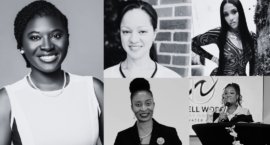
Black Women Political Candidates Are Expected to Be ‘Likable,’ Qualified and Tireless. Men Aren’t.

What I experienced during my 2014 run for office wasn’t entirely unfamiliar to me.

The year before, I had run for president of the Young Democrats of America (YDA), a national political party office role, against a popular opponent. The opponent was a Black man, so race wasn’t a factor in the election; however, gender was.

Before my campaign, I was vice president of YDA and had heard only good things about my service: my fundraising efforts, the partnerships I had engineered with progressive organizations, and programming coordination for the membership. However, when I decided to run for president, I instantly became ‘difficult to work with’ and ‘mean.’

Research on women candidates confirms that voters are less likely to vote for a woman if they don’t like her; by comparison, voters don’t need to like men to elect them. But when I was running as the Black woman candidate in a seven-candidate primary for public office, with two other women in the race, I noticed almost nothing about my being ‘difficult’ and more about my ability and work ethic.

My experience running for public office reflected the systemic bias and double standards not just for women candidates, but Black women candidates who dare to aspire to any sort of political leadership—and that needed to change.

We need more progressive Black women in public office for a myriad reasons, but we also specifically need the younger generation of Instigators in office, candidates who understand the times in which we live currently.

Electing more Black women will take real investment in changing the biases and attitudes (conscious and unconscious) of mostly white donors, media, campaign staff, consultants and institutional leaders to help shift the culture and systems. But this support needs to be substantively increased so that we can rebuild an inclusive, multiracial democracy with the leaders we want and need.

(Excerpted from The Instigators: How Black Women Have Been Essential to American Democracy by Atima Omara.)

How ICE Became the Enforcement Arm of the Patriarchy

Speaking in early February, while the nation was still reeling from the killings of Minneapolis residents Renee Good and Alex Pretti by federal agents, Jackson Katz, a leading voice in gender violence prevention and masculinity studies, and Loretta Ross, a celebrated Black feminist scholar and cofounder of SisterSong, examined the deadly ways misogyny and racism intersect in Donald Trump’s America.

The two of them had a nuanced exploration of how government institutions, cultural narratives and political movements shape—and weaponize—issues of gender and race. Their candid exchange critiques the forces behind U.S. Immigration and Customs Enforcement and right-wing populism, and challenges us to rethink empathy, identity and our strategies for building a more inclusive feminist movement.

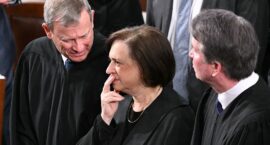
Justice Kagan Sounds the Alarm as Supreme Court Dismantles Voting Rights Protections: ‘Elected Politicians Picking Their Voters’

In a 6-3 decision in Callais v. Louisiana on Wednesday, the Supreme Court struck down Louisiana’s current congressional map—drawn after the 2020 census to include a second majority-Black district—and, in doing so, weakened Section 2 of the Voting Rights Act, the last remaining nationwide tool for challenging racially discriminatory voting laws.

From Pennsylvania to Illinois to California: A Wave of Good News for Women

It is a relief to point to bona fide good news coming from the states, often some of the best laboratories for democracy.

In Pennsylvania, an appeals court struck down a decades-old law banning the use of state Medicaid funding to cover abortion. Truly remarkable is the majority’s decree that reproductive autonomy is enshrined in the equal protection provision of the Pennsylvania Constitution, guaranteed under its Equal Rights Amendment. ERAs can be game-changing for bolstering legal protection against a wide array of discrimination—including on the basis of pregnancy, age, disability, and immigration status—as well as for addressing adjacent issues such as pay equity and transparency and gender-based violence.

Upcoming judicial elections in Georgia are fast becoming a reproductive rights referendum, as happened last year in Wisconsin. Activists are raising funds in force. 

Idaho voters will likely get to weigh in directly on abortion rights in the November midterms.

… and more.

No Pockets, No Power? The Feminist History of the Purse

With a global market worth of over $56 billion, handbags are one of the main drivers of the fashion industry.

However, as Kathleen B. Casey shows in her latest book, The Things She Carried: The Social History of the Purse in America, they are more than just a fashionable accessory: Women’s purses are an important marker of identity and social status. They are a statement of power, of resilience, of defiance and even protection. Indeed, you can tell a lot about a person from their handbag and what’s in it.

While both women and men have carried bags in the past, it was the evolution of pockets (and lack thereof in women’s clothes) that led to the purse being specifically marked as a feminine accessory, often associated with the female body and particularly the womb. 

With pockets becoming a symbol of functionality and masculinity, it is not a coincidence that utilitarian pockets became a feminist demand. Feminists have long argued for their right to free hands and movement, while keeping their possessions secure and concealed. Pockets were often equated to votes during the suffrage campaign, as activists criticized the lack of both in hindering women’s independence.

Despite being a conspicuous item, one that could be snatched or stolen, Casey is careful to show the power of the purse (pun intended) in offering women the ability to gain visibility in public as equal to men. Women could not only carry with them money, sanitary pads and birth control pills that allowed them freedom of movement and independence, but their bags enabled them to do it while maintaining their respectability and status. At times when women had little control over their bodies, the privacy of their purse offered them an autonomy they could not otherwise gain.

‘Who Will Revere the Black Woman?’ Remembering Nancy, Cerina and So Many More

Even though I did not know Nancy Metayer, my heart is utterly broken by the loss of her life and the violence of her death. The night before her funeral, I joined a virtual vèyè in her honor—a space to keep watch, to remember her impact and to hold one another in communal care.

That same day, news broke about Dr. Cerina Fairfax, also killed in her home. I did not know her either, and still, I was gutted.

Nor did I know Pastor Tammy McCollum, Ashly Robinson, Qualeisha Barnes, Davonta Curtis or Barbara Deer—Black women killed in just a matter of weeks. And to think these are only the names we know.

In moments like this, I find myself returning to a question first posed by Abbey Lincoln decades ago: “Who will revere the Black woman?” The reality of this violence—and the way it is so often explained away or softened—makes that question feel as urgent as ever.

Black feminists have long named the patterns, the structures and the stakes. And still, we are left mourning, naming and insisting: We will not let their lives be forgotten. We will continue the work in their honor—because we revere them.

When Reporting Becomes a Crime: Georgia Fort on Her Arrest, Press Freedom and Black Media Representation

The press release in Emmy-award winning journalist Georgia Fort’s inbox was vague, stating only that an event to honor Rev. Dr. Martin Luther King Jr’s memory would be taking place Jan. 18 and asking people to assemble at 10 a.m.

Fort joined protesters in a car caravan that ended up at Cities Church in St. Paul. The site, she learned, had been selected because one of the church’s pastors, Rev. David Easterwood, was rumored to be working as the acting head of a local office of Immigration and Customs Enforcement (ICE). Fort, with camera and mic in hand, recorded everything that was taking place and live-streamed the action as it was unfolding—a routine part of her work as an independent TV and radio journalist. 

On Jan. 30, she was arrested (along with seven others including former CNN reporter Don Lemon) and charged with “conspiracy to deprive the church’s congregants of the right to worship.”

She spoke to Ms. reporter Eleanor J. Bader in mid-April about her work as a multimedia reporter, mentor for Black and brown youth, and critic of the government’s “strategic attack” on press freedom.

“About two dozen federal agents, including personnel from the Drug Enforcement Agency, arrived around 6 a.m. and pounded on the door to my home. … They were really aggressive. … My 17-year-old has been having nightmares, and my 8-year-old cries every day.”

Silence Should Never Be the Price of Progress

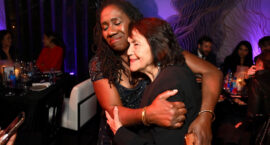
Dolores Huerta’s revelation lays bare a painful truth too many women already know: Silence is often the price of progress.

For generations, women—especially women of color—have been expected to absorb harm to uphold institutions, movements and powerful men. “La lucha” is always supposed to come first. Huerta was forced to carry that burden alone for decades.

This dynamic is not unique to one movement or one moment. It is embedded in the very structures that shape our society. Women are told, implicitly and explicitly, that speaking out will jeopardize the greater good. That calling attention to harm, even violence, will derail progress. And so many stay quiet, carrying the weight alone, believing their silence is necessary for something bigger than themselves.

I’ve witnessed this reality firsthand, in my own family, in workplaces, and in the stories women share when they finally feel safe enough to speak.

We cannot continue to treat harm as collateral damage in the pursuit of progress. Movements rooted in social justice must also practice it internally. That starts with listening to survivors without judgment, creating environments where speaking out is met with support rather than skepticism, and recognizing that accountability strengthens movements—it does not weaken them.

A future where women are not asked to sacrifice their dignity for progress is not just possible—it is necessary.