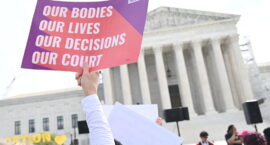
As abortion access is increasingly being decided by state and federal courts, two reproductive rights attorneys make sense of past rulings and the ongoing fight for reproductive healthcare.
This year we commemorate the 51st anniversary of Women’s Equality Day with perhaps more optimistic urgency than ever before.
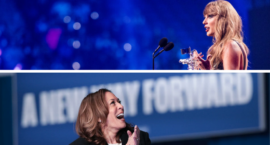
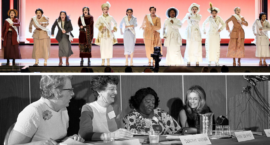
Amid the buzz, there has been an overt, palpable melding of pop culture and politics. That includes on Broadway, where the two-time Tony Award winning show, Suffs, tells the story of the fight for women’s suffrage—and all the humanity and perfectly imperfect organizing strategies of the cadre of activists who won the right to vote for women—in song.
Eight years ago, Hillary Clinton made history as the first woman to be nominated for president by a major party. A proud feminist, she embraced the trailblazing nature of her campaign, portraying it as a quest to break the “highest, hardest glass ceiling.” But winning the popular vote still didn’t enable her to shatter the glass. A greater equality, the dream of generations of women, remained just that—a dream. Another woman would have to make it come true.
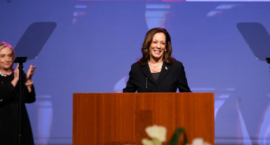
This week, in what might have been the waning days of her second term, Clinton declared in a full-throated speech at the Democratic National Convention, that “the future is here.” It is Kamala Harris, she said, who can smash that centuries-old ceiling once and for all.
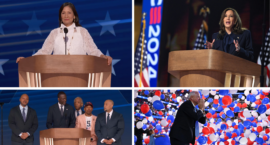
For those seeking an inside look at the intersection of politics and feminism, Ms. writers and editors are on the ground in Chicago, delivering real-time insights and reflections from the heart of the DNC, capturing the narratives and voices shaping the future of U.S. politics.
Explore: a roundtable with Democratic women governors and Julia Louis-Dreyfus; freedom-themed evening programing includes appearances from reproductive rights leaders, Oprah, Jan. 6 survivors and Minnesota Gov. Tim Walz; what’s driving women voters; and more.
Black women are often in the crosshairs of abusive discourse driven by social media. That recent targets are often public figures suggests that social media abusers find it profitable to attack high-profile Black women who have become symbolic avatars for the group as a whole.
(This article originally appears in the Spring 2024 issue of Ms. Join the Ms. community today and you’ll get issues delivered straight to your mailbox!)
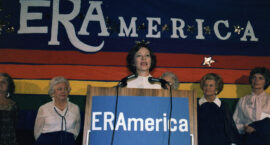
In the many tributes written since Rosalynn Carter’s death on Nov. 19, one word often is used to describe her: trailblazer. Indeed, Rosalynn Carter was like no other first lady. She testified before Congress on mental health issues; made policy proposals on caregiving and established the Rosalynn Carter Institute for Caregivers in 1987; worked to advance women’s rights; and helped in the ratification of the Equal Rights Amendment.
Carter’s own words are the most powerful about her belief and commitment to equality. “Although there has been progress, women still struggle to take their full, rightful places in politics, the media, business and athletics. … I would like for people to think that I took advantage of the opportunities I had and did the best I could.”
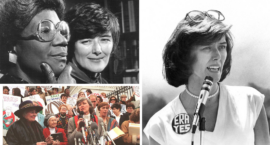
Since the news broke about Pat Schroeder’s death on March 14, there have been thousands of tributes, obituaries, tweets and social media postings in her honor. They described her as a maverick, pioneer, feminist champion, trailblazer, fearlessly independent politician, and an icon and role model for many elected officials, men and women. We agree—but for the feminist movement, Pat Schroeder was much more. On March 22, 2023, the House of Representatives will honor Schroeder with a moment of silence. In honor of this one minute—60 seconds—of silence, we’ve compiled 60 stories from people who knew and admired Pat Schroeder.
“Pat was best known for being a fierce advocate for women. And many young women asked her for advice. She told them to make sure women were in rooms where decisions were being made. And if they were not, to kick the door down and hold the door open for those behind them.”
On Presidents’ Day, we reflect on the legacy of the presidents who have led our nation since our founding. These leaders have differed in their ideologies, their policies, their professional experience, their age, their marital status. But in over 230 years of United States presidents, not one of them has been a woman.
On Friday, Sept. 23, Hillary Clinton—former U.S. secretary of state and the first woman to win a presidential nomination by a major U.S. political party—spoke at The Texas Tribune Festival in Austin, Texas. She was joined by Kara Swisher, renowned journalist and host of the new podcast On With Kara Swisher. Clinton’s and Swisher’s wide-ranging conversation covered several issues affecting women—from the feminist uprisings in Iran, to Trump and the classified documents at Mar-a-Lago, to the upcoming midterm elections. Read on for some of our favorite moments.