At Home and Abroad, MAGA’s Politics of Force Try to Reassert White Male Power

The connective tissue of Donald Trump’s takeover of Venezuela, his threats to invade Greenland, the killings of Renee Good and Alex Pretti by masked federal agents in Minneapolis, and the EEOC’s encouragement of white men to bring claims of discrimination against them is this: All represent increasingly desperate efforts by Trump and MAGA to forcefully put white men back in charge.

The Cruel and Unusual Killings of Renee Good and Alex Pretti

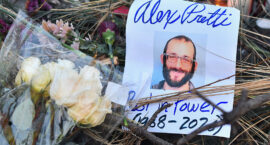
Barely two weeks apart, two American citizens have been slain in Minnesota by U.S. Immigration and Customs Enforcement (ICE) agents in the Twin Cities. Their deaths raise important questions—not just about the violation of First Amendment freedoms, but also the trampling of Eighth Amendment protections that bar the government from inflicting “cruel and unusual punishment.” 

A Month of Fear: ICE’s Surge in Minneapolis and the Backlash That Won’t Quit

For the people of Minneapolis, it has been another week of startling violence as the Trump administration continues to mobilize ICE officers into the city—shuttering schools and businesses and leaving residents afraid to leave their homes. Still, thousands have taken to the streets to resist.

One such resister’s story came to us through our Ms. community: Skye, a disabled U.S. Marine Corps veteran who has been participating in citizen observer efforts to warn neighbors about ICE presence. “This is my duty,” she told Ms. “I took an oath to defend the United States of America against all enemies, foreign and domestic. … [ICE agents] are terrorizing our citizens.”

If there’s a silver lining, it’s that people aren’t staying silent. Protests have filled streets in Minneapolis and far beyond. As we honor Martin Luther King Jr. Day, we’re reminded that racial justice, gender equality, reproductive rights and an end to state violence are intertwined struggles.

Keeping Score: Renee Good Fatally Shot by ICE; Women Work Longer and Are Paid Less Worldwide; N.Y. Fights Back Against Federal Childcare Freeze

In every issue of Ms., we track research on our progress in the fight for equality, catalogue can’t-miss quotes from feminist voices and keep tabs on the feminist movement’s many milestones. We’re Keeping Score online, too—in this biweekly roundup.

This week:
—”We had whistles. They had guns,” said Becca Good, wife of Renee Good, who was killed in Minneapolis by ICE agent Jonathan Ross.
—In central Texas, five months after the Sandy Creek flooding, “many are still homeless, and only 36 percent of FEMA claims in our area have been approved,” said survivor Brandy Gerstner. “FEMA must be independent, fully funded and strengthened—because when it fails to function, real families pay the price.”
—Anti-Muslim and anti-South Asian hate increased around the election of NYC Mayor Zohran Mamdani.
—The Department of Veterans Affairs announced new abortion bans.
—Meta has removed the social media accounts of dozens of reproductive health and LGBTQ groups.
—Women worldwide earn just a third of what men do when unpaid domestic labor is taken into account.

… and more.

‘Dad Went to War’: The Radical Faith Behind the Minnesota Assassinations [Part 3 of 4]

When Minnesota police arrested 57-year-old Vance Boelter after a two-day manhunt, they uncovered notebooks filled with names and addresses of elected officials and abortion providers. The suspect, who authorities say stockpiled 48 firearms, had already gunned down two people and left others gravely wounded. His writings and sermons hint at extremist religious currents, including ties to the New Apostolic Reformation.

“Their vision is violent at the outset,” says Frederick Clarkson, a longtime researcher of Christian extremism.

Advocates warn that rhetoric casting abortion as a holy war is not fringe—it is increasingly mainstream within the movement, fueling both deadly plots and everyday harassment of patients and providers.

The Minnesota Shooting Wasn’t Random—It Was a Predictable Resurgence of Violence

Minnesota experienced an act of devastating political violence last month: Former Minnesota House Speaker Melissa Hortman and her husband, Mark Hortman, were killed in their home. State Sen. John Hoffman and his wife Yvette are recovering from life-saving surgeries after shielding their adult daughter from the gunman.

In recent years, we’ve seen attacks escalate against elected officials across the political spectrum. However, we must recognize that Hortman, Hoffman and the other targets on the gunman’s list are uniquely vulnerable because of the way that we treat abortion: We isolate abortion from mainstream care, in law and practice; and we exclude it from insurance coverage, hospital systems and routine medical training.

By treating abortion as unsafe and morally suspect, rather than as legitimate medicine, we further normalize hostility towards it, its providers, and the policymakers who uphold access to it.

Political Violence Is Becoming America’s New Normal

Among the myriad headlines that roiled the nation last week, rising political violence in the United States was a sickening drumbeat—one that culminated and resounded most loudly during a weekend of targeted shootings directed at two Minnesota state lawmakers and their spouses.

Though the shooter’s motivations are still unconfirmed, news reports reveal that notebooks found in his car were “full of plans, lists of names, surveillance efforts and home addresses.” Among those listed are Democratic elected officials, including state Rep. Kelly Morrison, U.S. Rep. Ilhan Omar and U.S. Sen. Tina Smith, as well as state and federal leaders from other states; and local Planned Parenthood contacts, including abortion providers and advocates. Accounts by the shooter’s friends as well as his social media footprint indicate his vehement opposition to abortion and LGBTQ rights—an opposition he made especially clear.

All of it is worrisome, but the combination of antiabortion extremism, anti-democratic fury and actual violence is growing exponentially more potent. The federal government is communicating with utter precision that abortion is the exception, the excuse, the issue for which violence is an acceptable response. We ignore that message at our collective and societal peril.

Rest in Power, Melissa Hortman—The Kind of Leader Patriarchy Fears

“I’m not sorry. … I’m really tired of watching women of color in particular being ignored.”

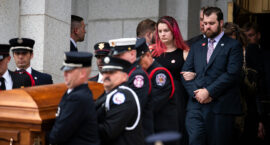
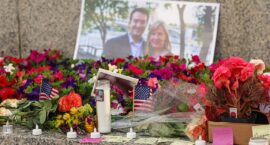
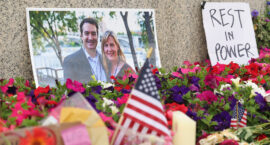
Over the weekend, the feminist movement lost a lion. Melissa Hortman, former speaker of the Minnesota House and longtime champion of reproductive justice, climate action and racial equity, was senselessly gunned down in a targeted attack at her home. Her husband, Mark, was also killed. 

Kelly Dittmar, a political science professor at Rutgers University-Camden and the director of research at the Center for American Women and Politics, shared on social media a powerful speech Hortman gave eight years ago, when she was the minority leader, on the House floor about the power of women’s voices. In it, she interrupted and called out white male legislators during a key debate—and when asked to apologize for her candor, she didn’t flinch.