The Missing Voices in the Epstein Files’ Media Commentary: Sexual Assault Prevention Educators

The Epstein files scandal has all the elements of a gigantic media spectacle. It encompasses everything from true crime to political intrigue, and offers a peak behind closed doors into the lifestyles of the rich and famous. It has more than a little sex and violence. 

It’s a conspiracy theory come to life.

Media commentary has explored seemingly every angle. Or has it? On closer examination, something has been missing.

Misogyny, Racism, Power: Connecting the Dots in the Violent Far Right

In Part 2 of the Q&A between Jackson Katz and Cynthia Miller-Idriss, the author of Man Up discusses the link of misogynists and mass shooters: “The fact that so many domestically violent extremist attacks have both gendered and racialized dimensions shows that racism and misogyny are inseparable in the minds of many perpetrators.”

Miller-Idriss explains the key role online gaming and chat spaces play within the radicalization of young men and boys.

Misogyny is no doubt threaded through nearly ever mass shooting, and feminists are used as a scapegoat for taking away men’s opportunities.

Sex, Power and Impunity: Epstein’s Legacy in Historical Perspective

The scandal that has preoccupied much of mainstream U.S. politics has, been, at one level, delightful: We have seen extremist Republicans—Reps. Marjorie Taylor Greene, Lauren Boebert, Thomas Massie and Nancy Mace—break with their party and its president in an effort to force into light the U.S. Department of Justice files on convicted sex trafficker and pedophile Jeffrey Epstein. 

The story is almost irresistible for critics of the current national administration, feminists among them: Will we finally get to items from Epstein like the CD labeled “girl pics nude book 4”? What might these materials reveal? And whose misbehavior might they reveal?  

Fire the starting gun on analyses from every liberal, left, critical corner. Claims abound of shifting coalitions, changing tides, pages turned, a president’s authority shredded. 

But there are still as many questions stirring in the Epstein pot as there are answers. Why did these particular Republicans break from the pack? Is this a contemporary Republican version of feminism? 

And beneath them all: What good does it actually do us—or Epstein’s particular victims, or the scads of other victims of sexual coercion, trafficking and other mistreatment—to raise the heat so high on this particular scandal?


What Boys Learn When Powerful Men Face No Consequences

For decades, Donald Trump has modeled a version of masculinity rooted in entitlement, impunity and the casual degradation of women—and he has done so from one of the most visible platforms on Earth. That visibility matters. When the most powerful man in the country repeatedly evades consequences for misogynous acts, it sends a potent cultural message to boys and young men about what manhood looks like and what women’s lives are worth.

This is why the stakes of the Epstein files extend far beyond Trump’s personal exposure. His ability—or inability—to finally face accountability is inseparable from the broader crisis of male socialization and the normalization of men’s violence against women.

At the same time, focusing solely on Trump risks missing the larger system that made Jeffrey Epstein’s predation possible. As feminists have long argued, these abuses were not aberrations but expressions of a patriarchal network that exploited girls and women with impunity. The Epstein saga is not simply a story of individual bad actors; it is an indictment of the cultural, financial and political institutions that protected them. Whether the public and political leaders confront that reality—or once again look away—will reveal as much about our collective values as it does about the men at the center of this scandal.

Virginia Giuffre’s Posthumous Memoir Is an Indictment of the Men and Institutions That Enabled Her Abuse

I thought I was mentally prepared to read Virginia Roberts Giuffre’s posthumous book, Nobody’s Girl. I was wrong. If reading the book was gut-wrenching, I can’t imagine what it was like for her and other girls and women who experience the horrors of being trafficked.

In the final paragraph of the book, and perhaps in some of the final sentences she ever wrote, Giuffre tells that she will have achieved her goal with Nobody’s Girl if “just one person” is moved to create “a world in which predators are punished, not protected; victims are treated with compassion, not shamed; and powerful people face the same consequences as everybody else.”

Although she never lived to see this day, her book, her courage and her rage compel us to fight for this goal in the name of all victims and survivors of sex trafficking. 

Actually It’s Good That Fewer High Schoolers Want to Get Married

High schoolers, and especially high school girls, are less likely than ever to say that they want to get married someday, according to new research from Pew Research Center. While boys have stayed fairly stable in how many of them say they want to marry, girls have gone from overwhelmingly wanting marriage to being even less likely than boys to want to wed.

Conservative groups and writers have met this new survey with some panic. If 12th graders don’t want to get married, I guess the logic goes, then they won’t get married, and America’s declining rates of marriage and childbearing will continue and will eventually destroy society. To them, this new survey indicates a broader social shift away from marriage and childbearing, which is bad, because in their view, the nuclear family is the good and necessary backbone of any moral and functional culture. 

But actually, it’s great that far fewer high school girls are even thinking about marriage.

The teenage girls who are thinking about their weekends instead of their weddings? They’re doing something right. 

America Is an Increasingly Dangerous Place for Women and Girls 

In America’s hyper-macho, gun-drenched culture, growing up female has never been safe. But under the Trump administration, America is becoming a much more dangerous place for women and girls.

America is dangerous for women and girls because our leaders choose to make it so. The Trump administration has already begun blocking access to abortion and Medicaid coverage for reproductive health, as well as targeting the rights of pregnant people within the 2023 Pregnant Workers Fairness Act.

Already, the macho culture of the U.S. has steadily made women’s safety in the nation decline. Around 41 percent of women in the U.S. have experienced sexual violence, while a third of women reported severe assault by a husband or boyfriend. The normalization of gun violence and violent pornography have also run rampant across the country, making America more dangerous day by day.

What Feminist Scholar Jane Caputi Believes History Can Teach Us About Taking on Male Supremacy—and Building a Future Without Femicide

The professor and The Age of Sex Crime author explained in the latest episode of Looking Back, Moving Forward why the backlash we’re facing is proof that we’re winning—and urged feminists not to abandon their utopic visions for a world without misogyny.

Listen to the latest episode of Looking Back, Moving Forward, “How Feminists are Breaking the Cycle of Gender-Based Violence and Harassment (with Ellen Sweet, Jane Caputi, Vanessa Tyson, Victoria Nourse, and Debra Katz)” on Spotify, Apple Podcasts or wherever you get your podcasts.

Sex Sells … Even in the Soap Aisle: What Does Sydney Sweeney’s ‘Bathwater Soap’ Say About Our Porn-Dominant Culture?

“I need your thoughts on this.” Attached to this urgent text was a link my friend had forwarded to me: An article by Elizabeth Gulino titled, “You Can Buy Sydney Sweeney’s Bathwater Now.”

Upon my first glance at the article, I found myself instinctually grasping for some feminist argument of the campaign, which Sweeney claimed to be fulfilling her fans’ persistent and frankly invasive requests for her bathwater. However, the way our commercial society and the broader marketplace are structured encourages women to market themselves towards those often degrading desires and enables men to continue acting as if treating women as objects is acceptable. And the solution is not restructuring what we construe as feminism, but rather, resisting the urge to accommodate one’s power to what seems like inevitable exploitation.

Defending bathwater products in the name of feminism will not lead us to the kind of liberation we could want for ourselves.

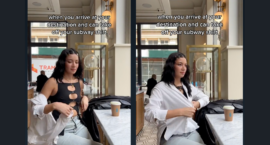
The ‘Subway Shirt’: How Young Women Are Dressing to Deflect Unwanted Attention

An excerpt from Sexy Selfie Nation: Standing Up for Yourself in Today’s Toxic, Sexist Culture, in which Leora Tanenbaum offers an incisive exploration of why many young women wear body-revealing outfits and share sexy selfies and what these choices say about our toxic, sexist culture:

“As temperatures in New York City climbed, young women faced a dilemma: They wanted to wear summery tank tops and miniskirts but were concerned that as they traveled around the city, especially on the subway, they would be met with predatory stares, harassing, ‘Hey baby, won’t you give me a smile?’ comments, and even unwanted touches and gropes.

“And so, being resourceful New York women, they hatched a solution: the ‘subway shirt’—an oversized, shapeless shirt one slips over her ‘real’ outfit.”