Trump-Era Federal Layoffs Hit Black Women Hardest

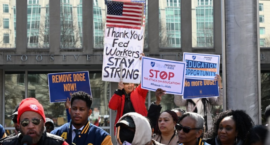
There is a shift happening in the labor force that favors men in general, and white men in particular. And Black women—who historically have found more job security and upward mobility in federal employment—are now seeing those federal jobs slip away in record numbers.

“What we are seeing happening is a federal government that is intent on creating a DEI boogeyman to radically change how workplaces operate in ways that disadvantage women, people of color and LGBTQ workers,” says Gaylynn Burroughs, vice president for education and workplace justice at the National Women’s Law Center.
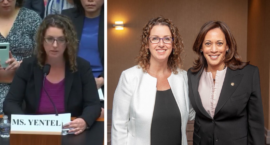

Affordable Housing as a Human Right: Activist Diane Yentel on the U.S. Housing Crisis, Racial Justice and Democracy

Right now, low-income renters are facing rising inflation, skyrocketing rents, limited tenant protections and a shortage of affordable units. Predictably, this is leading to an increasing number of evictions and a spike in homelessness.

Diane Yentel, president and CEO of the National Low Income Housing Coalition, sees housing and racial justice as inextricably linked. “We must ensure that low-income people can participate in democracy by removing the barriers to voting that make it difficult to cast a ballot.”

Half of U.S. States are Leaving Women Workers Behind

federal pandemic unemployment programs

After a year that has put parents—especially women—through unimaginable strain as they’ve struggled to keep a roof over their families’ heads and care for their children, governors in 24 states now want to rip out the rug from under them by ending state participation in federal pandemic unemployment programs.

Emergency unemployment aid is doing what it is meant to do: serving as a temporary lifeline while workers search for and return to work.

Full Employment is Not Enough to Support Black Women

Full Employment is Not Enough to Support Black Women

As has been well-documented during this pandemic, women and men interact with the economy differently. Because of occupational segregation and caregiving obligations, women have been forced out of the workforce at a higher rate than men. For new full-employment policies to serve women, they must proactively address these and other obstacles.