The Push to Eliminate New York State’s Voluntary Intoxication Loophole: ‘You Should Be Allowed to Get Drunk and Not Be Taken Advantage Of’

Under current New York law, if someone was drinking by choice when they were assaulted, prosecutors can decide not to pursue the case. This law provides prosecutors with an out when it comes to sexual assault, and statistics show they take it. In 2019, prosecutors dropped nearly half of all sexual assault cases in the Manhattan district attorney’s office. A bill proposed in the state legislature is looking to make it harder for prosecutors to throw out sexual assault and rape cases by prohibiting the use of intoxication of the victim as a defense. 

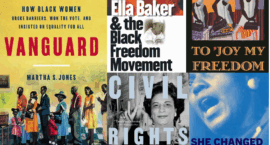
Five Best Books on Black Women’s Political Leadership

While writing my new book about the contributions Black women have made in the global struggle for human rights, I was humbled to see, over and over, how many of these women did not come from rich families, or hold positions of great power, or even have all that much education. But they did the hard and dangerous work required, day in and day out, because they believed in equal rights for everyone, around the world.

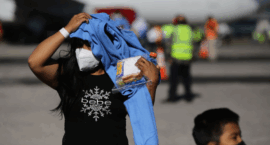
Nighttime Deportations: When Government Policy Becomes Child Trauma

The Departments of Homeland Security, as well as Health and Human Services, hit a new low over Labor Day weekend: Government officials ordered the deportation of over 600 Guatemalan children in the middle of the night.

Fortunately, a federal judge quickly acted to block the removals, at least for now—but the events that unfolded between Aug. 29 and Aug. 31 are a sobering indictment of all that is wrong with Trump’s campaign against immigrants. In a single night, the Trump administration may have permanently scarred children who were just beginning to feel like they had found a safe place, far away from the danger and threats they had fled.

Their terror and confusion is captured in the affidavits children and witnesses filed with the court over the next few days. One boy described how shelter staff woke him at 2 in the morning, telling him he would be leaving in a few hours; he had no time to wash his face or brush his teeth but had to gather his things and go. For a minute, he just sat there, staring into space, unable to fathom what going back to Guatemala might mean. Another child became so scared that she vomited. 

Many worried whether their parents or relatives could even answer the phone at such an hour or be ready to receive them. Some asked in trembling voices, “¿Me van a mandar a otro albergue en Guatemala?” “Are they going to send me to another shelter in Guatemala?”

Memory, Medicine and Law: Reflecting on the 20th Anniversary of Hurricane Katrina @ Washington, D.C., Sept. 11-13

This fall marks 20 years since Hurricane Katrina devastated New Orleans and the Gulf Coast, leaving more than 1,800 people dead and hundreds of thousands displaced. Katrina was not just a natural disaster—it was a political, legal and public health catastrophe that exposed deep inequities in the United States. Women, low-income communities and communities of color were hit hardest, and the failures of government response left lasting scars that continue to shape policy and memory today.

To reflect on these legacies, Georgetown University will host a three-day symposium, “Memory, Medicine and Law: Reflecting on the 20th Anniversary of Hurricane Katrina,” from Sept. 11-13, 2025, at its Capitol Campus and adjoining Law Center, located at 125 E Street NW in Washington, D.C.

The symposium is free and open to the public, but registration is required.

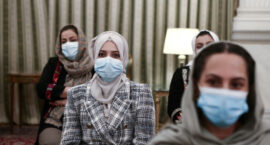
‘I Am Alive, but I Am Not Living’: Four Years After the Taliban’s Return, Afghan Women Judges Go Deeper Underground

When the Taliban regained control of Afghanistan in August 2021, one of their earliest, most devastating acts was to remove all women judges from their positions. These courageous women, educated in their own country and possessing many years of experience adjudicating complex and sensitive cases, were abruptly stripped of their roles and authority.

Although the global spotlight has dimmed, the danger remains real and immediate. These judges, still known and targeted by the Taliban, face grave risks. The international community must not let them fall through the cracks.

‘We Have to Be Relentless’: #MeToo Champion Debra Katz Is Confident ‘There Will Be Wins’ for Survivors in the Days Ahead

In the latest episode of Looking Back, Moving Forward, “the feared attorney of the #MeToo movement” assesses the legal landscape facing survivors—and how activists can continue to hold people in power accountable.

Listen to the latest episode of Looking Back, Moving Forward, “How Feminists are Breaking the Cycle of Gender-Based Violence and Harassment (with Ellen Sweet, Jane Caputi, Vanessa Tyson, Victoria Nourse, and Debra Katz)” on Spotify, Apple Podcasts or wherever you get your podcasts.

How E. Jean Carroll Fought Trump in Court—And Won

At least 27 women have accused President Donald Trump of sexual misconduct, with allegations ranging from harassment to sexual assault and rape. Trump has denied every charge, often dismissing the accusing women by claiming he’d never met them—or suggesting they weren’t attractive enough for him to assault.

In 2019, during Trump’s first term, author, journalist and longtime Elle magazine advice columnist E. Jean Carroll came forward with the allegation that Trump sexually assaulted her in a Bergdorf department store’s dressing room in New York City in the mid 1990s. As usual, Trump denied the allegations, prompting Carroll to sue him for defamation as well as battery under New York’s Adult Survivors Act.

But the jury believed Carroll. In 2023, she won the lawsuit.

From Alligator Alcatraz to National Guard Patrols: What Is the Cost of the Trump Administration’s Cruelty?

Reserve forces of the U.S. Army, 800 National Guardsmen, and for some reason, 120 FBI agents, are being newly assigned by El Presidente to patrol our national capital—citing crime as his motive, though it’s dropped by a third in recent (Biden) years. He’s already done this in Los Angeles for the last 60 days and predicts other cities are on his list: Baltimore, Chicago, Oakland, New York City—all places that just happen to vote blue.

Early on, the Pentagon testified it would spend about $134 million for the LA deployment, which sounds like a low-ball figure to anyone who’s recently shopped for groceries to feed 5,000 hungry young men three meals a day. And now, California’s governor is asking for the total cost to taxpayers of this “unlawful” deployment—because whether it’s political theater or not, we’re the ones footing the bill.

‘If You’re Not Centering the People Who Are Most Impacted, Your Policy Solution Will Fall Apart’: Gaylynn Burroughs Is Fighting for Economic Justice at the Intersections

Burroughs, the vice president of education and workplace justice at the National Women’s Law Center, connected the dots between poverty, policy and culture change in the latest episode of the Ms. Studios podcast Looking Back, Moving Forward. “Once you start seeing these problems as being problems that policy can solve,” she told me, “a whole world opens up.”

Listen to the latest episode of Looking Back, Moving Forward, “Women Can’t Afford to Wait for a Feminist Economic Future (with Premilla Nadasen, Rakeen Mabud and Lenore Palladino, Aisha Nyandoro, Gaylynn Burroughs, and Dolores Huerta)” on Spotify, Apple Podcasts or wherever you get your podcasts.

Doesn’t Gen Z Have the Right to Life? Young People Sue Trump Administration Over Climate Catastrophe as State-By-State Battle Continues

At least 137 people are dead after devastating flash-flooding in Texas in early July, including many children. As climate change induced disasters grow more common and the Trump administration rolls back environmental protections, several organizations are pursuing creative legal strategies to defend children’s fundamental right to a safe, healthy and stable natural environment.

On behalf of 22 young people, Our Children’s Trust filed Lighthiser v. Trump in May as part of its multi-case Youth v. Gov effort, asserting that three of the president’s pro-fossil fuel executive orders violate their constitutional rights to life, health and safety.

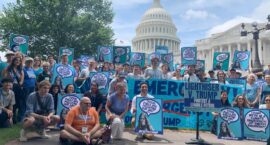
On July 16, hundreds gathered outside the U.S. Capitol to hear from Lighthiser plaintiffs and members of Congress at a press conference hosted by Our Children’s Trust and several organizational partners.

The same day, the Children’s Fundamental Rights to Life and a Stable Climate System resolution was introduced by Sen. Merkley (D-Oreg.) and Reps. Schakowsky (D-Ill.), Jayapal (D-Wash.) and Raskin (D-Md.). More than 50 additional senators and representatives joined the resolution as cosponsors.

Eva Lighthiser and Lander Busse were also plaintiffs in Held v. State of Montana, in which the Montana Supreme Court ruled that state law restricting consideration of climate change in environmental reviews violated youth plaintiffs’ right to a clean and healthful environment. The suit saw success largely because Montana has a Green Amendment—a constitutional amendment in the Bill of Rights section of the state Constitution explicitly declaring the legal right to a safe, healthy and stable natural environment for all people. Thus far, only Montana, Pennsylvania and New York have Green Amendments. The organization Green Amendments for the Generations (GAFTG) is working state-by-state alongside community partners to get new state-level Green Amendments passed.