Meet the Republican Attorneys General Wreaking Havoc on Abortion Access 

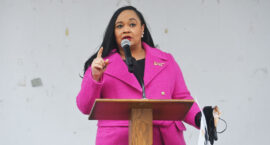
Republican Attorneys General Association (RAGA) is a veritable legal army of far-right attorneys general. RAGA-member AGs have been especially active in pushing for and enforcing oppressive abortion bans, and are working to fulfill anti-abortion power broker Leonard Leo’s extreme agenda.

Several attorneys general have been especially active in attempting to impose their personal beliefs about abortion on all Americans: Montana Attorney General Austin Knudsen, Idaho Attorney General Raúl Labrador, Florida Attorney General Ashley Moody, Texas Attorney General Ken Paxton and Mississippi Attorney General Lynn Fitch.

The Terrifying Global Reach of the American Anti-Abortion Movement

When performed properly, abortion is considered extremely safe. But nearly half—45 percent—of the 73 million abortions performed worldwide each year are unsafe.

One big reason: American anti-abortion policies.

For decades, the U.S. has used the power of the purse to force poorer nations to abide by the anti-abortion values of American conservatives or forgo aid for family planning and other healthcare—giving women around the globe no alternative but to seek backstreet abortions that send some to emergency rooms and others to their graves.

Barbie for President: Celebrating the 25th Anniversary of the White House Project and the Influence of Women in Leadership

Over the past 30 years, I have served the political arena in several roles—as an elected official, healthcare advocate, and most recently as a public affairs consultant. On panels and at events I’ve attended throughout my career, I’ve consistently heard the age-old question: “Can women have it all?” It’s a question that challenges women, who so often feel stuck when seeking a manageable balance between their personal lives and their careers.

It’s a question Marie Wilson hoped to address 25 years ago when she founded The White House Project, an initiative dedicated to increasing the number of women in leadership roles.

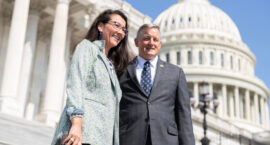
The Childcare Cliff Is Upon Us, and Congress Must Take Action

Since Congress failed to extend the childcare stabilization funding from the American Rescue Plan Act (ARPA) in September 2023, the supply of childcare has fallen off a cliff in many places across the United States, and its effects on families and the early childhood education (ECE) workforce are being felt more than ever. 

If you haven’t already done so, it is time to sit up and pay attention. As childcare programs increase fees to make up for budget shortfalls, the annual cost of care has risen to over $30,000 for 20 percent of families in the U.S., with another 50 percent paying approximately $20,000 annually. These costs often exceed the cost of college tuition. 

Research has long shown the cognitive and social emotional benefits of early learning, and an overwhelming majority of Americans feel that childcare is a good use of their taxpayer dollars. Congress’ disconnect on this issue remains unconscionable.

Six Decades of Fighting for Women in Politics: Cynthia Richie Terrell, Founder of RepresentWomen

Weekend Reading on Women’s Representation is a compilation of stories about women’s representation in politics, on boards, in sports and entertainment, in judicial offices and in the private sector in the U.S. and around the world—with a little gardening and goodwill mixed in for refreshment! The Weekend Reading began on Oct. 9, 2014, and was first formed as a listserv to share information on research, events and articles on strategies to advance women in politics. Released every Friday, the popular column has been online on Ms. almost every week now for four years.

In this special edition, we journey through founder and executive director of RepresentWomen Cynthia Richie Terrell’s writings that prove her heart in this work, take a trip through memory lane through her beloved pictures, and, more importantly, engage with RepresentWomen by supporting her team’s fundraising efforts to advance women’s representation and leadership in the United States.

Women and Caregivers Face Too Many Barriers Running for Office—Here’s How the ‘Help America Run’ Act Can Help

Parents, especially parents of young children, must bring children on the campaign trail—with all the difficulties that entails—or rely on vanishing childcare slots.

Currently, federal law permits candidates to use campaign funds for a limited number of personal expenses—such as childcare—incurred only because they are campaigning with each state having their own restrictions, too. The Help America Run Act formalizes and guarantees to help level the playing field for federal candidates. Without this standard, working parents, caregivers and the candidates from marginalized communities face barriers to campaigning resulting in a Congress that does not look like the United States.

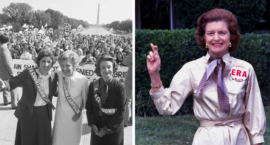
Celebrating First Lady Betty Ford and Her Work for the Equal Rights Amendment

On Friday, April 5, the United States Postal Service (USPS) will issue a commemorative Forever stamp and hold an event to celebrate the life and legacy of Betty Ford, who served as first lady of the United States from 1974 to 1977. 

As first lady and wife of a Republican president, Betty Ford carved out a role for herself that included advocating for issues she cared about—including ratification of the ERA.

How Blocking the Pregnant Workers Fairness Act Is Part of Texas’ Anti-Trans Agenda

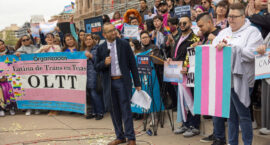
The Pregnant Workers Fairness Act’s gender-inclusive language—in notable contrast to the Pregnancy Discrimination Act of 1978—marks a crucial step towards ensuring equitable treatment and access to accommodations. Without adequate protections, Texas employers could resist making accommodations for people such as pregnant trans men by arguing that it does not apply to them on the account that the Pregnancy Discrimination Act refers specifically to “women”.

Texas has already made clear that trans and gender diverse employees will not be protected in the workplace, when a judge ruled that employers need not protect trans workers from discrimination based on dress, pronoun, and bathroom usage. The Texas legislature’s obstruction of the PWFA serves as a stark reminder of the tangled web woven by the state’s pro-business stance and its vehemently anti-trans agenda.

Now, as we navigate the treacherous terrain of a post-Dobbs landscape, the plight of transgender pregnant individuals in Texas grows increasingly dire, underscoring the urgent need for comprehensive protections and support.