Reads for the Rest of Us: The Most Anticipated Feminist Books of 2026

Happy new year, feminist readers! I hope you’ll make it a goal to carve out time to read, and I’m here to share the top books we are excited about this year. 

We’ve scoured catalogs and websites, searched our favorite authors, kept up with socials and tried to get through as much email as we can to find the gems that we know Ms. readers will love and learn from. We look for feminist, queer, anti-racist, anti-colonial, original, radical and reflective books. Subversive books. Books that’ll make you think and feel.

It’s a lot of work, but as a librarian and Ms. Feminist Know-It-All, it’s what I do! And it’s labor I love. 

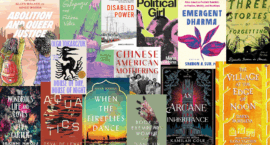
Here are the top 94 books we’re looking forward to in 2026. 

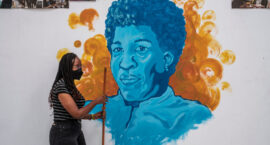
bell hooks Taught Us to Imagine Freedom. Universities Are Forcing Us to Fight for It.

On the day bell hooks became an ancestor, four years ago today, my beloved friend, comrade and co-conspirator Black feminist sociologist Shawn McGuffey and I were consoling one another over text when he wrote, “We should do something.” “Say less,” I replied.

We had institutional support from Northeastern University at a time when universities and other institutions were publicly and ceremoniously committing to funding DEI related initiatives in the tidal wave of so-called racial reckoning that occurred in the aftermath of George Floyd’s death. The first symposium took place two months later on a cold and clear February morning in 2022. This annual gathering became an important tradition that we looked forward to each year.

This week, we mark four years since the woman born Gloria Jean Watkins, a Black feminist writer, academic, professor and activist became an ancestor. But in 2026, there will be no bell hooks symposium at my university. Due to university wide fiscal austerity, we will not mark the anniversary this year in any official way. It is a tremendous loss, for our students and for our community locally, nationally and internationally.

As I grappled with my own grief over this loss, I had to also reflect deeply about what it means to be a Black feminist scholar in the academy today.

Octavia Butler Saw This Coming

The Huntington Library, located in San Marino, Calif., launches a new exhibit, Stories from the Library: From Brontë to Butler, on Dec. 13, 2025. This collection is especially renowned for its extensive archive on the personal writings and stories pertaining to science fiction author Octavia Butler, who died too soon at age 58 in 2006 due to a fall outside her home. The prolific writer and MacArthur Grant recipient leaves behind several series of novels and other works of fiction.

Janell Hobson spoke with Black feminist scholar and Butler biographer Susana M. Morris, who relied on the vast archive available at Huntington for her latest book, Positive Obsession: The Life and Times of Octavia E. Butler, which came out earlier this year.

“With Octavia Butler, we get cautionary tales. We could have just listened to her.”

A Feminist Historian’s Year-End Reading and Viewing Guide

As the year winds down, I find myself returning—as I always do—to the stories, performances and ideas that have shaped my teaching and thinking. Feminism’s past is never really past; it’s a living archive we carry with us, full of unresolved questions, missteps, breakthroughs and beautiful, complicated people. This year’s reading and viewing list reflects that sensibility.

Liberation forces its contemporary narrator—and its audience—to reckon with the impossible expectations we’ve placed on small groups of women in church basements.

Molly Jong-Fast’s memoir presses on the tender, maddening ties between feminist foremothers and the daughters who grew up in their shadow.

Sarah Weinman’s study of spousal rape laws exposes just how recently the law stopped treating wives’ bodies as open territory—while showing how fiercely survivors and advocates have had to push for change that should never have been controversial.

The Ms. Q&A With Democracy Defenders Norm Eisen, Skye Perryman and Jennifer Rubin

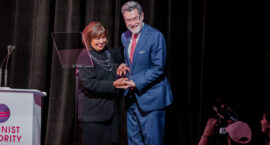
In the middle of an accelerating democratic crisis, and a year defined by sweeping attacks on women’s rights, the Feminist Majority Foundation, publisher of Ms. magazine, gathered in Los Angeles to honor some of the most formidable leaders on the front lines of resistance. At the Nov. 18 Global Women’s Rights Awards, journalists, lawyers, artists, organizers, litigators, community activists and movement strategists came together to celebrate what I call the “essential trifecta” for defeating authoritarianism: the law, the press and culture.

We recognized The Contrarian’s Jennifer Rubin and Norm Eisen for building an independent media platform willing to call out authoritarianism plainly; Democracy Forward president and CEO Skye Perryman for her organization’s record-breaking wave of legal challenges against the Trump administration; and the creative team behind the Broadway hit Liberation—playwright Bess Wohl, director Whitney White, and former Ms. writer and editor Lisa Cronin Wohl—for reminding audiences that storytelling is itself a democratic act.

“The number one tool that autocratic actors use to try to consolidate power and take away power from the people, is to convince people that they have no power,” said Perryman. “Their toolbox is one of isolation. They want you to feel alone.”

“I grew up miles from here, family hamburger stand,” said Eisen, “and now to be here, to have this opportunity with my colleagues to fight for this democracy that took my country, and my parents. … When my mother was living, she loved to say the Nazis took us out of Czechoslovakia on cattle cars, and my son flew back on Air Force One. So, how can I not be hopeful?”


Making the Invisible Visible: How Misogyny Is Driving Rising Political Violence

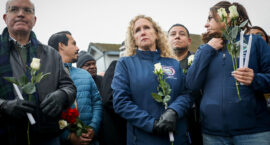
We have seen a rise in political assassinations and assassination attempts, along with violent extremist attacks that have ticked upward for years. Mass casualty plots in the U.S. have increased by over 2,000 percent since the 1990s, leading to the deaths or grievous injury of thousands of people in shootings at schools, grocery stores, theaters, parades, concerts, houses of worship and more.

In the search for explanations, the public and policy discourse is most often swept up in heated debates about far-left or far-right ideologies.

But the data shows that the biggest and clearest predictor of mass shootings, across ideologies, sits somewhere else: in rising gendered grievances, patriarchal backlash, and the perpetrators’ histories of gender-based violence and misogyny.