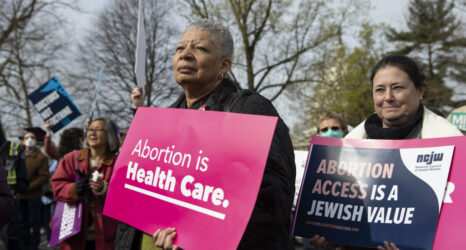
Last month marked the third anniversary of the Dobbs decision—the 2022 Supreme Court ruling that struck down Roe v. Wade, unraveling nearly 50 years of legal protection for abortion in the U.S. However, abortion is still an option—even in states with bans—thanks to medication abortion, which can be sent through the mail.
To celebrate the nationwide accessibility of abortion pills—even three years after Dobbs—Mayday Health took out a series of cheeky ads in the hometown newspapers of each of the five Supreme Court justices who struck down Roe v. Wade in 2022: Brett Kavanaugh, Neil Gorsuch, Amy Coney Barrett, Clarence Thomas and Samuel Alito.
The five ads each feature a picture of the justice in question and cheerfully announce, “Abortion pills are more popular than ever. Thanks, Brett! [Or Neil, Amy, Clarence or Samuel]”
Mayday Health is one of a few feminist nonprofits that provides information on how to access medication abortion in the U.S. The ads, which ran in papers including the Washington Informer and the Savannah Morning News, also have a QR code linking to Mayday Health’s website, where patients can learn more about the options available to them to obtain abortion care no matter their state.
Three years after Dobbs, 41 states have some form of abortion ban in place, with 13 banning abortion entirely. Maternal mortality and pregnancy related deaths are on the rise, with at least 10 American women dying in just the past two years (and possibly many more who didn’t make the major news cycles) after being denied abortions that would have saved their lives.
Over 80 percent of Americans, including Republicans and Trump voters, don’t want the government regulating abortion access.
But here’s the good news: Bans have not stopped women from finding abortion care. And Mayday Health’s newspaper ads are reminding the Supreme Court justices who struck down Roe just how popular abortion still is.
Abortion has not decreased but increased over the last three years since Dobbs, according to the Guttmacher Institute. There were more than 1 million abortions in the United States in 2023 and again in 2024. These are the highest numbers in over a decade, and they’re partially thanks to the growing availability of abortion pills online and by mail, helping women have abortions even in states with total bans and no abortion clinics left.
But even with broad support from Democrat and Republican voters alike, conservative lawmakers are fighting to strip back abortion rights and make abortion pills harder to come by. Doctors, like Margaret Carpenter in New York, are facing prosecution for mailing pills to patients at the same time that violent antiabortion terrorism is surging. Meanwhile, heartbreaking recent cases like those of Adriana Smith and Amber Nicole Thurman highlight the fatal consequences of denying women medically necessary, life-saving abortions.
“Three years ago [on June 24], these unelected justices took away access to abortion care for millions of women—resulting in dystopian abortion care deserts all across our country,” Mayday Health’s Instagram post explains. “But what these justices didn’t know is that overturning Roe would, actually, make abortion more popular than ever.”
Before Dobbs, about one in 20 abortions were provided through telehealth. In 2024, that number was one in four.
“You can ban clinics, but you can’t ban free speech,” the post continues. “That’s why we at Mayday will continue taking out ads, running billboards, flying airplane banners, driving boat floats, constructing pop-up abortion stores, stickering, and shouting from the rooftops the simple truth: abortion pills are available by all 50 states, through the mail.”