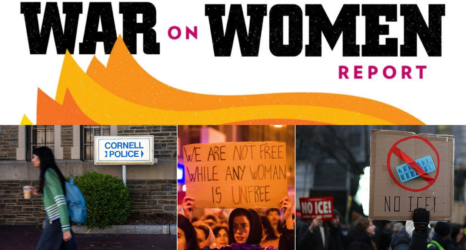
Editor’s note: On Jan. 14, the Senate Health, Education, Labor & Pensions (HELP) Committee held a hearing deceptively titled “Protecting Women: Exposing the Dangers of Chemical Abortion Drugs.” Rather than offering new evidence or legitimate oversight, the hearing played out exactly as reproductive health experts warned: a partisan exercise in recycling debunked claims, elevating junk science and laying the groundwork for further restrictions on the most commonly used abortion medication in the United States.
Sen. Patty Murray (D-Wash.), a senior member and former chair of the HELP Committee, dismantled the premise of the hearing, calling out Republicans for using the committee to advance a political agenda rather than public health: “We all know this hearing is not about safety—it’s about banning abortion nationwide.”
Murray criticized attempts to weaponize environmental laws to restrict mifepristone, calling the argument that abortion pills contaminate drinking water “insane,” and said antiabortion lawmakers are targeting medication abortion precisely because it remains accessible, despite sweeping abortion bans.
What follows explains why the outcome of this hearing was never in doubt—and why laundering disinformation through congressional oversight poses a threat to evidence-based policymaking itself.
What to Expect

On Jan. 14, the U.S. Senate Health, Education, Labor & Pensions (HELP) Committee will hold a hearing framed as an inquiry into the safety of medication abortion. In reality, it will be an opportunity for the committee’s antiabortion majority to showcase junk science and misleading narratives to undermine access to mifepristone—the first of two drugs in a commonly used medication abortion and miscarriage care regimens.
Mifepristone has been used safely and effectively for more than two decades, supported by an extensive body of evidence and endorsed by major medical organizations including the American College of Obstetricians and Gynecologists, the American Medical Association and numerous other leading medical societies. In the United States, the U.S. Food and Drug Administration (FDA) first approved mifepristone in 2000 and has repeatedly reviewed the medication since, each time reaching the same conclusion that it is safe and effective.
Globally, mifepristone is approved in roughly 100 countries and recommended by the World Health Organization in its abortion-care and self-care guidelines. These endorsements reflect decades of research and millions of uses worldwide, with serious complications occurring in far less than 1 percent of cases. In short, mifepristone’s safety profile is well-established and strong.
Yet the antiabortion movement has launched a coordinated campaign to cast doubt on that safety—not because credible new evidence demands it, but because medication abortion now accounts for about two-thirds of abortions in states without total bans, and up to 95 percent of abortions in more rural states.

Medication abortion is also instrumental in realizing the potential of critical state policy innovations like shield laws, which protect clinicians who provide medication abortion via telehealth to patients in states with total bans and other severe restrictions.
Limiting access to mifepristone is a way to restrict abortion overall, and the Senate hearing will amplify that strategy.
… Watch for distorted data masquerading as science, inflated complication rates resulting from fatally flawed methodologies, and policy proposals that ignore mifepristone’s robust evidence of safety and effectiveness.
At Wednesday’s hearing, expect a flood of junk science from antiabortion senators and their witnesses. Antiabortion advocates have leaned heavily on deeply flawed papers that fail to meet the standards of high-quality, rigorous science. These studies—some of which have been retracted by the journal that published them over methodological concerns—create the illusion of danger where decades of research show that serious complications are exceedingly rare.
One paper you may hear about was self-published by the Ethics & Public Policy Center (EPPC). Experts have flagged fundamental flaws in this report, including conflating emergency room visits with severe adverse events, using opaque methods and data sources and failing to undergo standard scientific vetting. As a result of these serious flaws, the EPPC paper significantly overstates risk and does not change the scientific well-established, decades-long consensus that mifepristone is safe and effective.
It is also likely that the committee will platform false claims that abortion pills threaten water safety. There is no evidence to support these claims, yet antiabortion policymakers are increasingly weaponizing these false assertions to advance their agenda of restricting medication abortion. Singling out mifepristone while ignoring well-documented sources of water contamination like agricultural runoff is a transparently political tactic that serves no purpose other than to further restrict abortion access.
These narratives aren’t just rhetorical—they shape policy. Calls to reinstate outdated restrictions on mifepristone to block people from getting the medication via mail or pharmacies would make care harder to access, especially for people in rural areas or in states with abortion bans. Antiabortion politicians and activists have already bullied the FDA into “reviewing” mifepristone’s approval with the goal of imposing medically unnecessary restrictions to reduce access. This is a naked attempt to politicize drug regulation and undermine evidence-based standards.
In short, at the hearing, watch for distorted data masquerading as science, inflated complication rates resulting from fatally flawed methodologies, and policy proposals that ignore mifepristone’s robust evidence of safety and effectiveness. Expect rhetoric about “polluted water” that lacks scientific grounding while doing nothing to solve actual problems with access to safe drinking water. And anticipate demands for the FDA to put politics over public health and roll back access to mifepristone.
Medication abortion is safe, effective and essential. That conclusion is supported by leading clinical authorities, FDA’s longstanding approval, clinician and patient experience, and extensive international experience. Efforts to restrict it through junk science and false narratives threaten not only abortion access but the integrity of evidence-based policymaking. The Senate HELP Committee should be a forum for facts, not fearmongering. When junk science drives the conversation, the result is junk policy—and patients pay the price.
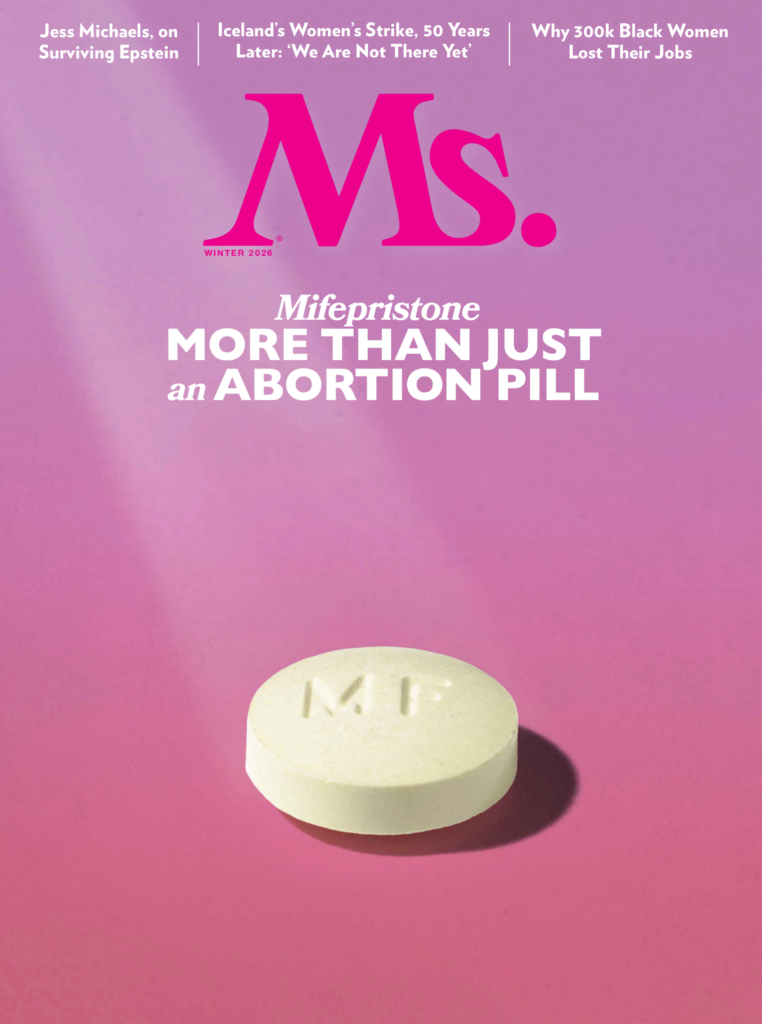
Editor’s note: Mifepristone has shown potential to treat a striking range of diseases and conditions, some life-threatening: fibroids, breast cancer, depression, endometriosis, Gulf War illness and maybe even other autoimmune diseases, such as chronic fatigue syndrome and multiple sclerosis. Research also suggests that mifepristone may help prevent some forms of breast cancer and can serve as an effective weekly contraceptive without the side effects of hormonal birth control. Yet despite the drug’s promise, its development has been repeatedly stymied by abortion opponents who fear wider availability would weaken their attempts to suppress abortion access.
The result? Women are left in needless pain and subject to invasive and unnecessary surgical procedures like hysterectomies.
Get a year of Ms. for just $20—a 43 percent discount off our usual price—when you join today.