Doctors, medical students, patients and faith leaders are speaking out about how Kentucky’s near-total abortion ban is endangering healthcare, restricting medical training and fueling the criminalization of pregnancy.
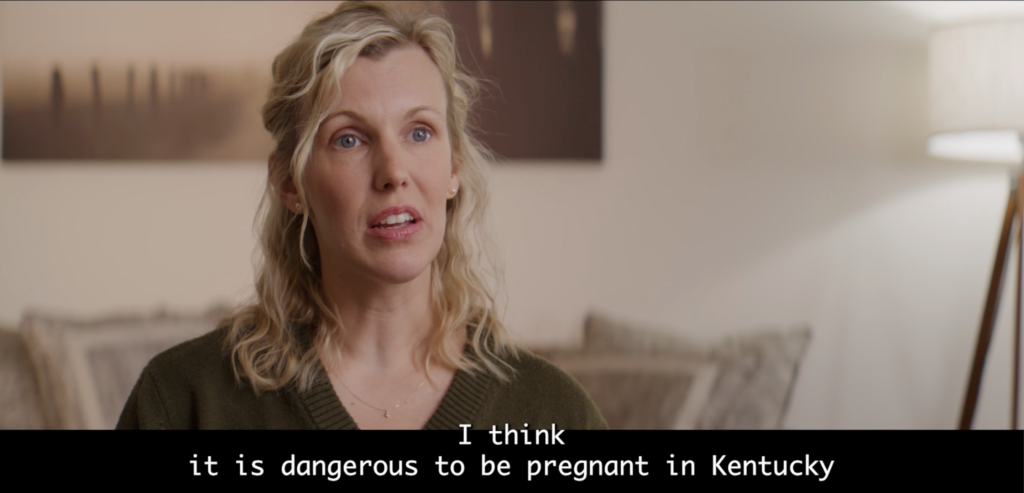
“It is dangerous to be pregnant in Kentucky.”
—an OB-GYN in rural Kentucky
The growing push for so-called “equal protection” legislation is reshaping the legal landscape of abortion bans across the country—and Kentucky is at the center of that shift.
A bill introduced in the state legislature, the Prenatal Equal Protection Act (PEPA), HB 714, would allow women and pregnant people to be charged with homicide by classifying fetuses as legal victims. While the bill includes narrow exceptions for “spontaneous miscarriages and life-saving medical procedures,” it represents a sweeping expansion of criminal liability that places pregnant women at unprecedented legal risk.
The trend of so-called equal protection bills have gained popularity following the overturning of Roe v. Wade. Similar bills have been introduced in states including Georgia, Missouri, Texas, Idaho, Iowa, Kansas and South Carolina, all seeking to elevate fetal personhood toward criminalizing certain pregnancy outcomes. These proposals build on existing restrictions in states like Kentucky, where abortion access is already nearly eliminated, signaling a new phase of legislative escalation.
The consequences of this legal framework are already unfolding in deeply troubling ways.
The same week advocates were raising alarms about these legislative efforts, news surfaced that a third Kentucky woman and her partner were arrested and charged after she experienced a miscarriage at home in 2024. The couple’s experience underscores the stark reality of how pregnancy is increasingly policed under the state’s extreme abortion ban.
… Kentucky’s proposed Prenatal Equal Protection Act could further entrench a system where miscarriage, stillbirth and other complications are treated not as medical events, but as potential crimes.
Across the state, pregnant women face growing surveillance and the threat of criminalization for normal pregnancy outcomes that are often beyond their control.
In another high-profile case, University of Kentucky student Laken Snelling, 20, was indicted on charges including first-degree manslaughter, abuse of a corpse, tampering with physical evidence and concealing the birth of an infant. The framing of these charges obscures the likelihood that she experienced a pregnancy loss while officials have continued to refer to the remains as a fetus. The use of such severe criminal charges highlights how legal language is being used to re-characterize pregnancy outcomes as criminal acts.
Together, these cases reveal how policies like Kentucky’s proposed Prenatal Equal Protection Act could further entrench a system where miscarriage, stillbirth and other complications are treated not as medical events, but as potential crimes. For many in Kentucky, this has created an atmosphere of fear and uncertainty—one where no pregnancy feels entirely safe.
Despite this escalating pressure, people across Kentucky are continuing to organize, speak out and fight back. The resistance in the state continues to gain traction despite the horrendous treatment of women and pregnant people that truly demonstrates the inhumanity of the ban.
On the heels of these prosecutions, the Kentucky Reproductive Freedom Fund (KYRFF) launched a statewide and national video campaign amplifying the voices of those most impacted by the ban. Physicians, medical students, faith leaders and patients share firsthand accounts of what it means to live without access to essential reproductive healthcare in a state where the law makes no exceptions for rape, incest, cancer diagnoses, nonviable pregnancies or common complications.
The campaign makes clear that the harm is not abstract. It details how the ban endangers lives, restricts medical training, undermines providers’ ability to deliver standard care and even raises concerns about religious freedom. As KYRFF emphasizes, “No one should have to risk their life, be denied standard care, lose control over their own health decisions, or travel hundreds of miles for care simply because they live in Kentucky. No politician’s personal religious beliefs should ever decide someone’s medical care.” The campaign videos went viral, garnering 2.5 million impressions, 131,000 engagements and counting.
That message has been echoed powerfully by healthcare providers themselves.
On Feb. 19, for the third consecutive year, Kentucky Physicians for Reproductive Freedom, which is a project of KYRFF, gathered at the state Capitol to call for a repeal of the ban. More than 600 medical professionals signed an open letter urging lawmakers to act—a significant increase from the previous year—demonstrating growing resistance within the medical community.
At the press conference, physicians and nurses described the impossible conditions they face under current law, where providing standard care can carry the risk of felony charges.
For the first time, they were joined by a patient, Chanté Berg, who shared her experience of being denied critical care and nearly losing her life. Her story underscored the disproportionate risks faced by Black women and the urgent need for change. Berg shared, “My life was nearly lost. Coupled with the fact that Black women face three to four times higher risk of maternal death, where is the fight for our right to life?”
“Abortion bans hurt families and put people’s lives at risk,” says Ona Marshall, founder of the Kentucky Reproductive Freedom Fund. “These bans don’t just affect pregnant people—they affect entire families. When my daughter was pregnant last year, our family made the painful decision that it was too risky for her to visit her home state of Kentucky. If she had experienced a pregnancy complication, there was no guarantee she would receive the standard medical care she needed.”
Faith leaders also stood alongside medical professionals, challenging the narrative that abortion bans are rooted in religious doctrine. They emphasized that both medical ethics and diverse faith traditions support compassionate, patient-centered care—not government intrusion into deeply personal decisions.
“We are incredibly proud of the people in Kentucky who have courageously stepped forward to speak out,” says Marshall. “Through this video campaign, doctors, nurses, researchers, faith leaders and patients are helping educate the public about the real-world health dangers and broader implications of abortion bans for patients, healthcare providers, families and communities.”
Taken together, these efforts reflect a broader truth: Even as laws grow more punitive and enforcement more aggressive, people in Kentucky are not backing down. Physicians continue to advocate for their patients, communities are organizing and individuals are sharing their stories despite the risks.
At a moment when healthcare has become deeply politicized in Kentucky, where lawmakers have increasingly sought to regulate reproductive healthcare, the campaign calls attention to the danger of political interference in private medical decisions. Ultimately, it affirms a simple principle: Abortion—and all healthcare decisions—should be made by the person seeking care, in consultation with their provider, not by politicians advancing a political agenda.
In Kentucky, that principle is being defended every day, not just in policy debates, but in lived experiences, collective action and an ongoing refusal to accept a system that puts lives at risk.
*
A note from Ms. editors: We want to hear from you for The Majority, a new campaign collecting stories about how reproductive freedom has enabled readers to build the lives they want and need.
Poll after poll shows a majority of Americans support reproductive healthcare access. Yet public debate overlooks the lives shaped by abortion access, contraception, IVF, miscarriage care, maternal healthcare or comprehensive sex education—countless women who chose to pursue an education, have children, not have children, protect their health and chart their own future. What’s your reproductive freedom story? Add your voice. Together, these stories will help show not only why reproductive freedom remains a majority value, but also what it makes possible.
Look to these trusted groups if you or a loved one needs to know more about reliable abortion care:
- A one-stop-shop for abortion seekers: I Need An A
- Other websites to explore all your options for abortion care: Plan C Pills, Abortion Finder
- Safe websites to buy abortion medication: Aid Access, Massachusetts Medication Abortion Access Project, Hey Jane
- If you need help affording abortion care, tell your telemedicine provider or contact an abortion fund near you.
- To protect your digital privacy when planning your abortion, click here.
- For free legal help as a patient or doctor, call If/When/How’s Repro Helpline—844-868-2812—or contact Pregnancy Justice.
- For medical advice, contact the Miscarriage & Abortion Hotline: 833-246-2632.
- If you need to know the abortion law in your state, look to the Center for Reproductive Rights. or Guttmacher Institute.
Support more work like this article
The reporting you just read is possible because of readers like you. Since 1972, Ms. has delivered independent, feminist journalism that tells the stories too often overlooked by other news media, challenges systems of inequality and holds power to account. We have no corporate owners, no advertisers and no billionaires dictating what we cover. Instead, we answer to our readers and our mission. If you value reporting that centers women and girls—and covers the issues others leave out—please support Ms. today by making a tax-deductible donation, becoming a member to receive a magazine subscription, or gifting a membership to a friend. Together, we can continue reporting, rebelling and truth-telling.