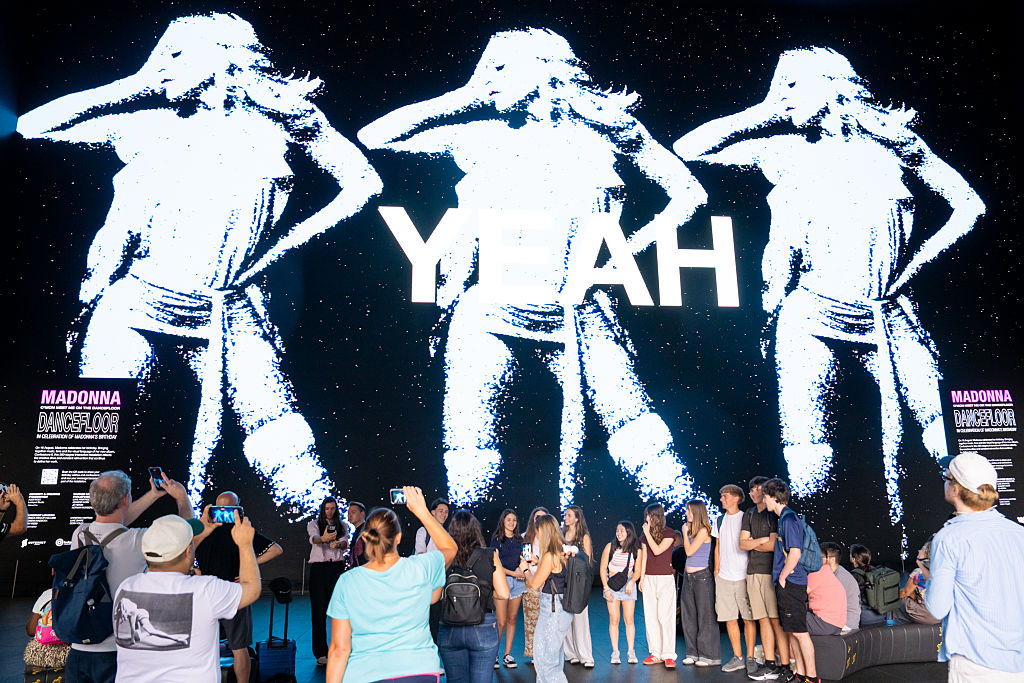
Thousands of fans, writers, nightlife legends and artists walked between the legs of a towering inflatable Madonna last month—a fitting monument to four decades of Madonna’s subversive expression of female sexuality and autonomy. The giant inflatable served as the entrance to Club Confessions at the Knockdown Center, where she celebrated Confessions II, her 15th studio album and sequel to her landmark 2005 album Confessions on a Dance Floor.
The event followed a summer in which Madonna staged a surprise album launch performance in Times Square.
She also joined Sabrina Carpenter onstage during Carpenter’s headlining Coachella set—a fitting pairing, given how much Carpenter’s cheeky sexuality and playful treatment of desire draw on a pop landscape Madonna helped create.
Madonna also opened the first-ever FIFA World Cup Final halftime show with “Music,” another reminder of her ability to remain at the center of global pop culture more than four decades into her career.
Inspired by her ongoing engagement with personal and sociopolitical turmoil, however, the album conjures more than nostalgia. Twenty years after Confessions on a Dance Floor transformed dance music through its seamless club mixes, disco revival and euphoric hedonism, it reaffirms Madonna’s enduring commitment to dismantling convention and her position as one of popular music’s defining feminist voices.
Widely regarded as a pioneering voice of women’s sexuality, authorship and autonomy in entertainment, Madonna has paved the way for generations of artists since the 1980s. But the industry moves at a relentless pace, with artists becoming irrelevant after a single album cycle and women in particular expected to endlessly reinvent themselves to remain culturally valuable. Against that backdrop, her newest work radically celebrates her own legacy.
Forty-three years after releasing her debut single, Madonna has fundamentally expanded the possibilities of female autonomy.
If you’re a girl, you have to play the game. … To age is a sin. You will be criticized and vilified and definitely not played on the radio.
Madonna

When Madonna arrived in New York in 1978 at 19, famously with just $35 in her pocket, she initially planned to become a professional dancer. She studied at the Martha Graham School, apprenticed with choreographer Pearl Lang and soon began playing drums, guitar and singing with downtown bands including Breakfast Club and Emmy.
By the early 1980s, she was writing her own songs and circulating her demos through New York’s club scene; after DJ Mark Kamins played “Everybody” at Danceteria, he helped bring the track to Sire Records, which signed her in 1982.
Her debut single, “Everybody,” followed that October, and her self-titled debut album arrived in 1983.
From the beginning, Madonna asserted unusual control over both her music and her image, pushing against an industry in which female performers were often expected to fit visions crafted by male producers, executives and record labels. Rather than simply inhabit a persona created for her, she made the construction—and continual reconstruction—of that persona central to her art.
Her now-iconic performance at the inaugural MTV Video Music Awards in 1984 of “Like a Virgin,” crystallized that philosophy. Rolling across the stage in a wedding dress while singing about innocence and desire, Madonna transformed one of Western culture’s most enduring symbols of feminine purity into an act of sexual rebellion.
The album became the first by a female artist to sell more than 5 million copies in the United States, demonstrating how women could command commercial success and creative control without conforming to expectations of respectability.

She pushed those ideas even further on the 1990 Blond Ambition World Tour in 1990. Working with Jean Paul Gaultier, Madonna transformed the now-iconic cone bra into one of fashion’s most recognizable symbols of female empowerment, wearing lingerie, which is historically hidden beneath clothing to shape, restrain and discipline women’s bodies, as a form of armor.
When she simulated masturbation during performances of “Like a Virgin,” prompting Toronto police to threaten obscenity charges and outrage from politicians, religious groups and newspapers, Madonna refused to apologize, insisting that women themselves could define the terms of their own sexuality.
After her 1992 album Erotica, she further challenged taboos against female sexuality with the publication of her book Sex later in the year. Filled with explicit, sadomasochistic imagery and photographs that challenged conventional boundaries between pornography, fashion, art and autobiography, the project provoked enormous backlash.
Radio stations pulled her songs, critics declared her career over and commentators dismissed Sex as narcissistic exhibitionism. Yet Sex was also a remarkable assertion of creative control, as she oversaw virtually every aspect of its production, presentation and distribution, refusing to allow magazines, tabloids or record executives to mediate her image.
Despite the controversy, Sex became the fastest-selling coffee table book in publishing history.
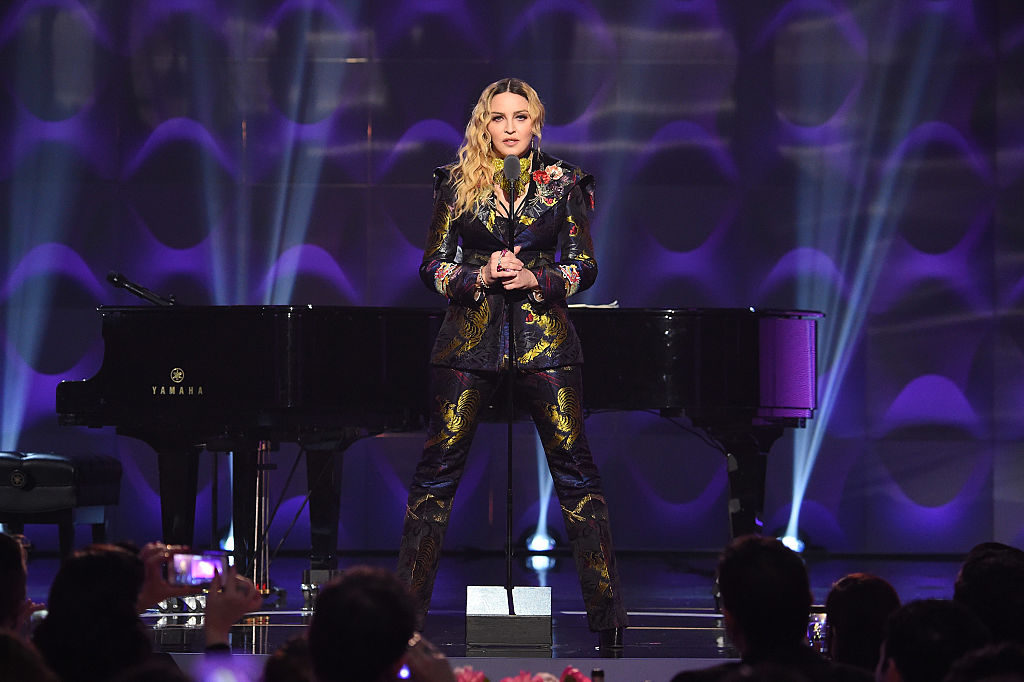
Nearly two decades later, in her acceptance speech for Billboard’s 2016 Woman of the Year award, Madonna reflected on the contradictions and double standards that had defined her career:
“If you’re a girl, you have to play the game. You are allowed to be pretty and cute and sexy. But don’t act too smart. Don’t have an opinion that is out of line with the status quo. You can be objectified by men and dress like a slut, but don’t own your sluttiness.
“And finally, do not age. Because to age is a sin. You will be criticized and vilified and definitely not played on the radio.”
Those words remain remarkably prescient today as Madonna returns to and continues one of the defining works of her own career. It would be easy to frame this monumental cultural milestone primarily through Madonna’s age—at 67, she completely subverts the culturally imposed age range of mainstream and relevant pop.
But making her age the story ultimately reinforces the very double standard she has spent four decades dismantling.

Male rock stars routinely tour stadiums, revisit classic albums and release new music well into their sixties and seventies without their relevance or age becoming the headline. More than four decades after her debut, Madonna is still expanding the boundaries of what female longevity can look like, by making age beside the point.
Perhaps that is her most radical legacy: insisting that every version of herself remains worthy of revisiting and reclaiming, and, in doing so, giving other women permission to believe the same.
*
A note from Ms. editors: We want to hear from you for The Majority, a new campaign collecting stories about how reproductive freedom has enabled readers to build the lives they want and need.

Poll after poll shows a majority of Americans support reproductive healthcare access. Yet public debate overlooks the lives shaped by abortion access, contraception, IVF, miscarriage care, maternal healthcare or comprehensive sex education—countless women who chose to pursue an education, have children, not have children, protect their health and chart their own future. What’s your reproductive freedom story? Add your voice. Together, these stories will help show not only why reproductive freedom remains a majority value, but also what it makes possible.