The FIFA World Cup and the Art of Looking Away

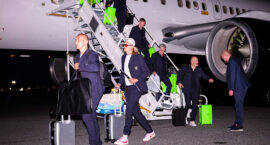
When the Federation Internationale de Football Association (FIFA) unveiled the first wave of celebrity promotions for the 2026 FIFA World Cup, the messaging was familiar: unity, celebration and global connection through sport.

Held every four years, the world’s largest international soccer (also known as football) tournament brings together national teams from around the globe to compete for the championship title. The right to host the World Cup is awarded through a competitive FIFA bidding process, with the 2026 tournament being awarded to a joint bid from the United States, Canada and Mexico.

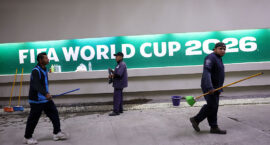
But beneath the glossy advertisement campaigns and official anthems lies an institution repeatedly tied to corruption scandals, labor exploitation and human rights controversies that cannot be danced away by celebrity performances and spectacle marketing.  

Loving the game should not require ignoring the systems surrounding it. Because behind every glittering opening ceremony is an uncomfortable question FIFA would rather audiences not ask: Who is paying the price for the spectacle?

Too often it is people whose labor, rights and well-being are treated as expendable.

Afghan Women’s Refugee Football Team Officially Recognized by FIFA in Landmark Victory

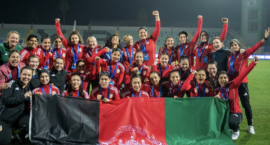
For the first time since the Taliban’s return to power in 2021 that forced Afghan women athletes into exile, Afghanistan’s women’s refugee football team has officially been granted recognition to compete in international tournaments under FIFA. This decision marks a rare and meaningful victory for Afghan women, whose rights, education and participation in public life have been systematically erased under Taliban rule for the past five years.

The FIFA Council announced the team formerly known as Afghan Women United will now be recognized as the Afghanistan women’s football team, allowing the players to compete in international competitions despite the Taliban-controlled Afghan Football Federation refusing to acknowledge women’s sports.

The players are now expected to participate in future international competitions and could potentially enter qualification for the 2028 Olympic Games in Los Angeles.

For many Afghan women, the moment carries meaning far beyond World Cup football. It serves as a reminder that despite years of repression, Afghan girls and women have not abandoned their ambitions, talents or dreams. Even after being pushed out of schools, workplaces, stadiums and public life, they continue to fight for spaces where they can exist freely and represent themselves on the world stage.

Nazia Ali, an Australia-based player on the team, reflected on the emotional significance of once again being able to represent Afghanistan officially. “For the last few years, we have played under many names—as refugees, as Afghan Women United, and as guests of other clubs—but in our hearts, we were always the national team.”

From the Halls of Congress to Out on the Trail, Women Beg the Question: Why Not You?

Weekend Reading on Women’s Representation is a compilation of stories about women’s representation in politics, on boards, in sports and entertainment, in judicial offices and in the private sector in the U.S. and around the world—with a little gardening and goodwill mixed in for refreshment!

This week:
—Rachel Entrekin makes history by setting a new course record at the Cocodona 250 ultramarathon, becoming the first woman to win the race outright.
—Amy Acton could become Ohio’s first woman governor.
—Mother’s Day has always been about women’s political power.

… and more.

Trump Administration Launches a Legally Bogus Investigation into Smith College

The Trump administration claims its investigation into Smith College is about defending women. In reality, it is an attack on the rights of women at Smith to define their own community, values and mission without political interference from Washington.

The Department of Education argues that by admitting transgender women and allowing them access to campus housing and facilities, Smith may have violated Title IX. But that argument collapses under even a basic reading of the law. Title IX simply does not apply to admissions at private undergraduate colleges like Smith.

The administration’s complaint is also striking because it is not based on evidence that Smith students have been harmed or excluded from campus life. There is no public record of students filing complaints about the college’s housing, bathrooms or locker rooms policies. Instead, this investigation grew out of pressure from a conservative advocacy group determined to use federal power to impose its ideological agenda on colleges and universities.

Smith’s campus policies were shaped over years by students, faculty and administrators themselves—including cisgender women students who pushed the college to open admissions to transgender women more than a decade ago.

At its core, this investigation is about far more than one women’s college. It reflects the Trump administration’s broader campaign against trans rights, higher education and liberal arts institutions that encourage critical thought, inclusion and intellectual independence.

Congress passed Title IX to expand educational opportunities for women. Now, the administration is attempting to weaponize that same civil rights law to undermine women’s education and bully colleges into abandoning their own principles.

A New Playbook for College Athletes: Consent, Intervention and Prevention

June 2026 will mark the 54th anniversary of Title IX, the 1972 federal law barring sex-based discrimination in education, ensuring equal participation in sports and prohibiting sexual violence in educational programs receiving federal funding.

But even though Title IX passed more than half a century ago, and significantly more women now go to college than men, gender-based violence is still rampant among college students. Thirteen percent of U.S. college students experience rape or sexual assault during their time on (or off) campus. For women, that number doubles: 26.4 percent of women (and 6.8 percent of men) undergraduates experience sexual violence. Young women are especially vulnerable, compared to older grad students, and women college students aged 18 to 24 are three times more likely to experience gender-based violence than women in general.

Most colleges and universities have standard anti-sexual violence training during freshman orientation (often just required videos or something students click through online), but this information is often quickly forgotten or not practical enough for students to easily apply to their own lives and interactions. The nonprofit sexual assault prevention organization It’s On Us is seeking to change that with the The Playbook 2.0, a research-based workshop series for college athletes.

Keeping Score: Pennsylvania ERA Secures Abortion Rights Win; Civil Rights Groups Investigate Trump Admin Delays in Childcare Payments; Senate Upholds Near-Total VA Abortion Ban

In every issue of Ms., we track research on our progress in the fight for equality, catalogue can’t-miss quotes from feminist voices and keep tabs on the feminist movement’s many milestones. We’re Keeping Score online, too—in this biweekly roundup.

This week:
—In a landmark ruling shaped by Pennsylvania’s ERA, a state court struck down a decades-old ban on using Medicaid funds for abortion.
—Trump continued to attack voting rights, threatening mail-in ballots and moving towards a nationalized registration database full of errors.
—An estimated 8 million people attended the latest “No Kings” protests.
—A Michigan court ruled that the state’s Pregnancy Exclusion law, which prevents providers from honoring pregnant women’s documented end-of-life decisions, violates a voter-approved 2022 constitutional amendment.
—A federal judge blocked RFK Jr.’s changes to routine vaccination schedules.
—The Supreme Court ruled against Colorado’s ban on dangerous “conversion therapy” for LGBTQ youth.
—Housing markets are declining in states with abortion bans as young people leave or avoid those areas.
—Senators demand the Trump Administration release lifesaving Title X funding.
—Twenty-five states received a failing grade on access to sexual and reproductive healthcare.
—High levels of contamination were found in braiding hair.
—Women are driven away from coaching college sports by pay inequities and other systemic barriers.

… and more.

Ms. Global: Energy Crisis in Cuba, Feminist Activist Assassinated in Iraq, Gay Asylum-Seeker Deported and More

The U.S. ranks as the 19th most dangerous country for women, 11th in maternal mortality, 30th in closing the gender pay gap, 75th in women’s political representation, and painfully lacks paid family leave and equal access to healthcare. But Ms. has always understood: Feminist movements around the world hold answers to some of the U.S.’s most intractable problems. Ms. Global is taking note of feminists worldwide.

This month:
—Seoul holds the 41st Women’s Strike in South Korea for International Women’s Day.
—Hospital patients suffer during Cuba’s three major blackouts.
—The U.S. is at fault for the missile strike that hit the Shajareh Tayyebeh Girls’ School in Minab, Iran, on Feb. 28, killing 175 people.
—Yanar Mohammed, a leading Iraqi feminist and human rights defender, was killed in an armed attack in Baghdad.
—IOC restricts transgender participation in Olympics.
—Amid widespread displacement, poverty and institutional collapse during the ongoing war in Gaza, families are increasingly turning to child marriage for their daughters.

… and more.

Olympic Sex Testing Returns, Reigniting Debate Over Who Qualifies as a Woman in Sports

The International Olympic Committee recently announced it will again require genetic sex screening for women athletes and bar many transgender and intersex competitors from women’s events beginning with the 2028 Los Angeles Games—reviving a policy widely criticized for its scientific flaws and human cost, and underscoring the continued relevance of this Ms. article from the October 1988 issue: “Chromosome Count.”

“I am an athlete, and I am a woman—or at least I believe I am. Yet for women competing on the world stage, that identity has long been treated as suspect, subject to invasive ‘verification’ by chromosome testing that claims to define femininity through a lab result rather than lived reality.

“Since 1968, female athletes have been required to submit to these screenings, where something as complex as sex is reduced to XX or XY—despite the many natural variations that defy such rigid categories.

“But these tests have never been as objective or fair as they claim. Women with no competitive advantage have been singled out, humiliated and even disqualified, their identities questioned and their careers erased.

“The story of athletes like Ewa Kłobukowska reveals the human cost of this policy—one built not on sound science, but on fear, misconception and a narrow, deeply flawed definition of what it means to be a woman.”

Democracy Is Not Self-Executing: How We Shape a Better Government Through Laws, Institutions and Culture

Weekend Reading on Women’s Representation is a compilation of stories about women’s representation in politics, on boards, in sports and entertainment, in judicial offices and in the private sector in the U.S. and around the world—with a little gardening and goodwill mixed in for refreshment!

This week:
—The SAVE Act would block women, young people and low-income people from voting.
—Crowded Illinois primaries call for ranked-choice voting.
—The American women’s hockey team wins gold at the Winter Olympics in Milan.
—An election in Denmark could extend women’s leadership

… and more.

War on Women Report: Kentucky Woman Arrested for Miscarriage; Kansas Anti-Trans Bill Takes Effect; Polls Show Most U.S. Women Disapprove of Trump

MAGA Republicans are back in the White House, and Project 2025 is their guide—the right-wing plan to turn back the clock on women’s rights, remove abortion access, and force women into roles as wives and mothers in the “ideal, natural family structure.” We know an empowered female electorate is essential to democracy. That’s why day after day, we stay vigilant in our goals to dismantle patriarchy at every turn. We are watching, and we refuse to go back. This is the War on Women Report.

Since our last report:
—Texas Attorney General Ken Paxton is suing Delaware abortion provider Debra Lynch, who operates the organization Her Safe Harbor, for allegedly mailing abortion pills into Texas.
—More than a year after seeking medical help for a miscarriage, Deann and Charles Bennett, a young couple in Booneville, Ky., have been arrested for alleged “reckless homicide.”
—Trump’s Department of Justice used the Freedom of Access to Clinic Entrances (FACE) Act, intended to protect abortion clinics from harassment, to prosecute journalist Don Lemon for attending an anti-ICE protest.
—The Trump administration withdrew a Biden-era rule that required pharmacies receiving federal funding to carry and dispense mifepristone, misoprostol and methotrexate.
—Arkansas’ near-total abortion ban is facing its first legal challenge since Dobbs
—Some good news from Cleveland: The Cleveland City Council passed Tanisha’s Law, creating a Community Crisis Response department to respond to non-violent mental health emergencies with trained, unarmed crisis teams.
—In a landmark victory for survivor accountability, an Arizona jury in Phoenix has ordered Uber to pay $8.5 million to Jaylynn Dean.
—Also in Arizona: Judge Gregory Como struck down several abortion restrictions, ruling them unconstitutional.

… and more.