Happily Never After: False Homeownership Notions Are Increasing the Gender Wealth Gap

The “American Dream” notion that homeownership will provide an express route to happily-ever-after is fueling record home prices and exacerbating gender inequities. We need to wake up from this nightmare.

If current real estate trends continue, a woman’s place will no longer be in the home, and not because of feminist gains. Rather, she’ll be completely priced out.
For 50 Years, Title IX Has Transformed Girls’ and Women’s Education. The Job Is Not Yet Done.

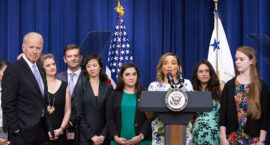
This year marks the 50th anniversary of Title IX, which prohibits gender discrimination in educational programs or activities. Because almost all schools receive federal funds, the law applies in nearly every educational context. Most people associate Title IX with athletics, where it has indeed had a profound effect on girls and women. Before Title IX, women and girls were virtually excluded from most athletic opportunities in schools.

The Pew Research Center did a national survey to gauge awareness and attitudes about Title IX 50 years after its passage. Among those who know about Title IX, there are both gender and political gaps in how they think about it.

Bipartisan Group Urges Reconsideration of Melissa Lucio’s Death Sentence

Bipartisan Groups Urge Reconsideration of Melissa Lucio’s Death Sentence

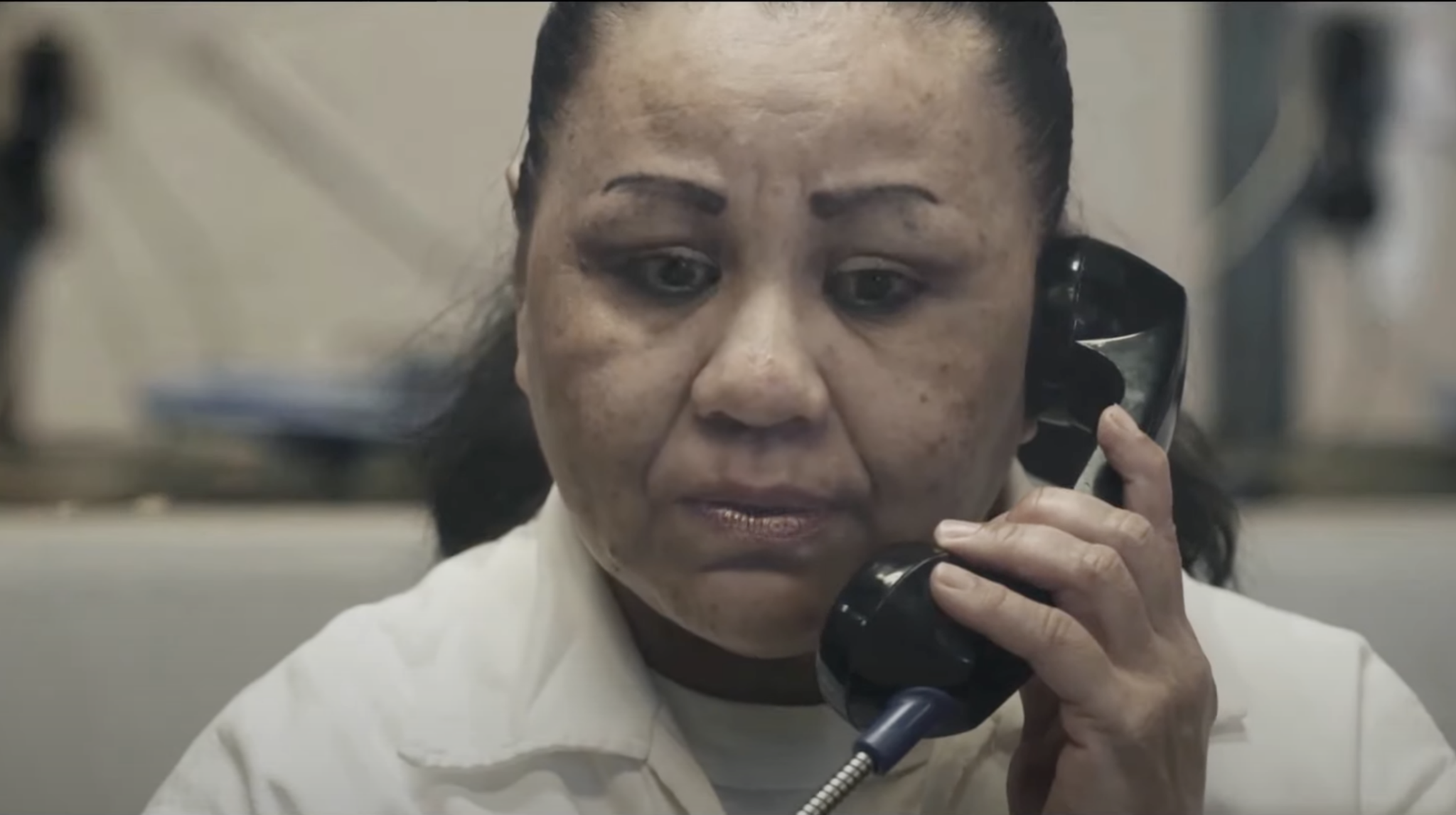
The state of Texas plans to put Melissa Lucio to death by lethal injection on Wednesday, April 27, which would make her the sixth woman executed in the U.S. in the last decade and the first Hispanic woman in Texas history.

But new evidence of Lucio’s interrogation reveals how unlikely it is that she is guilty—which is why a bipartisan group of Texas state lawmakers is asking authorities to reconsider the scheduled execution. They join hundreds of other Texans—including 225 anti-domestic violence groups, 130 faith leaders and 30 Latino organizations—in urging the Board of Pardons and Paroles and Governor Abbott to grant Lucio a reprieve.

Women Have Always Been the Heart of the Climate Change Movement: Weekend Reading on Women’s Representation

Weekend Reading for Women’s Representation is a compilation of stories about women’s representation. 

This week: Women have always been at the heart of the climate change movement; best practices to increase women’s representation on public and private sector boards; Kyra Wilson is the second woman elected chief of the Long Plain First Nation; majority of Americans support ranked-choice voting; and more.

‘If These Dolls Could Talk’: Art Exhibit Explores Role of Black Dolls in U.S. History and Challenges Racial Stereotypes

Dolls—from ancient representation of humans in art, to familiar children’s toys or use in religious rituals—have held meanings more than meets the eye. Now employing the lens of race and gender, the New-York Historical Society exhibition “Black Dolls” explores further the significant role of the Black doll in American history.

From the horrors of slavery through Reconstruction and Jim Crow, to the beginnings of the civil rights movement of the 1960s, this collection of 200 objects, textiles, sewing tools, photographs and ephemera represents a push back against negative racial stereotypes.

Teenagers on State Boards of Education—Why Including the Voices of Young Women Is Essential

Eleni Livingston and Rana Banankhah, both 17 years old, are voting members of their states’ board of education. They help decide high school graduation requirements, determine teacher qualifications and develop state student assessments. They also bridge the gender gap in education leadership—since women make up only 31 percent of school district chiefs. Their experiences show the importance of student voices in policymaking.

“On the board it can be intimidating to go in, as a young woman, as a teenager, into an environment like that and jump right in and start advocating for my peers,” Livingston said.

“To be treated like an adult, even though I can’t even vote for [U.S.] president, was really eye-opening,” Banankhah said.

The Power of Mobilizing Women in the Climate Crisis

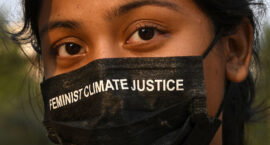
Women are by far the group most disproportionately affected by climate change. Yet, they are regularly left out of the conversation on a global scale. The United Nations estimates 80 percent of all people displaced by climate change are women and girls, who make up only 30 percent of global and national climate decision-making bodies. 

When thinking about the climate crisis, it is easy to become overwhelmed by dread and feelings of helplessness. But learning about the work of incredible women activists can provide a sense of hope and optimism as we all march forward into the impending storm. If we’re willing to listen to these women, we might actually be able to make it out of this alive. And dare I say, even better than before. 

Female Genital Mutilation Isn’t Just a Foreign Issue

female genital mutilation

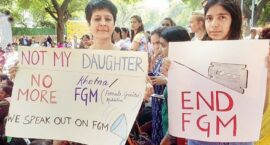
Texas Governor Greg Abbott waded into problematic territory when he called gender-affirming care for transgender minors “mutilation” and “child abuse.” His remarks generated lots of coverage and controversy, as he presumably knew they would. The irresponsible and incorrect use of the term “mutilation” takes attention away from the actual, serious problem of mutilation and cutting in the United States today. 

Worldwide, more than 200 million women and girls have undergone female genital mutilation/cutting. But it’s not just a foreign problem. More than half a million women and girls are either at risk or have undergone FGM/C in the U.S, including 51,000 in Washington, D.C. The U.S. must enact stronger legislation against the practice, while empowering and protecting those who have been subjected to FGM/C.

What the Christian Right Gets Wrong About Birth Control

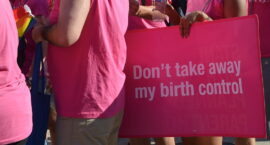
A section of the religious right claims that the use of contraception equates to abortion, as they believe contraceptive prevent the implantation of a fertilized embryo in the uterus. While scientists agree that this belief is misinformation and does not align with medical definitions of abortion, they also argue that contraceptive devices actually prevent fertilization, thus leading to less embryo abortions then would occur naturally.

This information needs to be made clear to these religious conservatives who are currently gaining ground in the statehouses and courts, working to limit access to abortion and contraception.

Gender Is Still Burning: The Ms. Q&A with Jennie Livingston

When filmmaker Jennie Livingston stumbled upon drag ball culture in the late 1980s, they had no idea how much the resulting film would resonate. Released in 1990, Livingston’s first documentary Paris Is Burning showcases drag balls during the late 1980s in Harlem, New York City, and features interviews with numerous queer and trans Black and Latinx performers who comprised the various “houses” in competition at the balls. Decades later, the film continues to resonate.